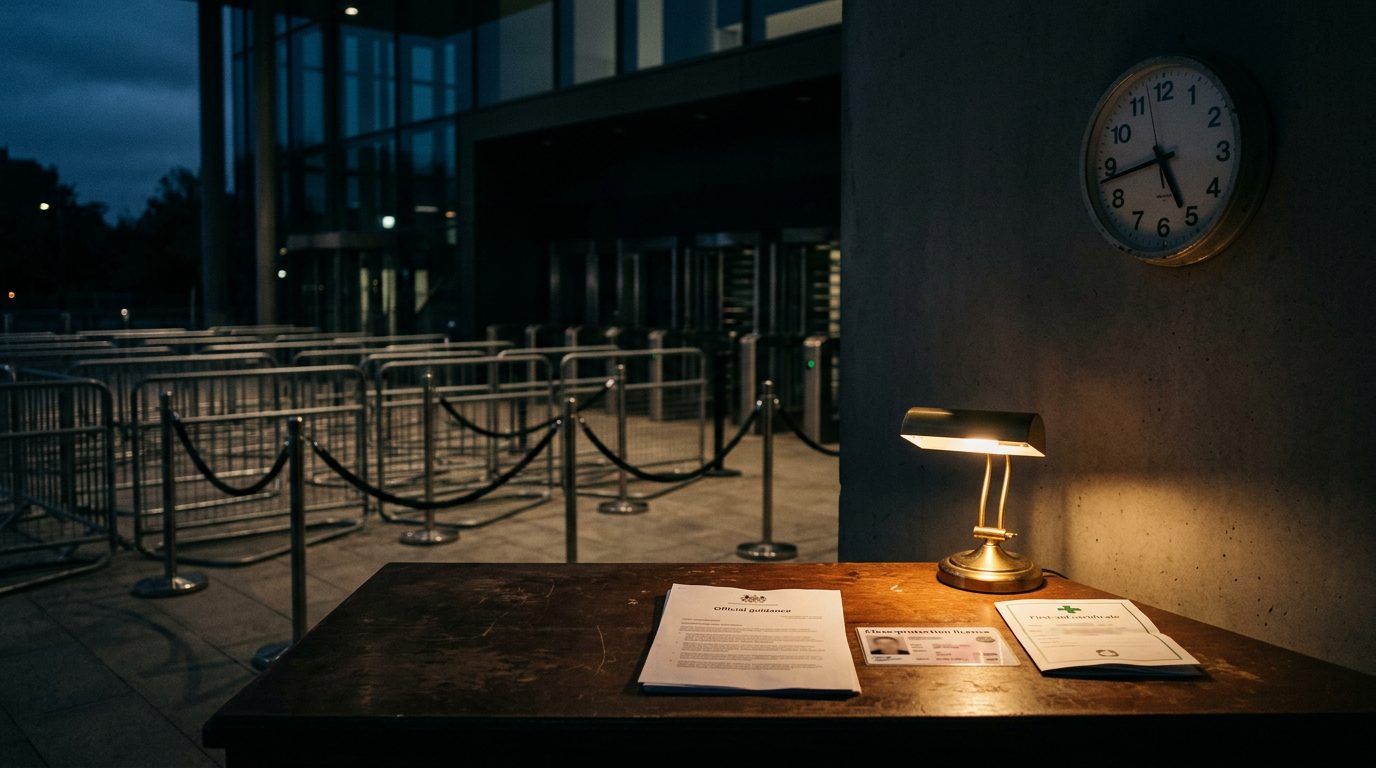
The Home Office published updated guidance on 17 July on the Security Industry Authority's role as regulator for the Terrorism (Protection of Premises) Act 2025, better known as Martyn's Law. It firms up the shape of a regime that comes into force in spring 2027.
The tiers are set by how many people are reasonably expected on site at the busiest time. Standard tier covers premises with 200 to 799. Enhanced tier covers 800 or more, and applies to qualifying events as well as premises. Childcare, education settings and places of worship stay in the standard tier even above 800.
The obligations differ by tier. Both require notifying the SIA and naming a responsible person. Enhanced-tier sites must also document their public protection procedures and measures and provide them to the regulator. The SIA will assess compliance through desk-based review and on-site inspection, normally with at least 72 hours' notice, though it can seek a warrant for unannounced access. The underlying test stays proportionate: reasonable and practicable steps on a risk basis, sized to the premises or event.
Timeline. The SIA's consultation on its section 12 statutory guidance closed on 16 June with nearly 200 detailed responses, and it plans to publish the final guidance and a full consultation report in autumn 2026. Compliance-portal testing is set for early 2027 with sector volunteers, ahead of a commencement date to be confirmed for spring 2027.
Operator implication. If you run close protection, event security or venue risk, the window to get responsible persons trained and procedures documented is now, not 2027. Enhanced-tier clients need their public protection procedures on paper and defensible. The standard is forming through the autumn guidance, so build to the direction of travel rather than waiting for the portal to open.