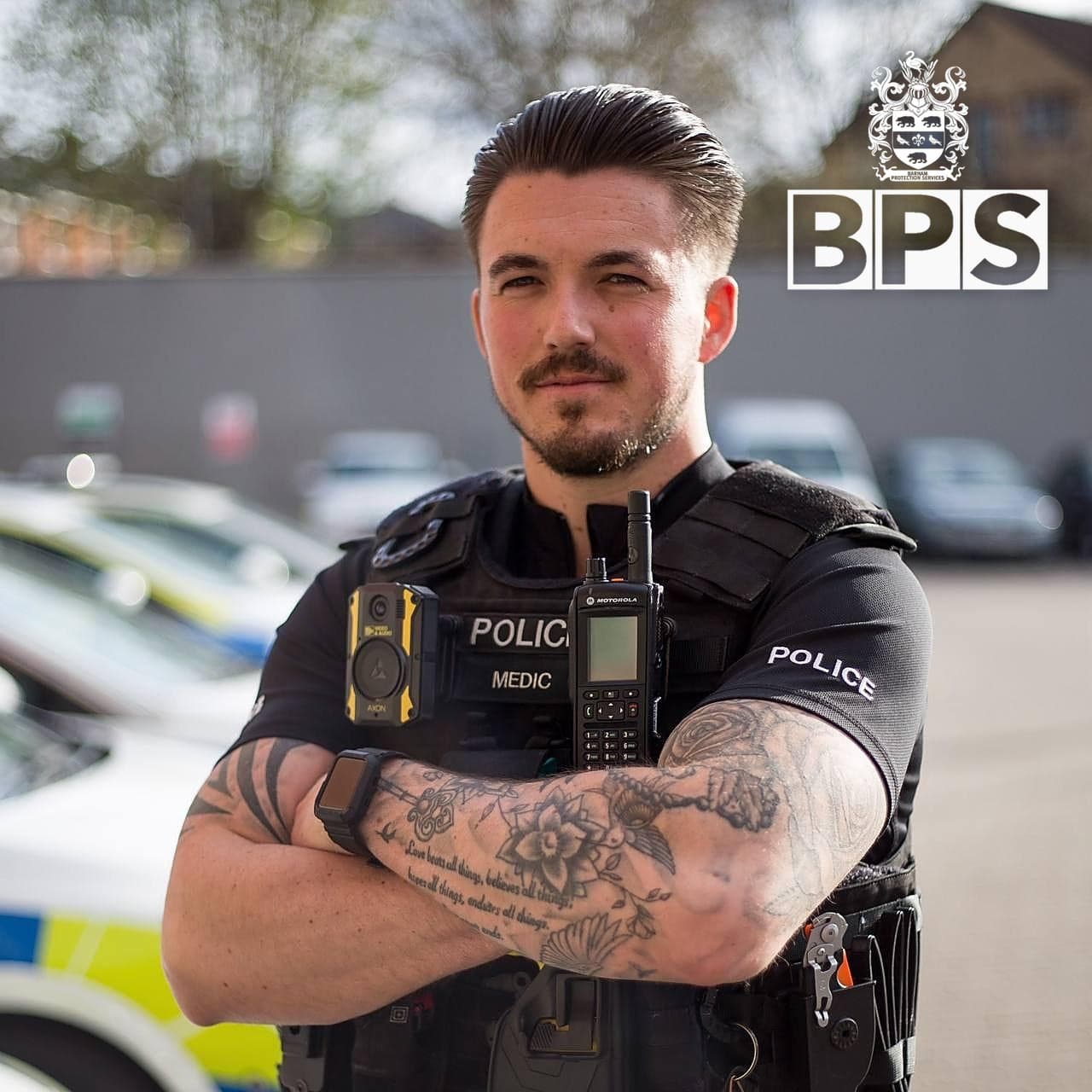
Brett Barham spent just under twelve years in the police, from a special constable at eighteen to a sergeant leading teams of officers, taking in firearms work, a manhunt unit and roads policing along the way. He left to go all in on close protection and behavioural detection, and now runs Barham Protection Services, one of our partners, whose training wing built the first Highfield-accredited Level 3 behavioural detection course in the world. This is his journey, in his own words.
It started with a burglary
At school I was set on design. My A levels were graphic design, IT and product design, and that was the plan. Then my grandad was the victim of a violent burglary in Kent, and I watched the officers who came to the house look after my family. I never forgot the comfort they gave us. That changed everything for me.
I joined as a special constable at eighteen, a volunteer in Medway, the busiest policing area in Kent, and went full time at twenty-one.
Up through the ranks
After probation I moved onto the borough's proactive Community Policing Team, and when my sergeant went on maternity leave I stepped up as team leader. That was my first real taste of leadership, and it was there that I realised being a leader was what I wanted.
Just over three years in, I became an authorised firearms officer on the Armed Response Vehicles and stayed for three and a half years, at times on high-profile protection duties. It was there I also qualified as a TEAMS medic, a scope of practice between FREC 4 and technician, with skills such as needle chest decompression that in the ambulance service only paramedics perform.
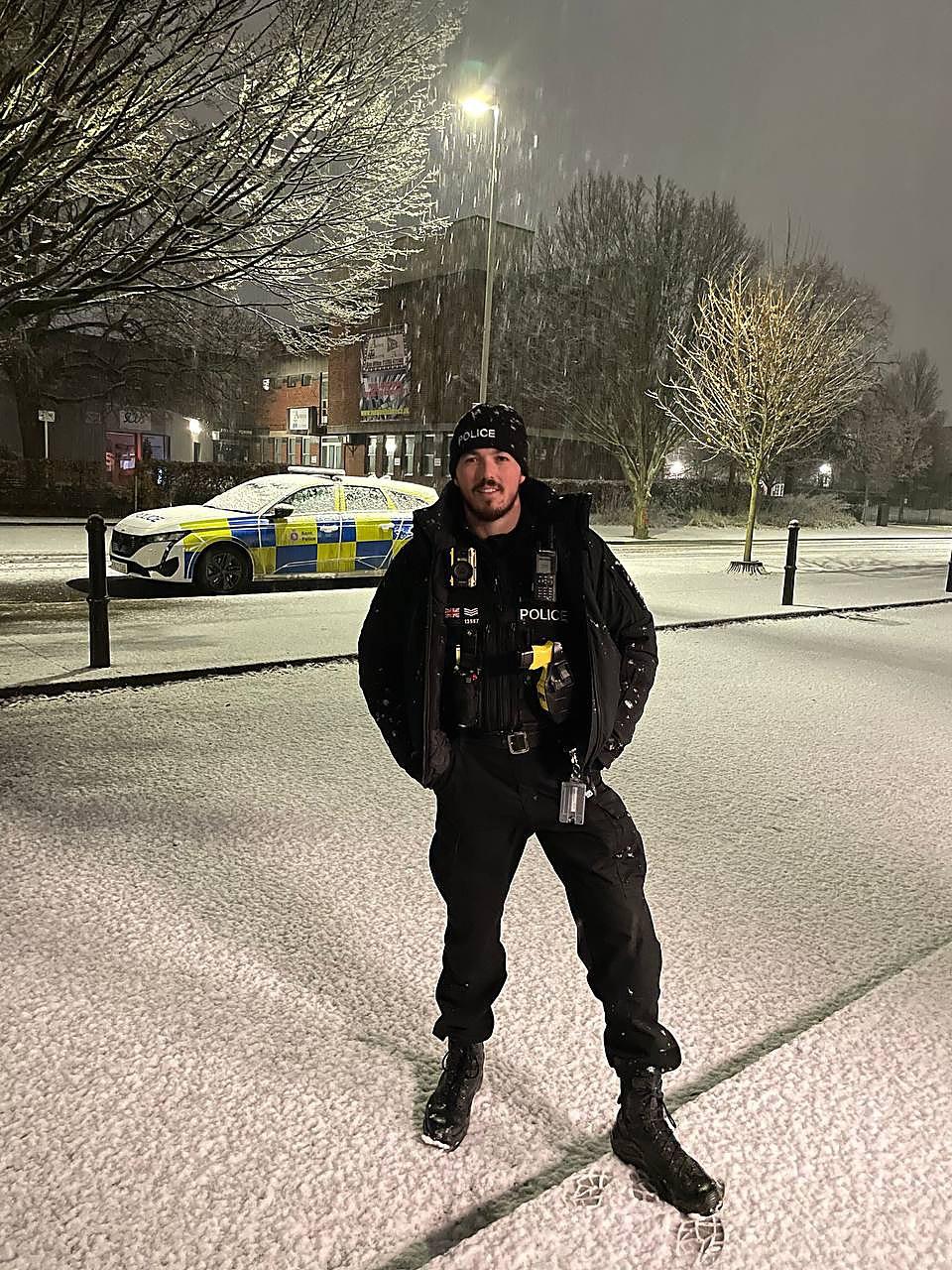
Then came promotion. As an acting sergeant I joined the Proactive Targeting Team, Kent Police's manhunt team, hunting the county's most dangerous and wanted offenders and carrying out covert work, all in plain clothes and unmarked cars. From there I went to the Roads Policing Unit as a temporary sergeant, covering the whole county, and at times I was operational commander on Operation Stack and on the response to the Just Stop Oil protests on the M25. On promotion to sergeant I led a team of eighteen officers in Swale, covering the Isle of Sheppey, Sittingbourne and Faversham, and then did the same in Maidstone.
Developing younger officers, their skills and their confidence, was the part of the job I loved most. It was on the Armed Response Vehicles and the Proactive Targeting Team that what I do now, close protection and behavioural detection, started to take shape.
When behavioural detection clicked
There was a moment when behavioural detection clicked for me, and I can tell you exactly where. Whitstable.
I was on the Proactive Targeting Team, and someone was robbing elderly people along the seafront. We had no idea who, so we went looking. We picked him out on behaviour alone: the nervousness, the evasiveness, the subtle behavioural cues that people usually do not notice. He shone like a lighthouse to me. We followed him along the seafront and up the high street, and we struck on nothing more than what we had seen. He had committed another robbery that morning and still had the property on him. He was the man who had been preying on vulnerable people along that stretch of coast for a good couple of weeks.
That was the moment it clicked.
He shone like a lighthouse to me. We struck on nothing more than what we had seen.
Why I left
Promotion showed me a side of policing I had not seen. On the Armed Response Vehicles and the proactive teams the job was simple: find the people who needed locking up, and lock them up. Once I was working alongside chief inspectors and superintendents, it became about results and performance targets. Officially the police do not have targets any more. In practice they very much do, you just do not see them until you reach a certain rank. Maidstone showed me the politics up close, and not long afterwards I decided to go.
The real reason though was how the police treats its own. A good friend of mine went through something terrible on duty, and the support he and his team got afterwards just was not good enough. The higher I climbed, the less the job was about people. It was about results, and about colleagues tripping each other up to look better than the next person. I was one of the highest performing officers in the county (modest, I know), and while the results kept coming, everyone senior was my best friend. I could see how quickly that would disappear. I no longer believed in the organisation, so I left.
The hardest email I ever sent
I will be honest about this part, because I think it matters. When I decided to go, I had nothing lined up. Sending that resignation email was the most frightening thing I have ever done. I am not ashamed to say I sat at my kitchen table with it open, pressed send, and cried like a baby.
That is also why the advice I give now is the advice I did not take myself. Do not jump until you have got somewhere to land. Build something before you leave. I have been lucky in some respects, but I worked so hard in the police that I knew if I put the same effort and care into my own business, I could not fail.
Sending that resignation email was the most frightening thing I have ever done.
The first six months
Scary, but good.
I went straight onto a close protection course in London. Honestly, it was not a great course. It was very basic and felt a little Mickey Mouse, and not realistic enough to prepare anyone for real tasks. But it gave me a grounding and my licence, and it opened the door to some very good work. It also showed me exactly how poor training in our sector could be, which is a big part of why we later built our own.
On day two of that course I met Ryan, now a good friend, who was head of operations for a manned guarding company protecting watch shops across the UK. He offered me a job there and then. I started as soon as the course finished and stayed about a year, with great people, a great management team and interesting work. It also taught me that door supervisor level deployments and managing manned guarding were not for me, because of staff reliability and problems that simply should not have been problems. At the same time I was working close protection at a Premier League football club, which I loved for nearly two years, and quietly building my own company on the side. When our first proper contract came in, in September 2024, I made the jump. I stopped working for anyone else, put everything into Barham Protection Services, and I have not looked back.
Building BPS
It has grown massively. Our first proper contract was two years ago last month. Today we run more than eight full-time contracts, with twenty-six operatives working for us full time every day and 216 ad hoc operatives on our books.
BPS is an operational company first, and I am an operator first. I did not leave the police to become a trainer. I left to do close protection and behavioural detection for real, and as managing director I still deploy with my teams at least once a week: parliamentary work, high net worth protection, residential security, driving and medical cover. That keeps me close to the people doing the job.
The training side goes straight back to that first course. It showed me how little credible behavioural detection training existed, so we built our own. We were the first in the world to have a Level 3 behavioural detection course accredited by Highfield. Our graduates now work across the UK and internationally, and we are seen as the go-to for behavioural detection training, which I am exceedingly humbled by and incredibly proud of.
People first, always
Looking after the people doing the job matters more to me than anything. Our own team as much as our clients and principals. Which, if I am honest, is exactly what the police stopped doing for me.
Rank does not make someone a leader. It makes them a manager. A lot of people in senior roles are there because they interview well and pass exams, not because they look after their people. The person worth becoming is the one on the shoulder of their team, backing them up, checking they are okay after a horrible job, buying the pizza after a bad shift, taking the calls so they can rest. Since leaving, I have found far more of those people in the private sector than I expected.
Managers do things right. Leaders do the right thing.
What I would tell someone still in
Look hard at who you call a leader, and be the one you would want to follow. Take the good parts from the good leaders, and avoid being the bad you saw in the poor ones. Everything is a lesson, and every hurdle is a chance to surpass your own expectations and other people's.
Police officers amass a fantastic range of skills and experience that is in demand across a huge array of industries. Spend the time researching and networking before you go. Be prepared for some real jealousy, too, if you leave and make a success of yourself. Take it as a compliment. Jealousy is the tribute mediocrity pays to genius.
The harder I work, the luckier I get.
The bottom line
Brett's route was his own, but the shape of it will be familiar to anyone who has worn a uniform and wondered what comes next. Lead from the front. Build something before you leave. Put people first, especially when the organisation above you stops doing it. Turn what you already know, on the ground, into something the private sector needs.
That people-first instinct is the thread through all of it, from why he joined to why he left to how he runs BPS now. It is the same reason we do what we do.
If you are a service leaver working out your next move, you do not have to do it alone. Our community is full of people who have already made the jump, and are happy to hold the door for the next one. Join the community.
At a glance
Brett joined as a special constable at eighteen and served just under twelve years, rising to sergeant and taking in firearms work, a manhunt team and roads policing.
Behavioural detection clicked for him on an operation in Whitstable, picking out an offender on behaviour alone.
He left because the higher he climbed, the less policing was about its people, and he no longer believed in the organisation.
Sending his resignation with nothing lined up was the most frightening thing he has ever done. His advice now: build something before you leave.
He went all in on Barham Protection Services in September 2024. It now runs eight-plus full-time contracts with twenty-six full-time operatives and 216 on the books.
BPS is operational first. Brett still deploys weekly, and that keeps the training honest.
Its training wing built the first Highfield-accredited Level 3 behavioural detection course in the world.
His leadership creed: rank makes a manager, not a leader. People first, always.