Our founder, Fraser Coleman, on his grandfather, the Cenotaph, and what Remembrance asks of us.
This week, the country falls quiet. At eleven o'clock on the eleventh of November, traffic slows, conversations trail off, and for two minutes a nation that rarely agrees on anything stands still together.
For a lot of people it passes as routine. The poppy goes on, the silence comes and goes, the same familiar words are read out. For those who have served, it rarely feels that way. The day is heavier, closer, and far more personal.
Rather than mark it with the usual lines, we wanted to share something real. We asked our founder, Fraser Coleman, what Remembrance means to him.
Fraser is a veteran. He was also raised by one. His grandfather, a World War II veteran, brought him up after his parents died, so for Fraser, Remembrance and family have always been bound together. Here is what he told us.
A quiet morning
There was no parade this year. Fraser spent Remembrance Sunday at church, on his own. The Last Post played, and he marked mass and remembrance together in the quiet of it.
No crowds, no ceremony. Just a man, a church, and the people he was there to remember. He calls it "a solemn, needed moment."
Marching for his grandfather
The two years before were different. Fraser marched at the Cenotaph, among the Afghan Veterans Community and the Scots regiments, and saw his first commanding officer there, Sir Nicholas Borton, a man he holds in the highest respect. It is a day that has stayed with him.
For all the scale of it, though, he marched for one man. His grandfather, the World War II veteran who raised him after his parents died.
It felt like I was paying homage and respect to him, if nothing else.
Remembering, and mourning
Ask Fraser whether there is a difference between remembering and mourning, and he does not pull the two apart. He calls it "a difficult question, a strong, powerful question," and takes his time before he answers.
For him, they are one and the same. His own path, he says, has been "somewhat unique." Fraser has known more loss than most, and these are things you think long and hard about. They never leave you.
When we remember, we mourn. When we mourn, we remember.
Who he thinks about in the silence
In the two minutes, Fraser's thoughts widen out well beyond the people he knew himself. He thinks about the sheer scale of it. How many were lost. How many families waited. How many children waited. How many had to endure.
He draws a line between those who went forward and those who stayed behind. Those on the front, he says, endured in the most horrific ways. The ones left at home carried something of their own.
Those in the back endured in their own purgatory.
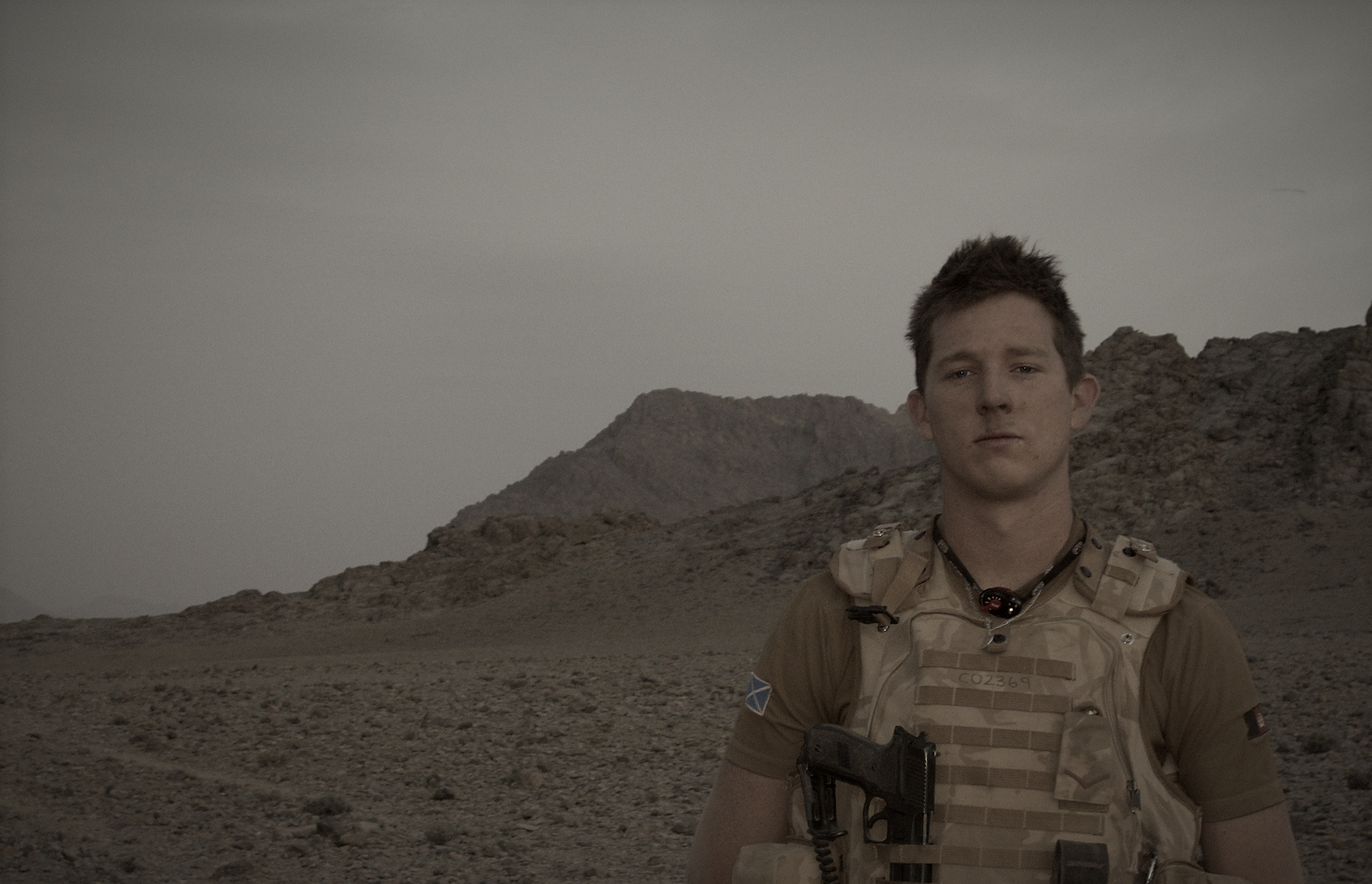
Afghanistan, 2008.
Easier, or harder
Years on, he does not find the day any easier. He does not find it any harder either. For Fraser it sits somewhere else entirely, in a single worry that never quite goes away.
"It's never easy nor hard," he says. The hard part, if there is one, is "worrying that their sacrifice was in vain."
What he tells his daughter
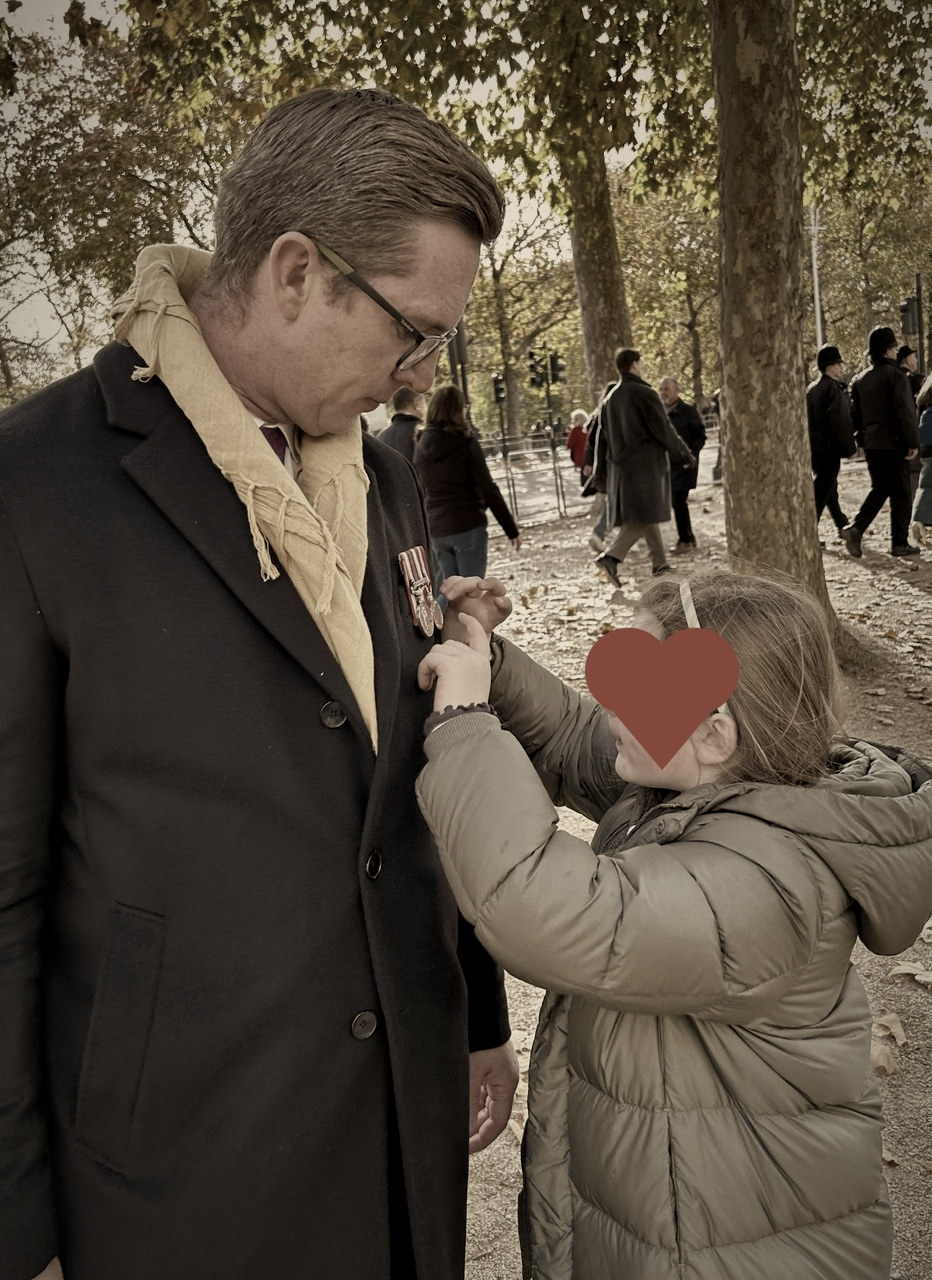
That worry is exactly why he is careful about how he hands the day down. With his daughter, he keeps it positive, steering her towards the meaning of it rather than the loss. Last year she was there in London, proud to watch her dad march. The handing on has already begun.
He wants her to understand that what was given was not given for nothing, and that remembering is the very least any of us can do.
Their sacrifice was never for nothing. The smallest thing we can do is remember them.
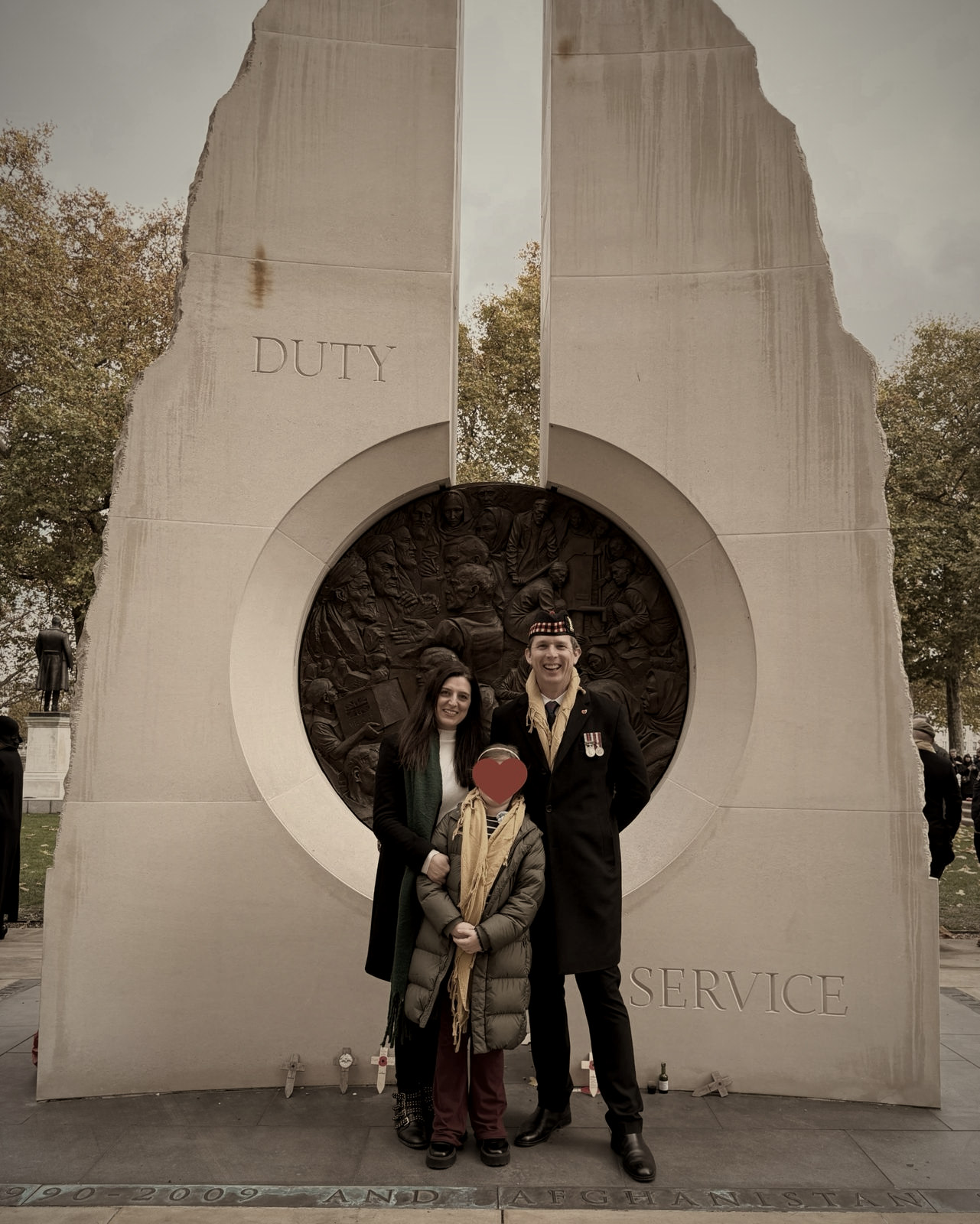
When Fraser stands in the silence, he stands for the man who raised him. The old soldier who stepped in for a boy who had lost his parents. He carries him forward still.
That is what remembrance comes down to in the end. A promise, kept. We hold on to them so that what they gave was never wasted, and we hand it to our children so that it never will be.
So this week, when the silence falls, give it to someone. A face. A name. A story passed down. Stand still, and let them in.
We will remember them.