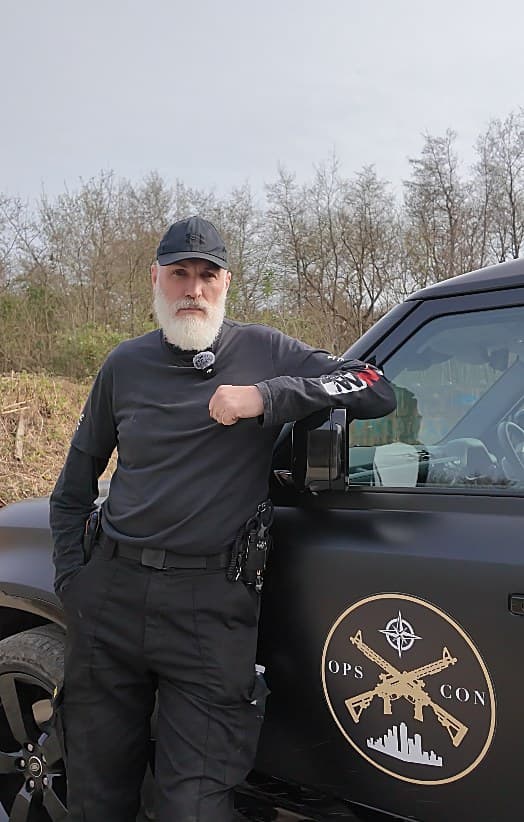
David spent 32 years in uniform, eight in the Army and twenty-four in the police, before retiring in 2024. One of our founding members, he is also one of the most measured planners we know, and he has now made the transition twice. This is the second one, into the security industry, in his own words.
Two uniforms, two goodbyes
I left the Army in 2001 and the police in 2024. Both times I had spent a long while thinking about my options, planning and preparing, and both times the final day felt the same. Like a weight had been lifted. Like the shackles had been released. A sense of freedom.
I retired from the police on a full pension in September 2024, aged 55. I could have stayed on, but the job had changed so much, and I could see it getting worse, so I went at the earliest point I could.
Both times, the last day felt like the shackles coming off. A sense of freedom.
What I knew the second time
I am what the personality tests call an ISTP. Rational, measured, logical. I put a lot of weight on research, planning and preparation, so I approached leaving the police exactly as I had approached leaving the Army.
The one big difference was the safety net. This time I had a monthly pension landing before I did a single day of paid work. That takes the pressure off finding it. It is a luxury not everyone has, and I do not take it for granted, but it shaped every decision I made next.
The plan came first
I looked at the skills and experience I had built over 32 years, thought about my interests and my personality, and landed on two options that could offer well paid work. Offshore or remote medic, or the security industry.
The medic side was already in me. Reservist combat medic, volunteer coastguard search and rescue, four years as a dedicated police medic, plus work for a private ambulance and event medic company. The security side ran just as deep. Detective in area CID and then nationally in counter terrorism. Doors part time during my Army days, retail security between the Army and the police, behaviour detection operations, public order at protests. On the transport beat you learn the commercial side fast too, because closing a station even briefly costs the train company dearly, and you carry that awareness into every decision.
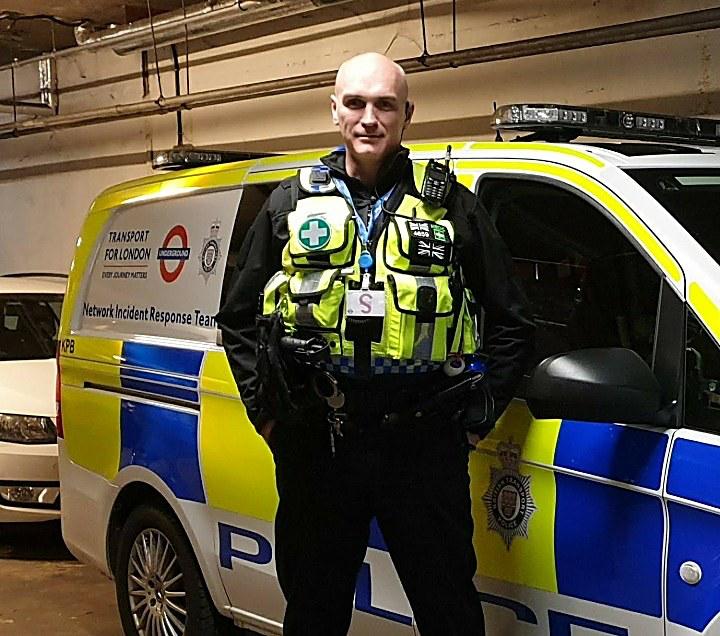
So security was a natural fit. I set about proving it on paper.
A year of stacking tickets
First the HSE Offshore Medic at DDRC Plymouth. To be signed off as clinically competent to work on your own you need a minimum sixty hour clinical placement, so I flew out to Guadalajara in Mexico for four weeks. Two weeks hands on in the emergency department under the doctors, two weeks out on the ambulances with the paramedics. An amazing experience, and it raised my game as a medic.
Then a behaviour detection course with Barham Protection Services, to put certification behind the policing experience. Then STCW and BOSIET, the tickets for working at sea and offshore. Then my close protection course with 3RG down in Poole, which was very good. Then the SRMC with Frontier Risks, which was outstanding.
I did not stop there. In October 2025 I did Cosain's three day Media Safety Advisor course, and I have done a lot of that work since. I went on to the inaugural SENTINEL programme with The Ops Con, which was one of the best courses I have attended in forty years, and there have been a few. I am currently working through the Certified News Media Safety Advisor course with Watchkeeper Ops.
A word on all that training. Every course built on the one before, so none of it was wasted, and whatever the quality of the course, you always come away having learned something. But the biggest return is not the certificate. It is the networking. Every course puts you in a room with people already doing the work, and those are the contacts that change things.
The first task
That first job. I was fortunate. A bloke I met on the SRMC course pointed me towards Insight Risk Management, who run security for a high-profile corporate AGM. I got in touch, and the indomitable Harriet onboarded me with supreme efficiency.
It was a three day gig. Two days of paid training and accommodation, then the AGM itself on day three, a huge operation involving over 120 security operatives. It was headed up by my twin brother from another mother, an absolute legend and a lovely man, Greg. We often laugh about how people mistake me for him. I was on the sixteen man stage protection detail, the last line of defence if anyone tried to reach the board. I was truly impressed by how the whole operation was run, and I learned a great deal from Greg and a few others, two of whom I would specifically mention, Luke and Mark.
The medic myth
Here is one that surprised me. I thought my FREC4 (First Response Emergency Care, level four, the trauma-focused first aid qualification) and my medical experience would have me in demand as a medic on the CP side. It has not made the slightest difference. I have never once been hired for my medical capability. The thing that gets me most of my work is the policing background.
That has not changed my view on medical training one bit. I am a big believer in it, but note that I say training AND experience. There are far too many in this game holding a FREC3 or FREC4 who never do any medical work, or any medical CPD, the ongoing practice that keeps a qualification worth the paper.
A qualification certificate is like an MOT for your car. It only proves you passed an assessment once upon a time.
Skill and knowledge fade is a real thing. They degrade over time. There is plenty of event medic work out there, so not much excuse for it, in my book.
Translating the experience
The hardest part for a lot of cops coming out is not the skills themselves. It is translating your experience into language the private sector understands, so they can see the value in it. All of it is relevant. The trick is making that obvious to someone who has never done the job.
The work I do most now proves the point. A lot of media safety advisor work, and a lot of physical penetration testing, which I never trained for on a course because my policing experience carries it. That same experience is crucial in the media backwatch work too.
What nobody puts in the brochure
Now the unglamorous part. Pay rates, and the race to the bottom across the industry. CP training courses seem to have taken over from the actual operational side as the way to make money. That goes hand in hand with low standards, and with the sub-sub-sub contracting that runs through everything. And then there is the phoenixing, companies folding and rising again under a new name to dodge what they owe.
I have been genuinely lucky. Every company I have worked for has paid well and on time. The pension helps here too, mind. It means I can hold a minimum rate I am willing to work for, and walk away from the outfits that pay low, late, or not at all.
What I would tell myself the day before
If I could sit with myself the day before I handed in that warrant card, I would not give general advice. I would say one specific thing. Better out than in.
Police officers, even over a five year career, amass a fantastic range of skills and experience that is in demand across a huge array of industries and sectors. Spend the time researching and networking. Yes, LinkedIn. It is becoming a bit like Facebook, but used properly it is a goldmine.
I try to practise what I preach. I recently had cause to call the police out for a personal matter. The officers who came were brilliant, and before they left I gave them each my card and said that if any of them ever started thinking about life after the job, to get in touch for a no BS natter and some advice. One of them passed my details to another chap who had already left. I have since helped him find work.
That is the bit that matters most. You get out, you find your feet, and then you turn round and hold the door open for the next one.
The bottom line
David's route was his own, but the shape of it is not. Research and planning. Translating what you already know into what the market wants. Holding your standards when the industry is racing the other way. And leaning on the people who walked out of the same door a step ahead of you.
That last part is our core purpose.
If you are a service leaver working out your next move, you do not have to do it alone. Our community is full of people who have already made the jump, and are happy to hold the door for the next one. Join the community.
At a glance
He has transitioned twice, Army in 2001 and police in 2024, and both times planning made the difference.
A pension is a safety net that changes the maths. It let him set a minimum rate and walk away from poor ones.
He stacked qualifications with intent, each course building on the last, and the contacts made on them mattering as much as the certificate.
His first task was a stage protection detail on a high-profile corporate AGM, found through someone he met on a course.
The medic myth: the qualification alone got him nothing. Training AND ongoing experience is what counts.
The real skill for leavers is translating your experience into language the private sector understands.
The honest downsides: pay, the race to the bottom, low standards, and companies that fold to dodge what they owe.
Better out than in. Research, network, use LinkedIn properly, and pay it forward.