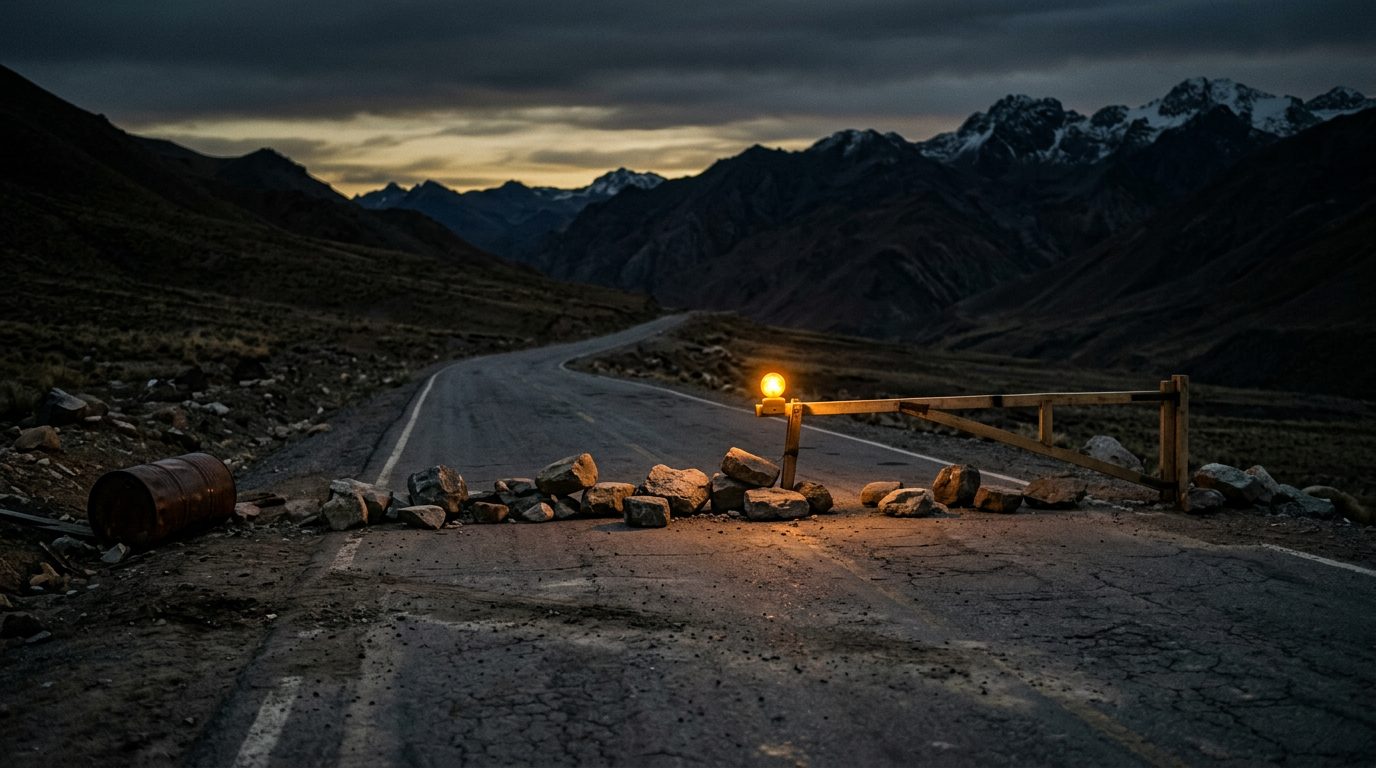
Bolivia remains under a state of emergency, and the powers it grants are worth knowing before any ground movement in the country. The FCDO advises that police and the armed forces can remove roadblocks, disrupt protests and detain those not complying with the measures for up to eight hours without charge.
For a protection team, the operational risk sits in two places. The first is movement: roadblocks and the response to them can close routes with little notice, and a blocked road is not the place to be caught between demonstrators and security forces. The second is detention: an eight-hour hold without charge for non-compliance is a real exposure for a driver or a close-protection operator who misreads a checkpoint or a cordon.
The FCDO also advises against all but essential travel to the Chapare region of Cochabamba Department, including Villa Tunari and highway routes 4 and 24 that pass through Chapare. That zone should be treated as off the route map for routine tasking.
The practical guidance is straightforward. Do not attempt to cross or force a roadblock, build slack into any ground plan, keep documentation to hand, and treat the situation as one that can deteriorate without warning. Read the current FCDO advice before committing to a movement, as the picture in Bolivia has shifted repeatedly this year.