When the strait is contested, the discipline that keeps a vessel out of trouble is the Best Management Practices for Maritime Security (BMP MS) — the joint framework produced by ICS, BIMCO, INTERCARGO, INTERTANKO, IMCA and OCIMF, and refreshed for the Strait of Hormuz on 20 May 2026 (BIMCO). It is built to support voyage-specific threat and risk assessment, which is exactly the right mindset now: every transit is its own decision, not a routine.
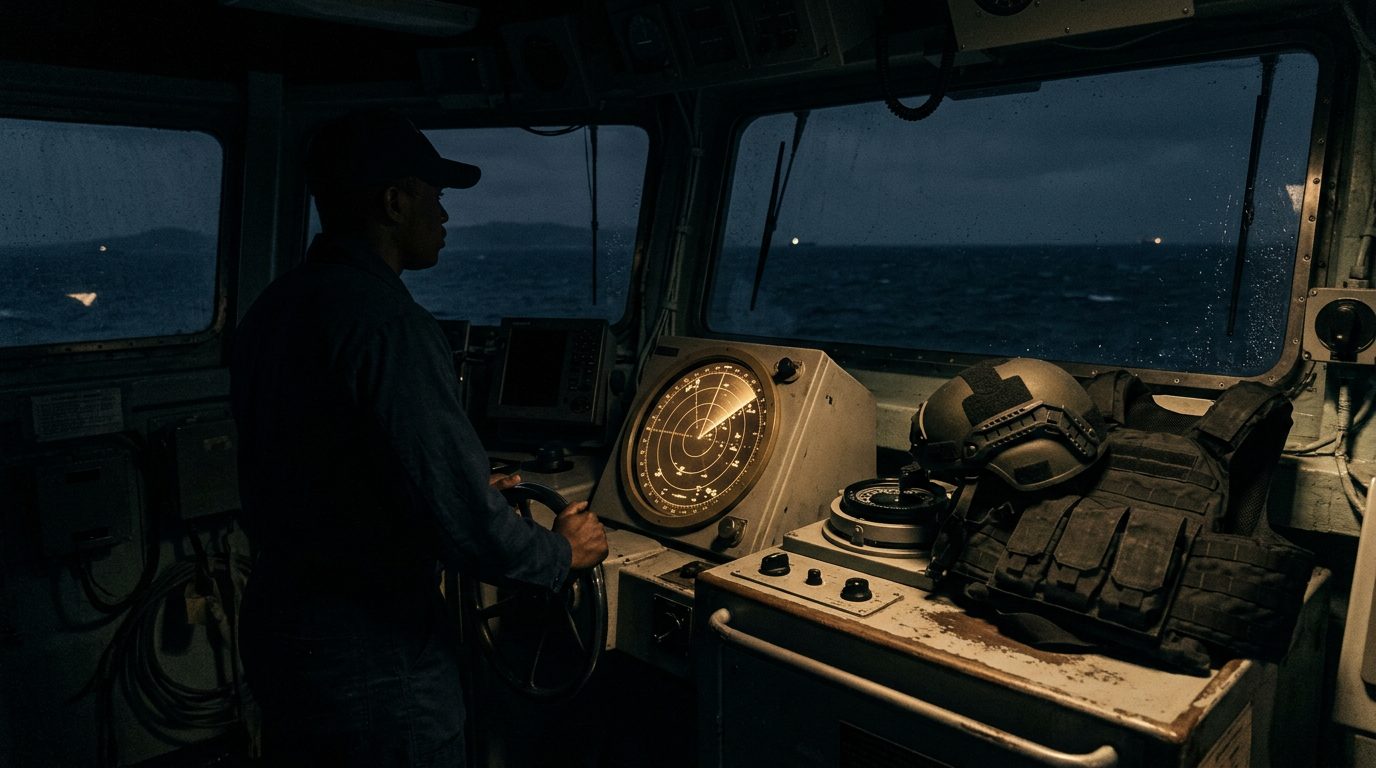
The framework's spine is the same whether the threat is piracy or state action. Register and report to UKMTO before entering the reporting area, monitor VHF Channel 16, and route to cut exposure at the chokepoint by keeping to the southern side toward Omani waters. Hardening follows: reinforced watchkeeping with a dedicated lookout and radar watch, ballistic protection for bridge crew where the assessment warrants it, a mustering and citadel plan, and a communications drill so a distress call goes out fast and clean. The IMO's position now is blunt — its Secretary-General, Arsenio Dominguez, has said non-essential sailings should be avoided (Insurance Journal).
For private security and protective teams with maritime exposure — yacht movements, principal transfers, asset shipments — the BMP posture is the floor, not the ceiling. The current threat is missiles, armed drones and uncrewed surface craft, not boarders, so the emphasis shifts from repelling a boarding to reducing signature and getting off the line of threat: emissions discipline, unpredictable timing, and a firm rule that nothing moves without a fresh risk assessment and a confirmed war-risk position that same day.
Treat any Gulf transit this week as high-risk by default and reversible by design. Every plan should carry a turn-back trigger and a divert option that does not cross the strait. The framework will not stop a missile, but it makes a vessel a harder, quieter, better-prepared target — and it puts the reporting and comms in place that turn an incident into a rescue rather than a loss.