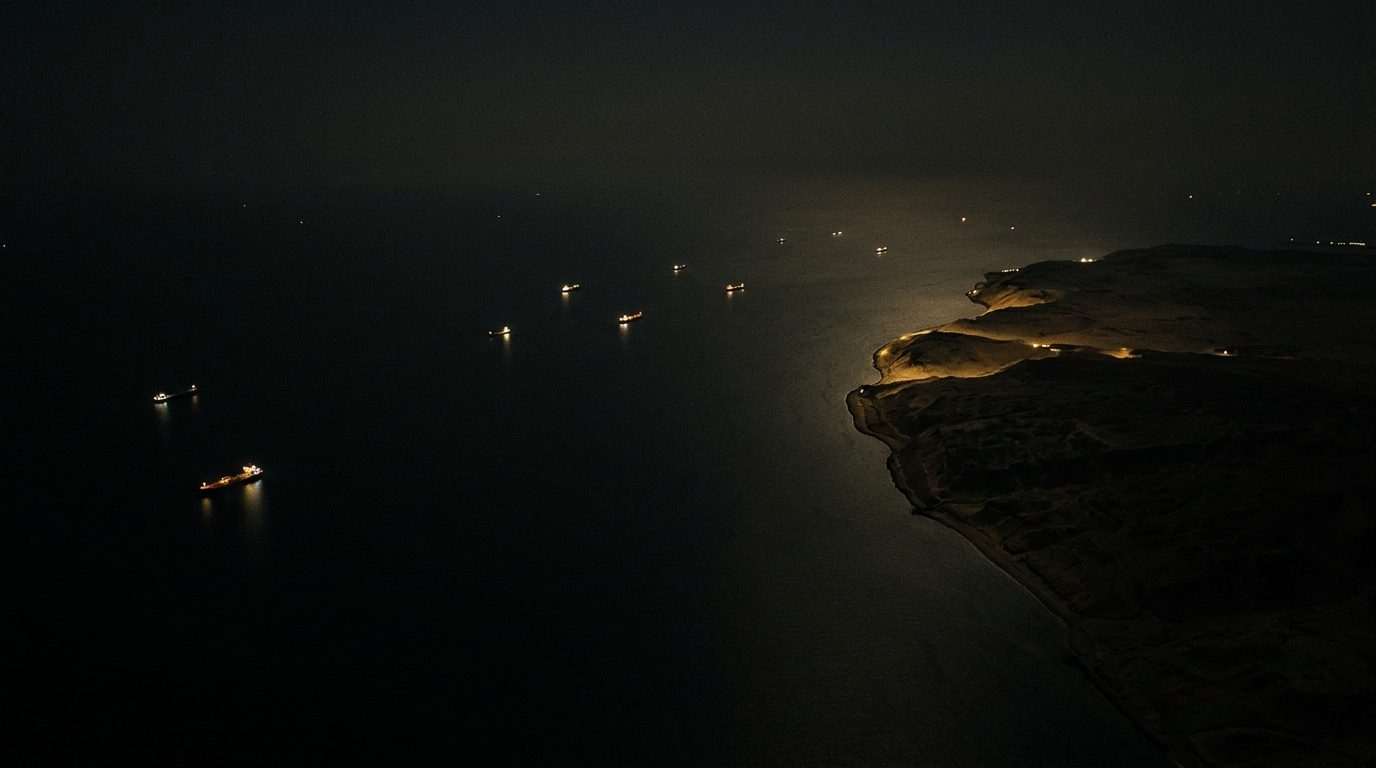
The UN Security Council met on Friday 13 November at Bahrain's request to discuss the threat to regional and maritime security in the Gulf. UN News, which covered the meeting live, reports that transits of the Strait of Hormuz remain about 65 per cent below pre-conflict levels, citing UK Maritime Trade Operations (UKMTO), and that October saw the most incidents since the war began. The UK told the Council the Strait must reopen. This post is for operators and risk managers with Gulf, maritime or regional travel exposure.
What is new
Our reports of 23 October and 2 November covered individual UKMTO incident entries. What is new is the Council meeting and the two figures UN News relays from it. UKMTO's own site could not be read for this post, so the transit figure is UN News's account of UKMTO, and the UN News page read gives no incident count for October.
The Bab al-Mandab Strait and the Red Sea are a separate waterway. UN News reports that transits through the Bab al-Mandab are down by roughly a quarter since the Houthis declared a blockade on Saudi-linked shipping in July. That is not a Hormuz figure.
What the UK said
Dame Sarah MacIntosh, the UK Permanent Representative, said that countries in the Gulf and the wider region have faced repeated Iranian attacks in 2026 on civilian areas, critical infrastructure and economic assets, and that the UK stands in solidarity with its Gulf partners. The UK condemned those attacks and said the Strait of Hormuz must be reopened so that shipping and seafarers can transit safely, in line with international law. It said disruption to these routes has consequences for global trade, energy and food security, warned that the actions of Iran and its proxies, including recent attacks by Iranian-aligned groups in Iraq, risk a spiralling regional conflict, and commended mediators including Qatar. These are the UK's statements. The sources read for this post do not set out what other delegations said.
What the FCDO says about Bahrain
The Foreign, Commonwealth and Development Office (FCDO) last updated its Bahrain advice on 27 October, with updated information on regional tensions. Since 20 August the FCDO no longer advises against all but essential travel to Bahrain, a position it had taken from 23 July. The page's regional tensions section says the context in the Middle East remains deeply unpredictable and the risk of sudden escalation is high, and tells British nationals in or travelling through the region to be prepared for flight cancellations, airspace closures and travel disruption, and to keep departure plans under review, noting that in April 2026 airspace and the King Fahd Causeway to Saudi Arabia closed at the same time.
What it means for operators and risk managers
This is The Ops Con's reading, not the UN's, UKMTO's or the UK's.
Nothing in these sources reports a new incident on 13 November, so the picture is a corridor that is still heavily reduced and still dangerous, not a new shock. For anyone routing vessels, cargo or crew through the Gulf, transits about 65 per cent down and the busiest month for incidents since the war began are planning facts. Build in delay, check war-risk insurance and charter terms against current UKMTO reports, and keep an alternative to any port call that depends on Hormuz. For teams based in or moving through Bahrain, the FCDO's own prompt to keep departure plans under review, with the April double closure as its example, is the practical baseline: hold more than one exit route and confirm each still works before you need it.