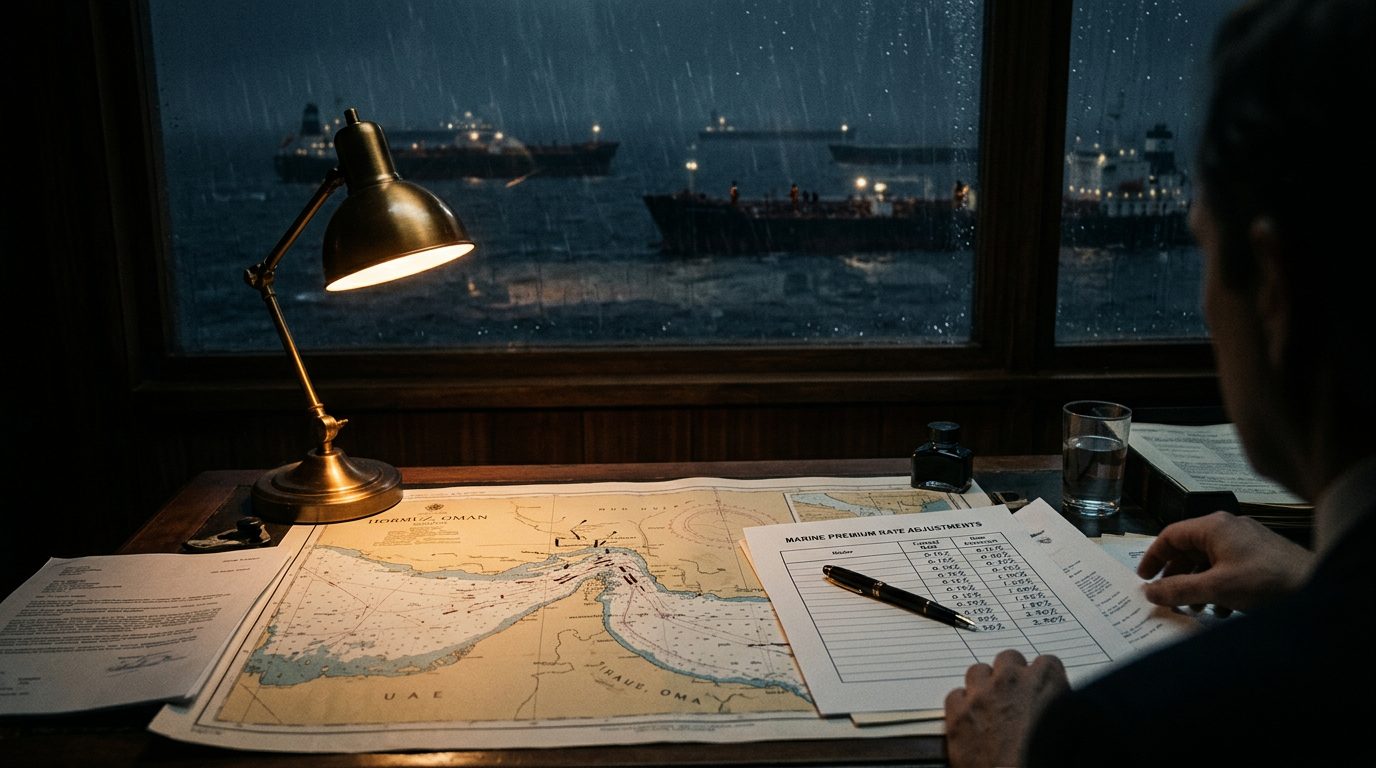
The cost of insuring a ship through the Strait of Hormuz has stopped looking like a temporary spike and started looking like the new baseline.
Reporting in The National on 17 July put hull war-risk premiums at between 3 and 10 per cent of a vessel's value for a Hormuz transit, against roughly 0.25 per cent before the war. Marcus Baker, global head of marine at broker Marsh, said rates can sit anywhere in that 3 to 10 per cent band, with the spread reflecting how underwriters read each specific voyage. On a 100 million dollar tanker that is a war-risk cost of between 3 and 10 million dollars for a single passage, on top of everything else.
Two things follow. The market is not refusing to write the risk, it is pricing it high enough that only cargoes worth the premium move, which is part of why tracked traffic has thinned out. And the human cost is mounting: the same reporting cited an IMO update on 8 July putting around 6,000 seafarers stranded in the region, aboard ships that cannot safely sail or discharge.
For the protective sector the read-across is straightforward. Maritime security demand, from armed teams to risk advisories to crew welfare and repatriation support, tracks these premiums closely. When cover runs into eight figures a voyage and thousands of crew are stuck, the appetite for professional risk management rises with it. Providers positioned for maritime and crisis-response work should expect enquiries to hold up for as long as the strait stays contested.