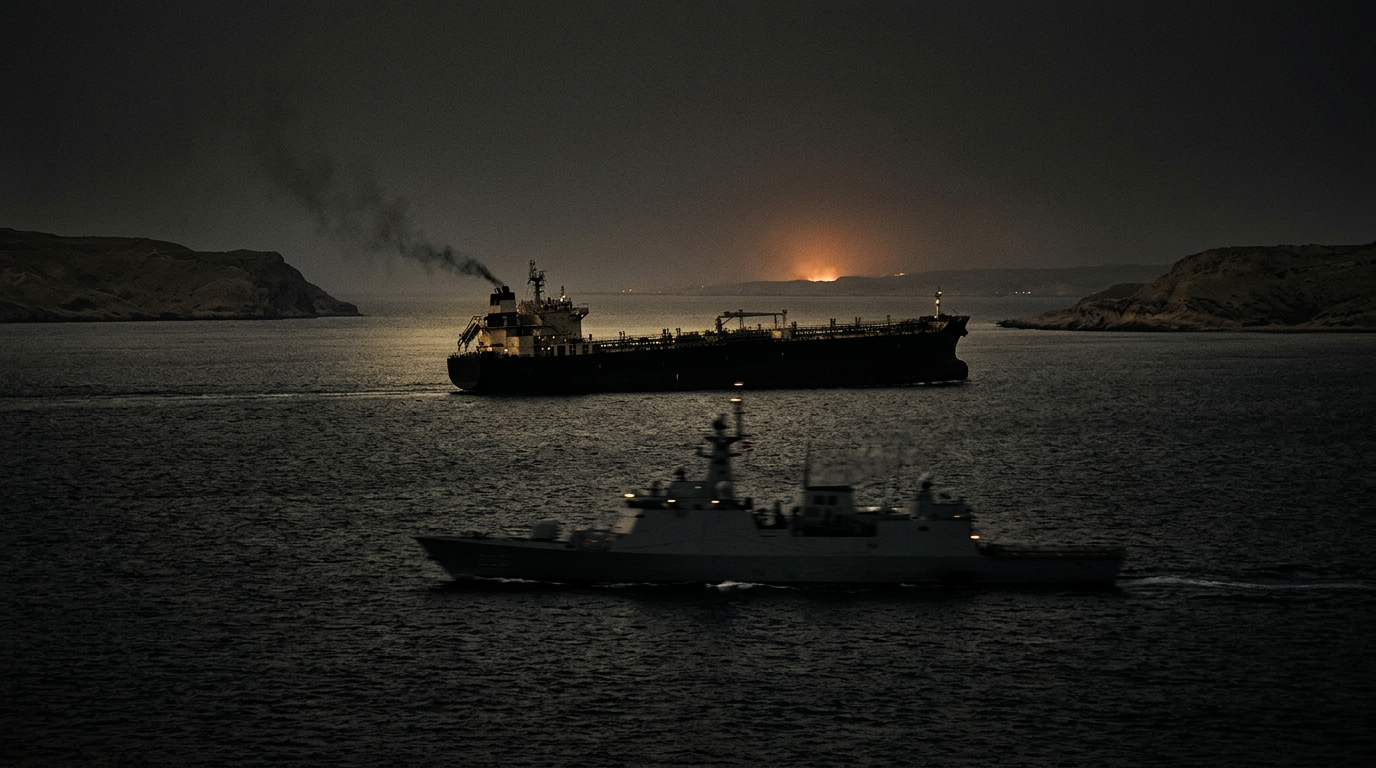
The fragile calm in the Gulf has not held. Open-source reporting indicates the Panama-flagged crude tanker Kiku, carrying more than two million barrels, was struck by a one-way attack drone on 27 June while transiting the Strait of Hormuz, damaging its bridge. No crew were injured and no cargo leak was reported. Days earlier the Singapore-registered container ship Ever Lovely was hit in the same waters.
The US response was immediate. CENTCOM launched two nights of strikes on Iranian targets, reporting hits on military surveillance infrastructure, communications systems, air-defence sites, drone-storage facilities and minelaying capabilities in southern Iran near Sirik and on Qeshm Island.
The attacks land against a deal that is unravelling. The 17 June memorandum of understanding between Washington and Tehran called for a permanent end to operations and gave Iran a 60-day window to make 'best efforts' to allow commercial traffic back through the Strait. That window is now the flashpoint, with the parties disputing the terms. President Trump's public line hardened further: 'There may come a point when we are no longer able to be reasonable, and will be forced to militarily complete the job.'
The shipping picture reflects the risk. Traffic that ran at roughly 178 vessels a day before the war remains down by about 95%, and war-risk premiums sit far above their pre-conflict floor.
Operator implication: treat June's de-escalation as reversible, not resolved. For anyone moving principals, crews or cargo in or near the Gulf, the planning baseline is a contested strait with attacks resuming at short notice. Keep resumption-of-hostilities triggers, evacuation cover and route contingencies live, and read yesterday's easing of Gulf travel advice as a floor that can be withdrawn as fast as it was granted.