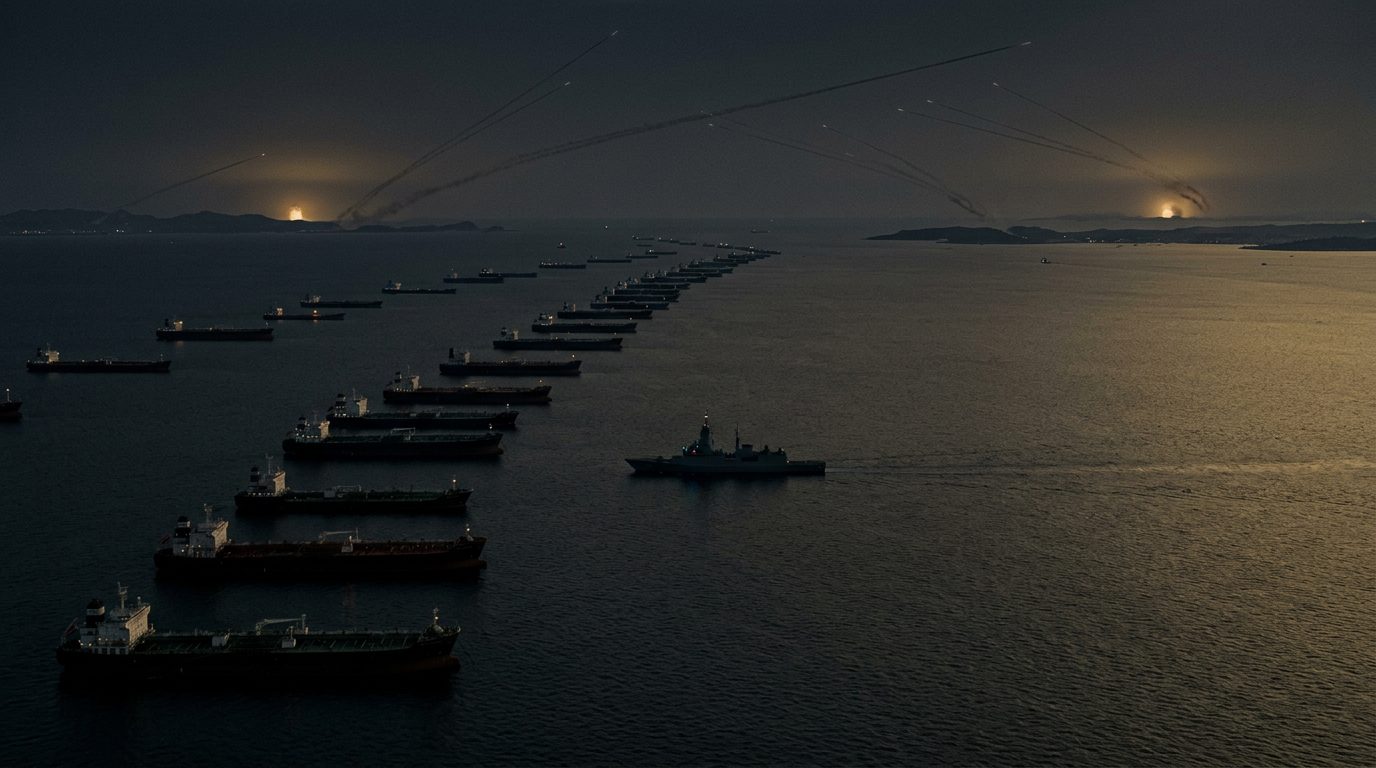
The Strait of Hormuz remains effectively sealed to compliant tanker traffic as the US and Iran trade strikes for a second week.
US Central Command has kept up a run of nightly strikes on the Iranian coast. Open-source reporting from Al Jazeera put it at an eighth consecutive night into 18 July, with targets around Sirik in Hormozgan province, Qeshm Island and Shadegan in Khuzestan. CENTCOM framed the campaign as an effort to further degrade Iran's ability to threaten commercial shipping in the strait, hitting coastal surveillance, air defence, and missile and drone storage.
Iran has answered against the wider Gulf rather than at sea. Al Jazeera reported Iranian strikes on two Kuwaiti bases and the destruction of the Bonji desalination plant, cutting water for around 10,000 people, with a second desalination plant on Qeshm damaged. Iranian officials put their losses at more than 50 killed and over 500 wounded across roughly three weeks of US strikes. Two US service members were killed and one reported missing in a Friday attack in Jordan.
The waterway itself has stopped working as a trade route. Around 130 vessels a day crossed before the war. Al Jazeera, citing Lloyd's List Intelligence, reported that no vessel above 10,000 deadweight tonnes had transited the southern Oman-hugging lane with its AIS switched on since 7 July, with at least two ships believed to have crossed dark. The US reimposed its naval blockade of Iranian ports on 15 July.
Operator implication. There is no low-risk way through the Gulf by sea right now. The northern lane carries compliance and interdiction exposure; the southern Oman-coast lane is where Iran has concentrated its tanker attacks. Treat any principal movement or asset transit touching the Gulf as a war-zone planning problem, not a routing inconvenience. Assume degraded comms, contested airspace over the littoral, and knock-on effects on Gulf-state water and power. Build in the delay: the strait is not reopening on anyone's schedule but the belligerents'.