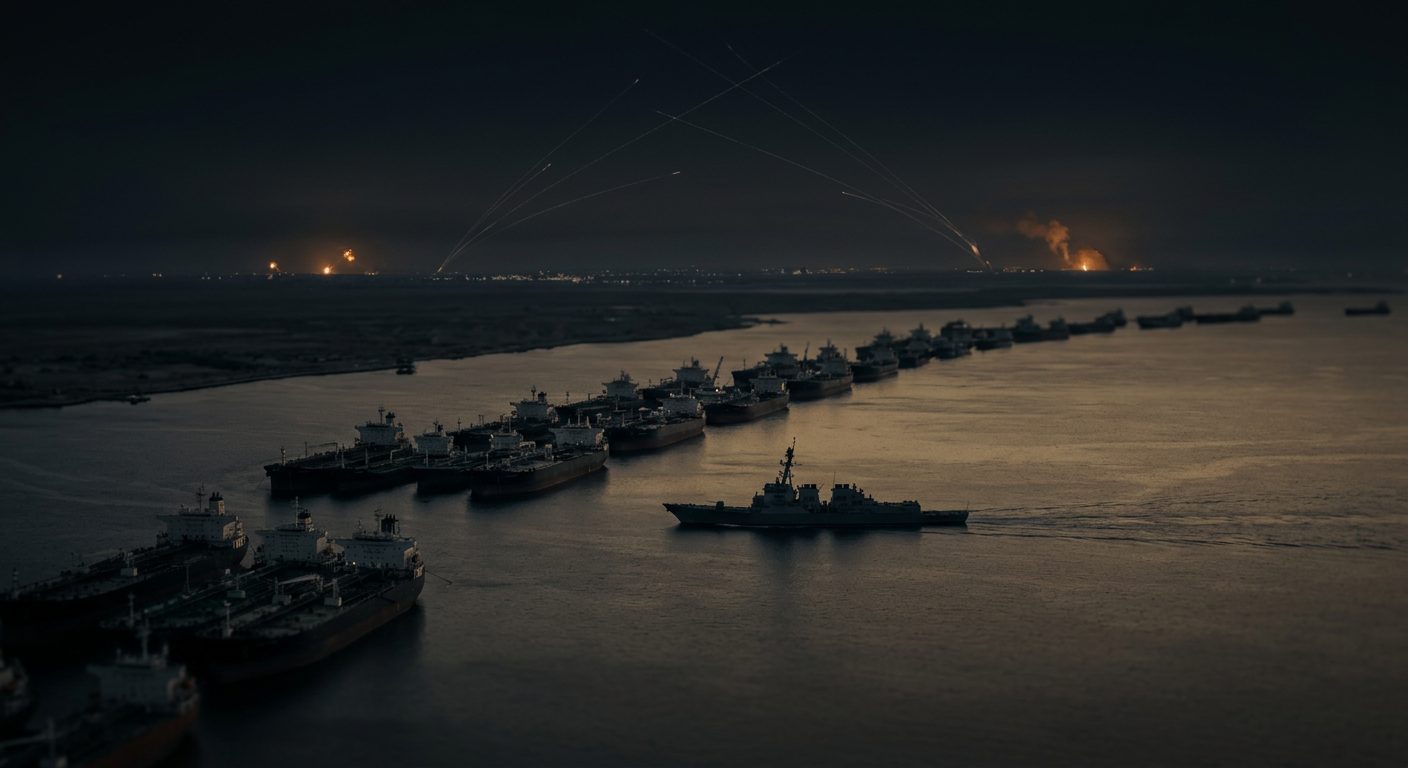
Two weeks on from the tanker attacks that collapsed the truce, the Strait of Hormuz remains effectively closed to compliant commercial traffic and the fighting around it has widened rather than eased.
The trigger was 7 July, when Iran's Revolutionary Guard Corps struck commercial vessels off Oman, including the Qatari LNG carrier Al Rekayyat. That broke the interim understanding the US and Iran had signed in June, and by 8 July the strikes had resumed. On 12 July Iran declared the strait closed until, in its words, the end of US interference in the region, and launched coordinated attacks on five Gulf states the following day, including Al Udeid in Qatar, bases in Kuwait and Bahrain, the port of Duqm in Oman, and Prince Hassan airbase in Jordan.
The US response has run in successive nightly waves. Open-source reporting from Al Jazeera on 16 July described strikes on Greater Tunb Island and on command, air defence, missile and drone sites near Tehran and Bandar Abbas, with at least 35 people reported killed and more than 300 wounded since that round began. CENTCOM has also reimposed a naval blockade on Iranian ports and says it disabled a non-compliant tanker heading for Kharg Island using Hellfire missiles.
The cumulative toll on shipping is now significant. Open-source tallies put it at around 17 seafarers killed since late February, roughly 15 vessels abandoned, four captured and three sunk, with more than a dozen others damaged.
For operators the picture is simple and unforgiving. The sea lane is a shooting gallery and effectively barred to legitimate traffic. The airspace over the Gulf is contested, with Iranian missiles and drones reaching bases and infrastructure across the GCC. Movement planning for principals or teams in or through the region has to assume both routes are exposed, that Gulf-state infrastructure is a target set in its own right, and that any window of calm can close within hours of the next exchange.