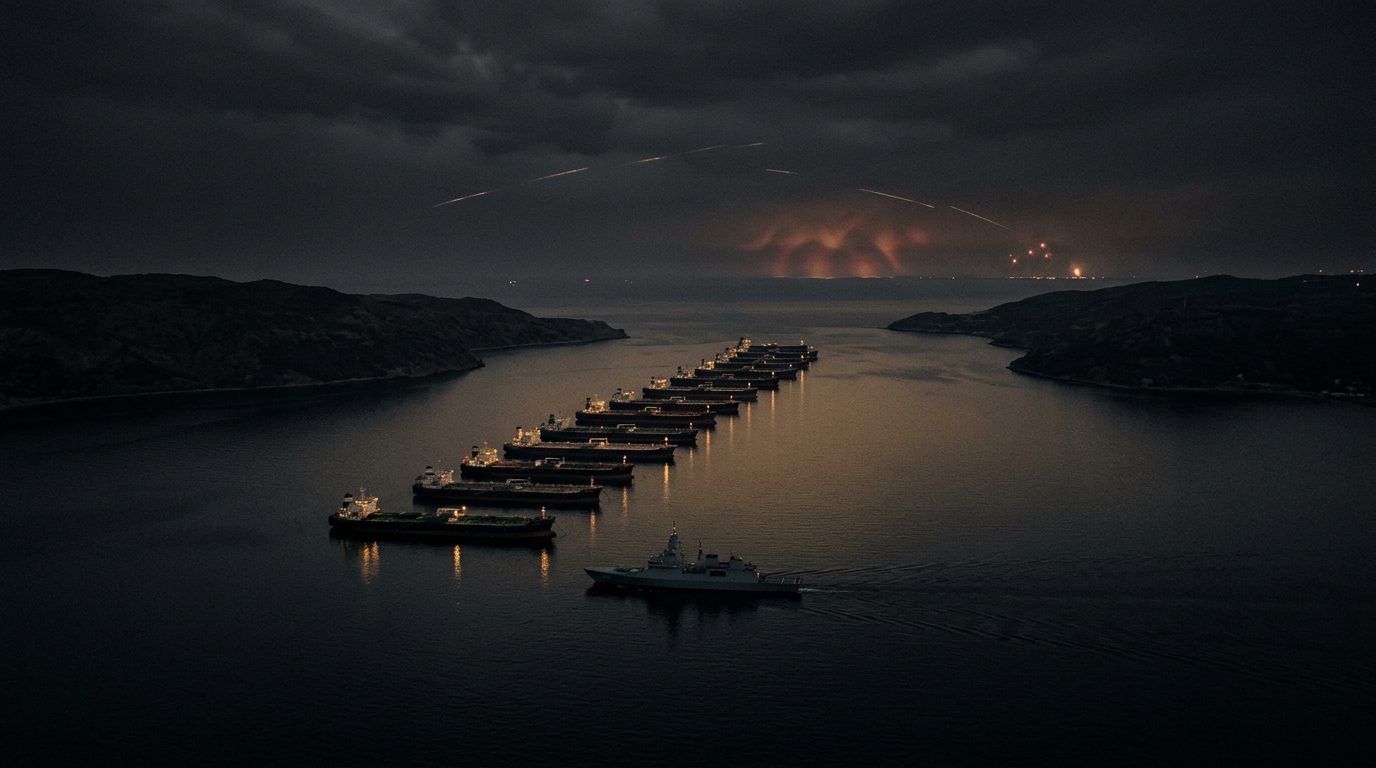
The Strait of Hormuz remains the harder half of a two-front maritime crisis. The US naval blockade of Iran was reinstated on 14 July, and open-source tracking of the wider crisis records the June truce breaking down on 8 July after Iran struck multiple commercial ships in the strait. A fresh round of US strikes on Iran ran overnight into 22 July, keeping oil at a multi-week high near 92 dollars a barrel.
The threat to shipping is not abstract. On 15 July, Iran struck two UAE supertankers, the Mombasa and the Al Bahyah, operated by Adnoc Logistics and Services, killing one sailor and injuring eight, according to The National. Those are the casualties behind the insurance numbers and the empty sea lane.
Traffic has collapsed to a handful of transits a day. The two chokepoints now closed at once, Hormuz and Bab el-Mandeb, sit over a quarter of the world's oil and gas by Al Jazeera's reckoning, which is why every escalation moves the oil price and the war-risk rate together.
For operators, the read-across is simple. Gulf sea movement is a decision about safety, not availability, and it should be treated as high-risk for the foreseeable. Anyone with crews, assets or principals transiting the region needs a live contingency plan and a route that does not assume either strait reopens soon.