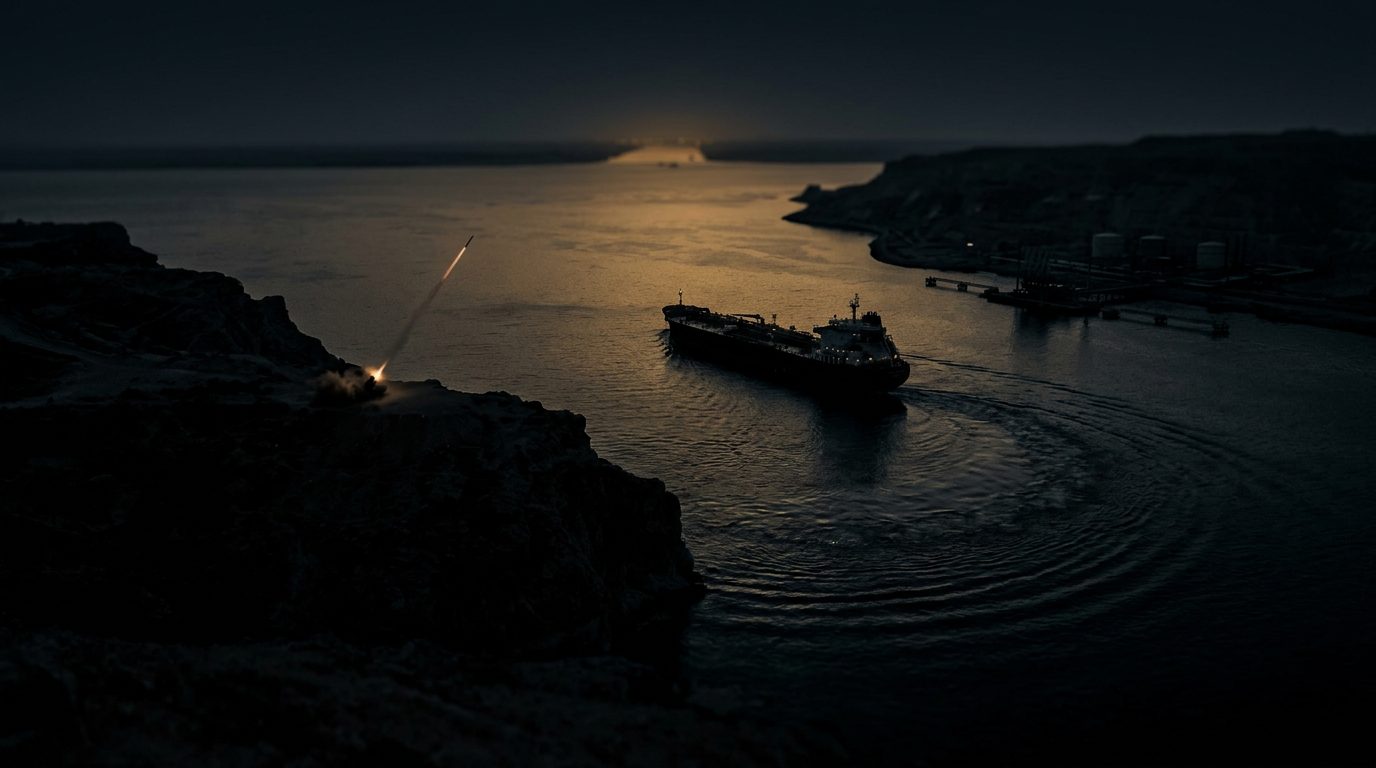
The Houthis declared a naval blockade on Saudi Arabia through the Bab el-Mandeb strait on 20 July, and the effect is already visible on the water. Within a day, tankers carrying Saudi crude for China and India turned back in the Red Sea and rerouted toward the Suez Canal after warnings from the group, according to open-source reporting.
Saudi Arabia condemned the move. Its foreign ministry said it would take all necessary measures to protect its ships, per Al Jazeera.
The disruption is in the loadings data. Crude leaving Saudi Arabia through Bab el-Mandeb fell 36 per cent in the two weeks to 13 July, dropping to 6.1 million barrels a day from a peak of 9.5 million on 29 June, according to Kpler figures reported by The National. Riyadh has been pushing more than 70 per cent of its exports through the western port of Yanbu since Hormuz shut, so the Red Sea route was already carrying the load, and it is now the pressure point.
The strategic weight is why this reaches beyond the Gulf. Around six million barrels a day of crude bound for Asia passes through Bab el-Mandeb, roughly two thirds of it Saudi. Al Jazeera reports that closing the strait on top of the already-shut Strait of Hormuz could put about a quarter of the world's oil and gas supply at risk. Brent rose again on 22 July, up 1.3 per cent to around 92 dollars a barrel, on the supply-disruption fears.
For operators, a second maritime chokepoint is now contested at the same time as the first. The Red Sea was the workaround for Hormuz, and that workaround is narrowing. Expect knock-on effects on Gulf and Red Sea movement, on energy prices, and on any principal or business with exposure to the region.