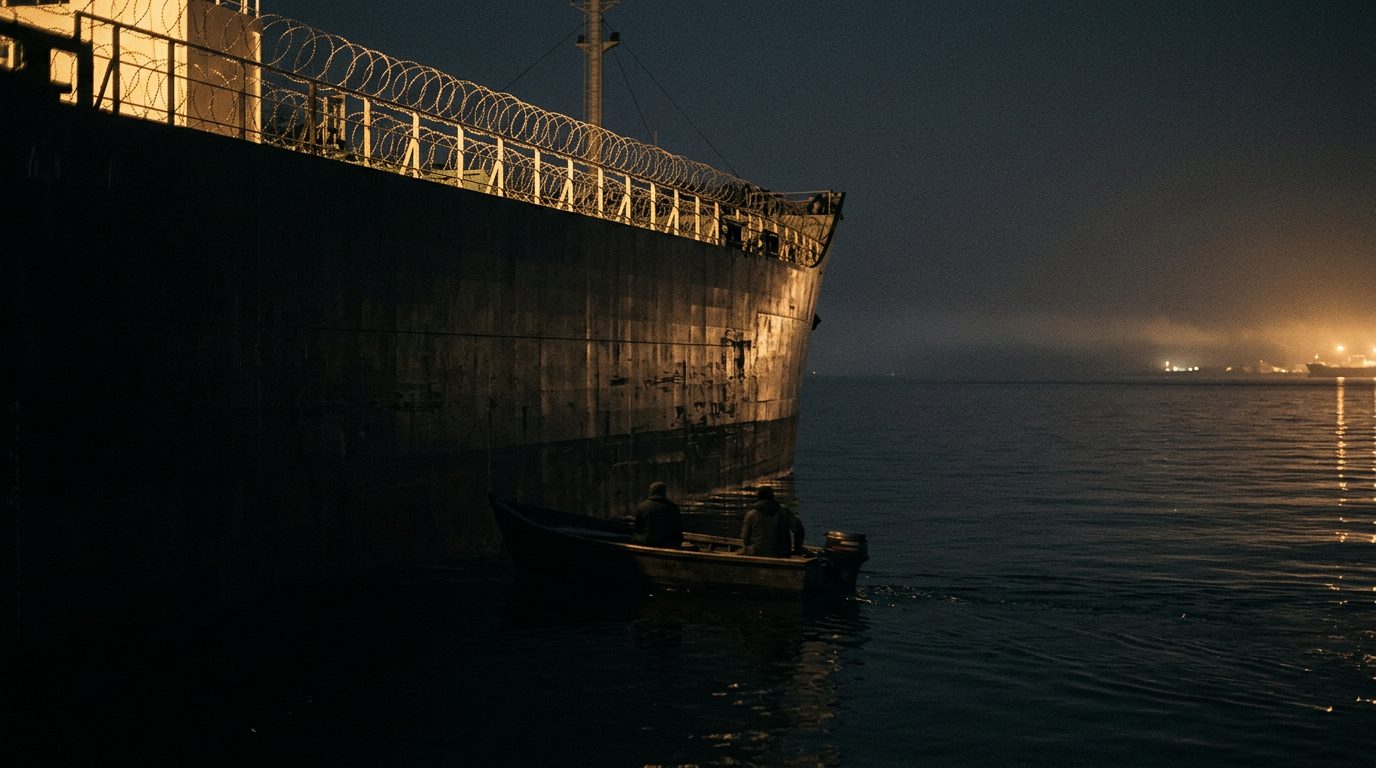
Three ships hijacked in the Gulf of Aden region this year have been freed, but five seafarers reportedly died during the operation to free one of them, the International Maritime Organization (IMO) said on Friday 2 October. Twenty-two seafarers are still held aboard a fourth ship.
The IMO says 44 seafarers were freed from the HONOUR 25, the SEAMULL (also known as SIBU 1) and the EUREKA, which were held by pirates and armed robbers after being seized between April and August 2026. IMO Secretary-General Arsenio Dominguez said he was saddened to learn of the loss of five seafarers during the rescue of the HONOUR 25 on Tuesday 29 September, in Somali waters, and that several other seafarers were seriously injured. The IMO thanked the Government of Somalia for its efforts in securing the releases. It does not say who carried out the rescue or how the crew members died beyond describing them as having "reportedly died in the crossfire of rescue operations".
Mr Dominguez added: "We must not forget the 22 seafarers who remain in captivity onboard the ASANA, which was also taken hostage by pirates and armed robbers earlier this year."
The EU naval force, EUNAVFOR Operation ATALANTA, has tracked the run of hijackings since April. Its update of 29 July records the HONOUR 25 hijacked off northern Somalia on 21 April while en route to Mogadishu, the EUREKA hijacked on 2 May while anchored off Qana Port in Shabwa, Yemen, and the ASANA hijacked on 17 July about 65 nautical miles southwest of Mukalla, Yemen. As of that update, the four vessels then held, including the SWARD, were anchored inside Somali territorial waters, very close to the coast. On 24 August, after the SEAMULL was hijacked on 20 August, the IMO said a sixth vessel was being held and that more than 90 seafarers were captive, warning: "We cannot allow the resurgence of piracy in the Gulf of Aden and surrounding waters to go unaddressed." On 11 September ATALANTA reported the hijacking of the GLAMOR 38 nautical miles southwest of Balhaf, Yemen, the day before, resolved the same day when the pirates abandoned the vessel, and called it the seventh piracy case since April 2026.
The FCDO's Somalia advice says there is still a significant risk of piracy in the Gulf of Aden and Indian Ocean, and that "Pirates can attack up to 1,000 nautical miles from the Somali coast or more." It says the combined naval counter-piracy forces assess that sailing yachts should not enter the designated high-risk area because of the risk of hijacking, and that "Terrorists and criminal groups, including piracy groups, are involved in kidnapping."
What it means for operators
The releases do not end the threat. At least one ship and 22 crew remain held, the IMO describes piracy in the region as resurgent, and the attacks have reached both the Somali coast and the Yemeni side of the Gulf of Aden, including a ship at anchor. Treat any transit or tasking in the Gulf of Aden and western Indian Ocean as a live hijack and kidnap risk.
A rescue is itself a high-risk moment. The HONOUR 25 deaths were reported during the operation to free the crew, not during the seizure, so crews and embarked teams need drilled actions for a military or law-enforcement boarding as well as for a pirate one. The IMO urges vessels in the region to conduct thorough security risk assessments and to implement the industry's Best Management Practices; today's tradecraft piece sets out what that guidance asks for.