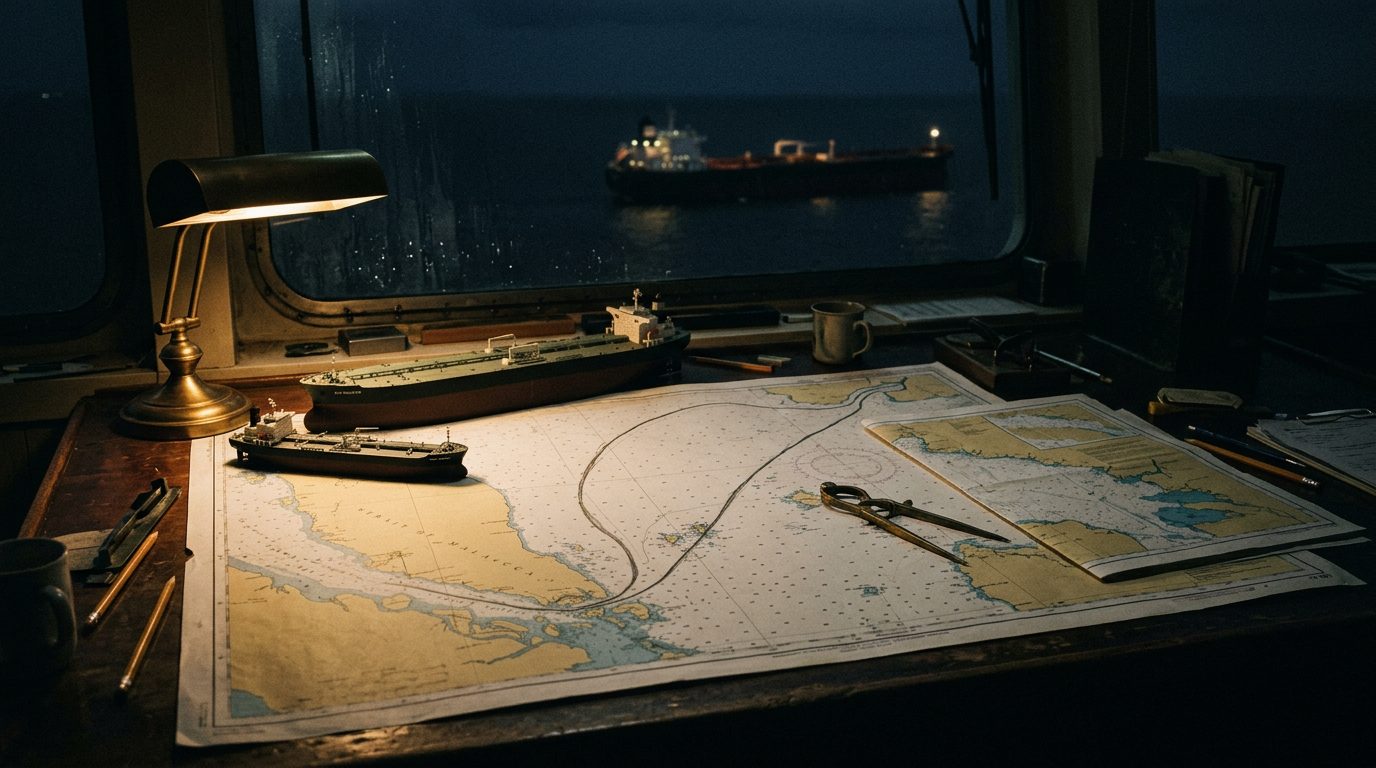
The instinct when a chokepoint closes is to find the way around it. For Saudi crude leaving the Red Sea, that way around is the Suez Canal, and it is a poor substitute.
The distance penalty is real. Al Jazeera reports that moving a cargo from Yanbu to South Korea via Suez stretches the voyage from roughly 24 days to about 54, more than doubling the time on the water and the capital tied up in it.
The harder constraint is the ships. Fully laden Very Large Crude Carriers sit too deep for the Suez Canal, so a Saudi VLCC cannot simply reroute north. Owners have to lighten the cargo through a ship-to-ship transfer or move the oil in smaller Suezmax tankers, both of which cost time and money and add handling risk. Yanbu was already carrying the weight, exporting about 4.1 million barrels a day in June and taking on roughly 64 per cent of the Saudi oil that would otherwise have left through Hormuz.
The operator takeaway is that there is no clean relief valve here. Around six million barrels a day of Asia-bound crude is exposed, and the reroute that looks like an answer on a map is longer, more expensive and only partly usable in practice. Anyone modelling supply-chain, fuel-cost or travel exposure for the second half of the year should assume friction on both routes, not a smooth diversion around one.