With the IMO reporting that five seafarers reportedly died in the rescue of a hijacked ship off Somalia this week, it is worth going back to the guidance the IMO tells ships in the region to follow: Best Management Practices Maritime Security (BMP MS), the shipping industry's consolidated counter-piracy and maritime security guide. IMO circular MSC.1/Circ.1601/Rev.2 of 30 June 2025 records that BMP MS was issued in 2025, replacing the previous Global BMP, BMP5 and BMP West Africa, and invites governments to advise their ship operators and crews to act on it.
This piece pulls out the parts most relevant to protection teams: the citadel, armed guards, and conduct during a hijack or an armed boarding.
The citadel
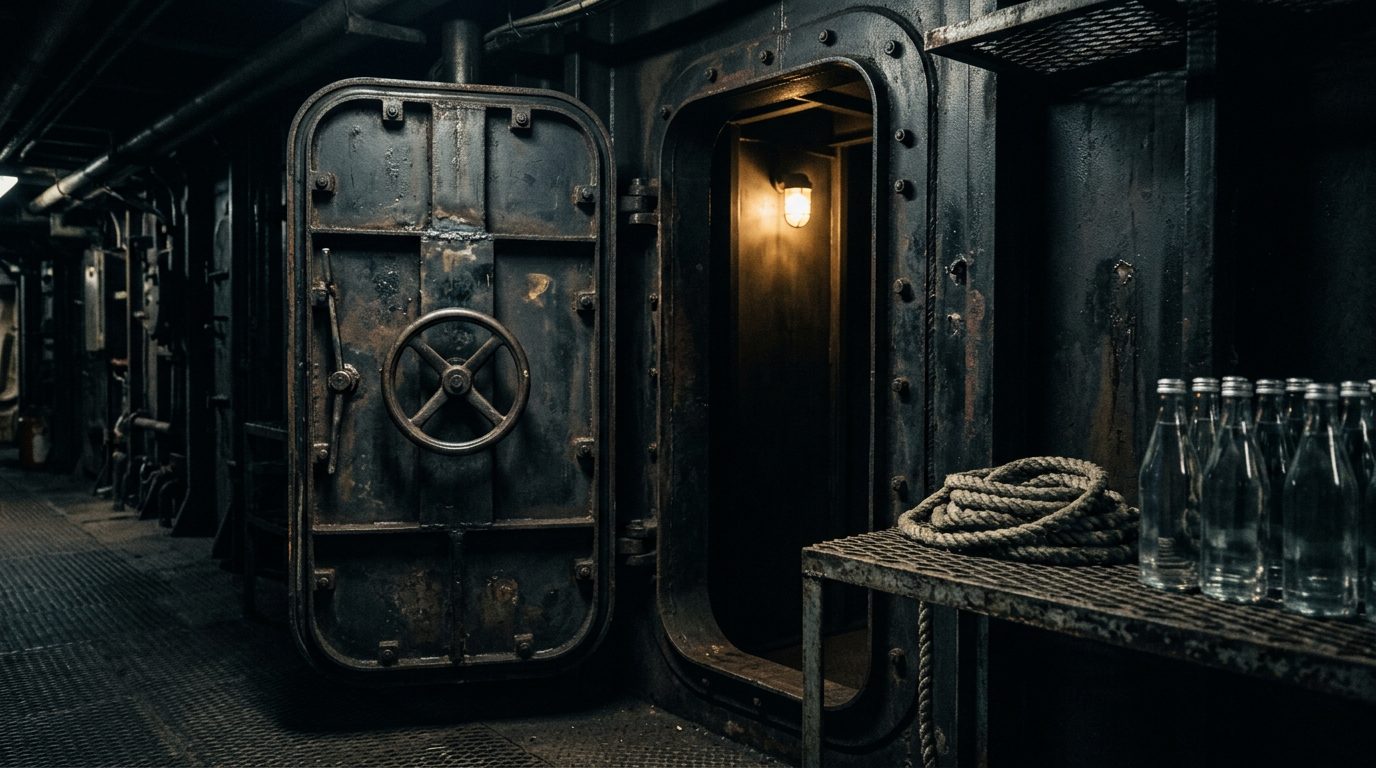
BMP MS describes the citadel as a secure location where the crew can retreat if intruders board. It "should accommodate the entire crew and any extra staff for 3-5 days", with VHF and SATCOM, independent power, bottled water, food and sanitation, and two-way communication with company headquarters and naval or law-enforcement forces. Satellite antennae must be independent of bridge systems, and the guidance suggests keeping the CCTV recording unit inside the citadel so intruders cannot damage it. If propulsion and steering cannot be controlled from the citadel, the ship should be stopped before the crew enters it. "The Master should decide when to use the citadel."
Two points matter most for anyone planning for an intervention. First, the guidance says that in a piracy case the crew should not leave the citadel until they have confirmed the pirates have left or the military provide a safe word, and that this could take days. Second: "Military forces may require all crew to be accounted for and in the citadel, with two-way communication, before boarding." A head count that cannot be passed to a rescuing force is a gap in the plan.
ATALANTA's account of the GLAMOR incident on 10 September shows the sequence working. Before the pirates boarded, the crew stopped the vessel, shut down all systems and went to the citadel; after show-of-force flights and with international forces heading to the area, the pirates abandoned the ship and the crew were reported safe.
Armed guards
BMP MS is cautious. "BMP does not recommend or endorse the general use of armed security personnel or Security Escort Vessels (SEV) to safeguard merchant ships", leaving it to individual ship operators. Where a private maritime security company (PMSC) is used, "Shipping companies should only employ PMSCs certified to the current ISO 28007-1:2015 Guidelines for Private Maritime Security Companies". Before privately contracted armed security personnel (PCASP) embark, the guidance lists a Flag State letter permitting armed guards, a P&I Club letter confirming cover is not prejudiced, and a war risk letter confirming no change in cover. The rules for the use of force must be acceptable to the Flag State and the company, and the Master's overriding authority must be clearly understood. "PCASP should be used only as an additional layer of mitigation and protection, not as an alternative to other measures." And: "The ship’s crew must not handle or use firearms."
If the ship is taken
The guidance notes that "pirates will typically seek to kidnap seafarers". For a hijack and hostage situation its list of dos includes staying calm, staying together, accepting the captors' leadership while keeping the crew's rank structure, conserving water and essentials, and keeping routines. Its don'ts include offering resistance, arguing with captors, taking photographs, hiding valuables and bargaining for personal privileges. For any state or military action on board it advises keeping low to the deck with both hands covering the head, keeping hands visible, being ready to be challenged on identity and separated by nationality, and cooperating fully.
What it means for operators
For CP teams moving principals by sea, on yachts or on commercial and offshore vessels in the Gulf of Aden or western Indian Ocean: confirm the vessel has a citadel that meets the BMP MS standard, that your team is in its muster and head count, and that your actions on a hostile boarding and on a rescue boarding are rehearsed with the Master and any embarked guards. Check the PMSC's ISO 28007-1 certification and the three insurance and Flag State letters before you rely on armed guards. And remember the FCDO's warning, citing the combined naval counter-piracy forces, that sailing yachts should not enter the designated high-risk area at all.