When advice moves as fast as it did in Ethiopia this week, the question for a team on the ground is simple: stay or go, and who is helping. The FCDO's own guidance on crises abroad answers the second part plainly, and every close protection plan should be built around that answer.
Start with what the FCDO says it is not. "We do not have a general duty of care to British nationals abroad." It says the help it can give in a crisis "may be limited, particularly in a country where we already advise against travel", and that it "will not send" its staff "into a situation where we judge that their safety could be seriously at risk."
On evacuation it is just as direct. Military aircraft or ships are used only "in extreme and rare circumstances", and "you should not expect HMG to evacuate you and should ensure you have your own emergency plans should you need to leave a country." Where commercial flights stop, the FCDO may lay on a charter, but you may be charged for the seat.
Then the part most likely to catch a team out. For victims of terrorist attacks abroad, government ministers can activate the FCDO's Exceptional Assistance Measures, which exist because many travel insurance policies exclude terrorism, and which can cover medical evacuation, immediate medical expenses and getting home. That help "will not be made available to those who have travelled to a country or region for which the FCDO had advised against all travel immediately prior to the incident." When a no-go line moves at short notice, as it did twice in Afar on Thursday, that condition moves with it, and it is the all travel line that counts, not all but essential.
So the plan has to stand on its own. The FCDO's preparation list is short and practical, and it maps straight onto a protective team's checklist:
Know the employer's evacuation and contingency plan, and make sure the employer holds next of kin details.
Keep passports and visas current and secure, for the principal, the team and any family travelling. The FCDO says to consider entry clearance for likely transit countries, because local passport and visa services may close in a crisis.
Keep vehicles fuelled and generator fuel as full as possible.
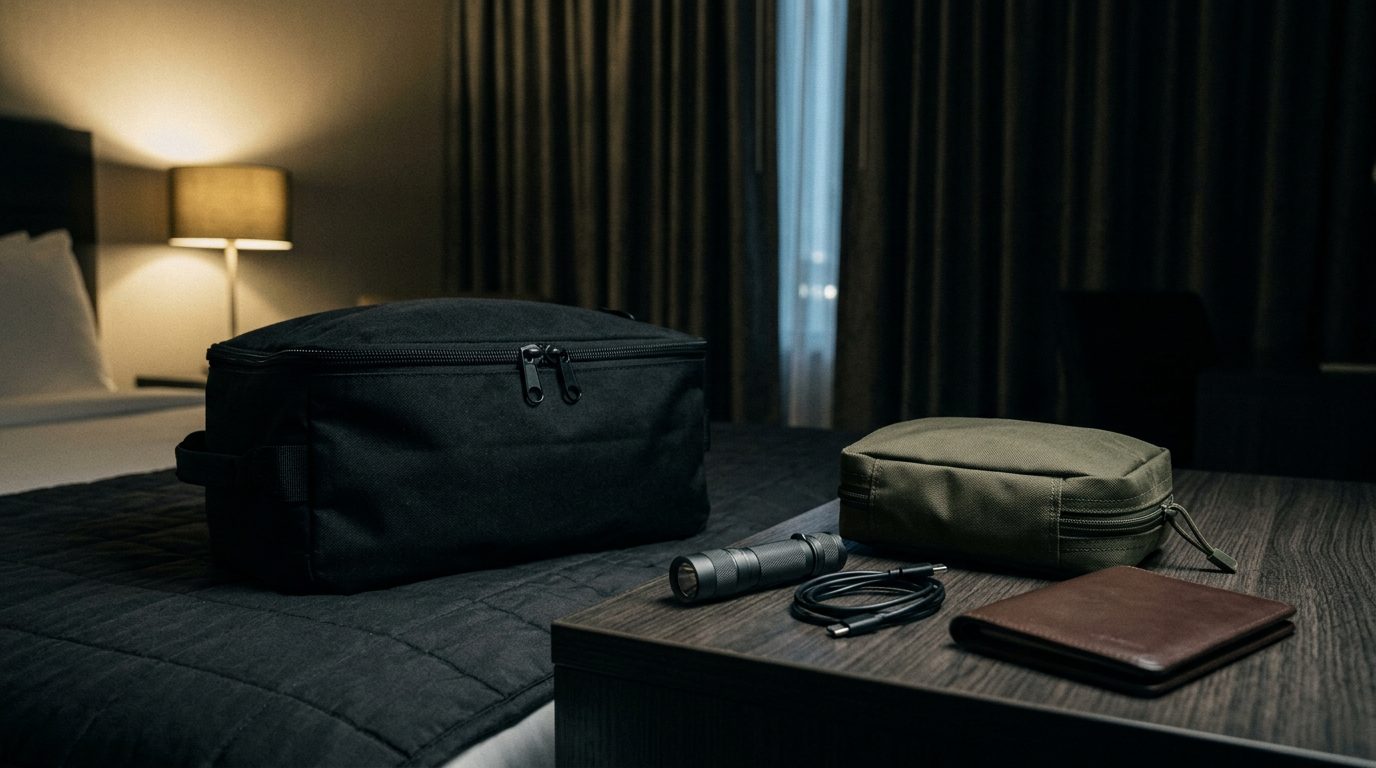
Hold medical supplies, prescription medication, a torch, batteries and several days of food and water.
Have a grab bag ready "in case you need to leave quickly".
Have "a personal emergency plan that does not rely on the UK government."
The stay or go decision is yours too. The guidance says to "decide whether to leave the country, if it's safe to do so, especially during civil or political unrest", and adds: "If you decide to stay, we can't guarantee we will be able to help you." Where leaving is not safe, the FCDO's current advice for anyone in Ethiopia's Tigray region shows what sheltering looks like: stay indoors whenever possible, obey local restrictions such as curfews, monitor the media for a safe window to leave, and stay in touch with your airline.
Two habits make all of this work. Check the travel advice before every movement in a fast-moving country, not on a weekly cycle. And put the FCDO number in every phone before deployment: in a crisis abroad the guidance says to call +44 (0)20 7008 5000.