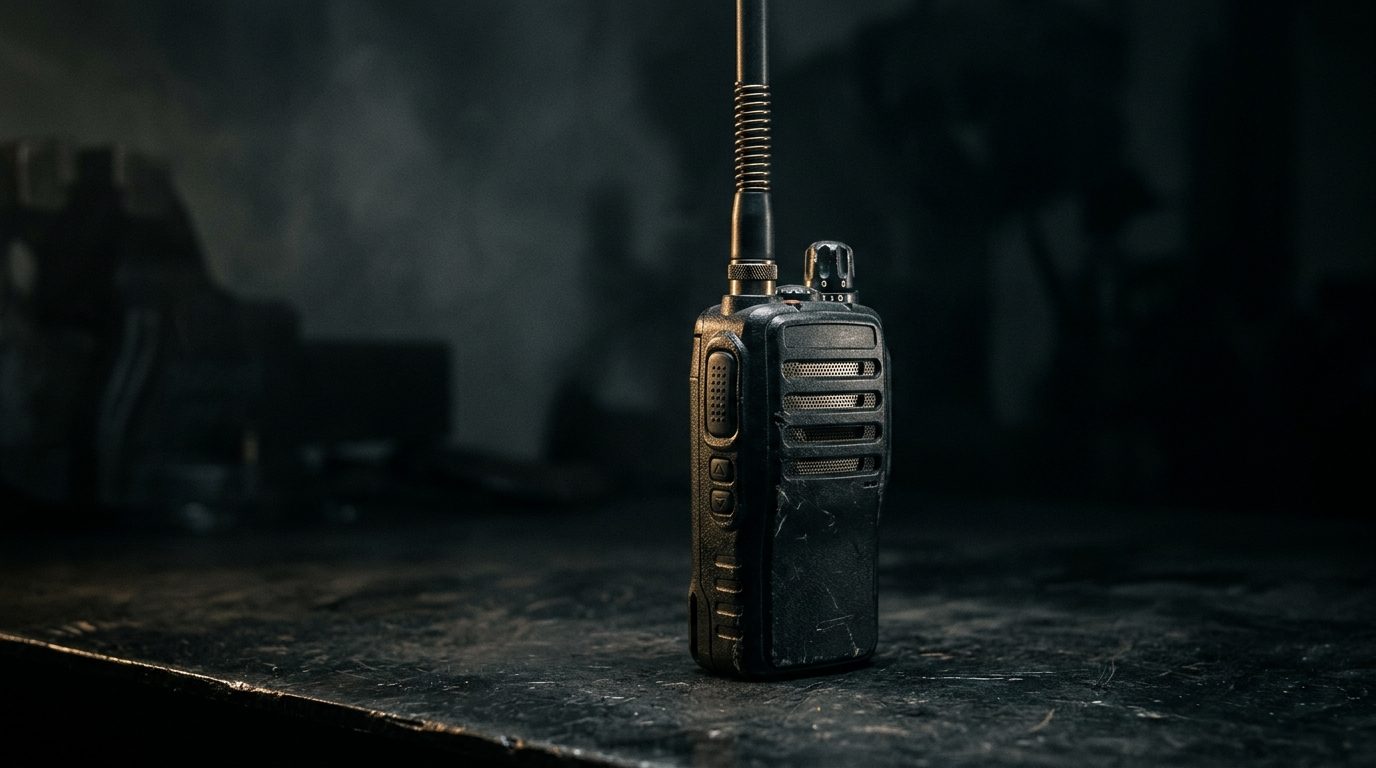
The Cabinet Office published a final order on Monday 23 November under the National Security and Investment Act 2021, covering a licence of digital mobile radio technology. The order came into force on 23 November 2026. It lets the acquisition stand, subject to conditions, and names risks to supply for UK Government, critical national infrastructure and emergency services customers, and the transfer of information overseas. It is an official notice, and it gives few details of the conditions.
What the order says
The notice says that, following a detailed national security assessment, the Secretary of State made a final order under section 26 of the Act. The parties subject to the order are TTG Global Solutions Limited, Simcomm Science & Technology Co., Limited, and Hytera Communications (UK) Corporation Limited.
On 24 December 2025, Simcomm and Hytera gained control of intellectual property related to digital mobile radio technology from TTG by executing a licence agreement. The notice explains that a licence can give control of an asset by allowing the acquirer to use it, or to use it more than before, which is a trigger event under section 9(1)(a) of the Act.
The Secretary of State allowed the acquisition to proceed, subject to the parties meeting certain requirements. The notice lists them as notification requirements for future collaborations, requirements on the supply of products to UK Government, critical national infrastructure and emergency services customers, and other requirements on information security and data protection.
The notice says the Secretary of State considers the measures necessary and proportionate to remedy, prevent or mitigate risks to national security relating to the disruption of supply to those customers and the transfer of information overseas.
What the order does not say
It does not describe the detail of the conditions, name the products involved, or say who owns any of the three parties. It does not mention private-sector customers or the security industry. It does not say why the order came about eleven months after the licence agreement was executed, and it does not say that any product has been withdrawn or found to be at fault.
What it means for teams
This is The Ops Con's reading, not the Cabinet Office's.
Some teams may use digital mobile radio. Several of the order's conditions concern supply to government, critical national infrastructure and emergency services customers, and the notice does not mention anyone else. There is no instruction for private users in it, and there is no reason to change equipment on the strength of this notice alone. Two sensible checks follow. First, ask your radio supplier whether the equipment you buy or rent is covered by the technology named in the order, and what, if anything, the order changes for you. Second, if you hold contracts that sit within government, critical national infrastructure or emergency services supply chains, ask your client whether they expect flow-down requirements. Treat the order as an example of the Act being applied to a radio technology licence, and keep a record of which radio systems your operations depend on.