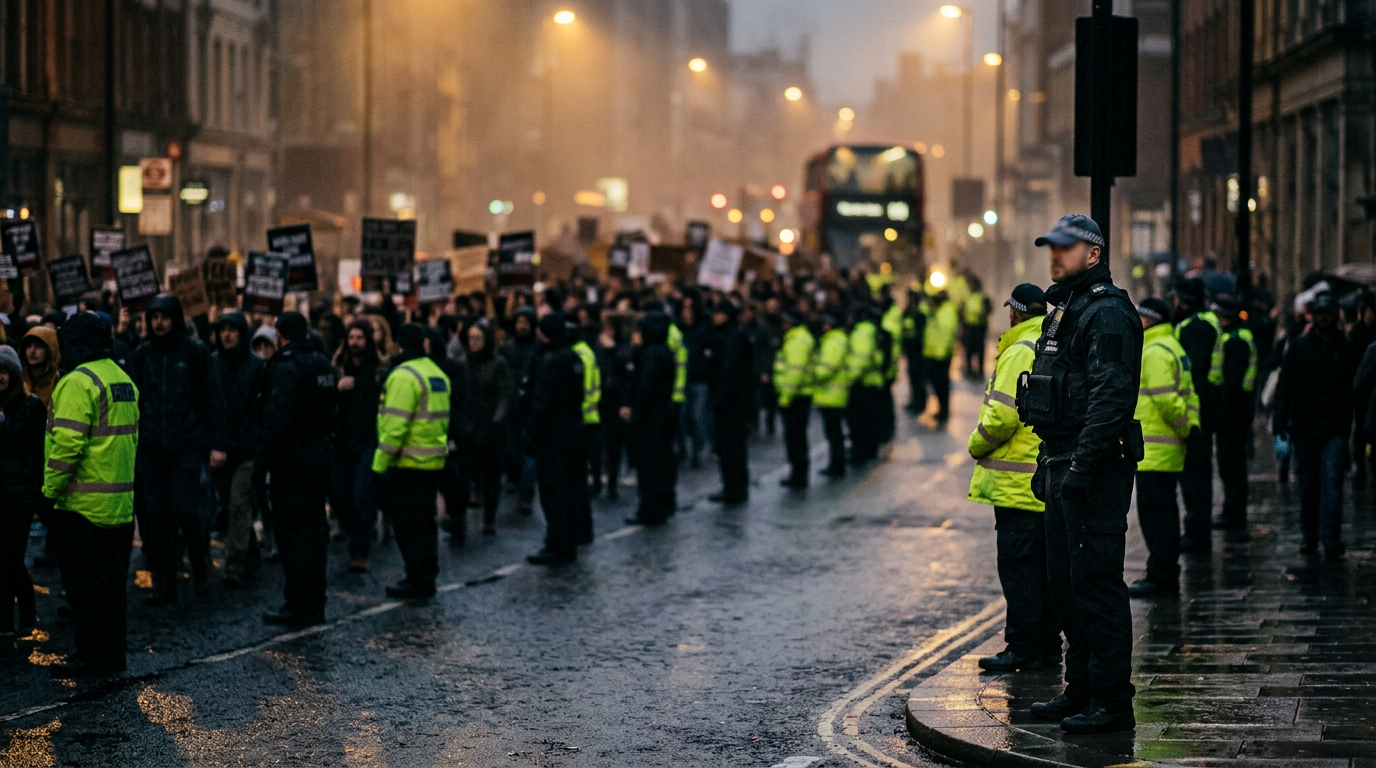
UK protective-security teams enter July with a live public-order picture. The British Security Industry Association flagged a 'Month of Action' from the start of June, with campaign groups picketing and demonstrating outside financial institutions in the City of London over arms, migrant detention and Palestine. The BSIA's advice to premises was blunt: review security arrangements for the period, increase visible patrols and monitoring, and report suspicious activity, with the caveat that no fixed protest locations had been confirmed.
That sits on top of a volatile month. Rioting broke out across Belfast and several Northern Irish towns from 9 June following a serious assault, spreading to parts of Scotland and England before subsiding within a few days; the US Embassy issued repeat demonstration alerts to its nationals across the UK. City of London Police signposted protest activity running into July.
Operator implication: the immediate task is not a single event but a season. Static guarding at corporate and financial sites, residential close protection for exposed principals, and journey planning all need to account for spontaneous crowds, road closures and reputational-risk flashpoints. Build in route alternatives, brief teams on hostile media and filming, and hold a low-profile posture where a visible detail becomes a target in itself.