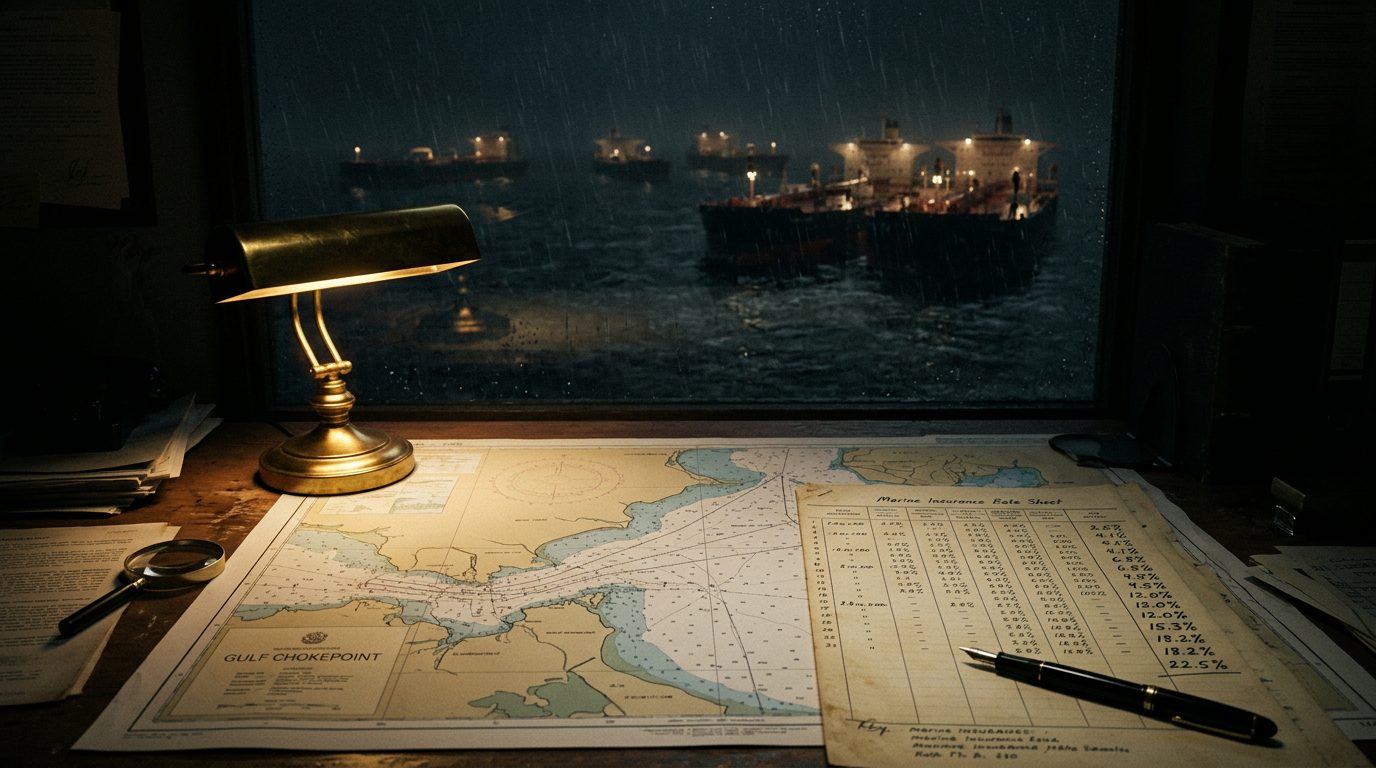
The insurance market has repriced Gulf risk, not withdrawn from it. Hull war-risk premiums are running at 3 to 10 per cent of a vessel's insured value for a Strait of Hormuz transit, against a pre-crisis baseline of about 0.25 per cent, according to The National. On a 100 million dollar tanker that is the difference between roughly 250,000 dollars and three to ten million dollars, per voyage.
Marcus Baker, global head of marine, cargo and logistics at Marsh, put it plainly to The National: war rates have been on a roller coaster mirroring the oil price, and can sit anywhere between 3 and 10 per cent on hull value, the range reflecting the concerns.
The key point for operators is that this is not an availability failure. The Lloyd's Market Association has said war-risk cover remains available in the London market and that owners are choosing not to transit on safety grounds rather than being priced out, per gCaptain. Transit volumes have fallen to as few as six vessels a day, a five-week low.
The human cost is the part that gets lost in the rate sheets. The IMO reported around 6,000 seafarers trapped in the region as of 8 July and is working to move stranded vessels out through safe routes. IMO Secretary General Arsenio Dominguez called the situation one of great concern and warned that the high cost of cover is itself adding to the strain on owners and operators. For any firm with crews or duty-of-care exposure in the Gulf, welfare, relief and evacuation planning belongs at the top of the list, not the bottom.