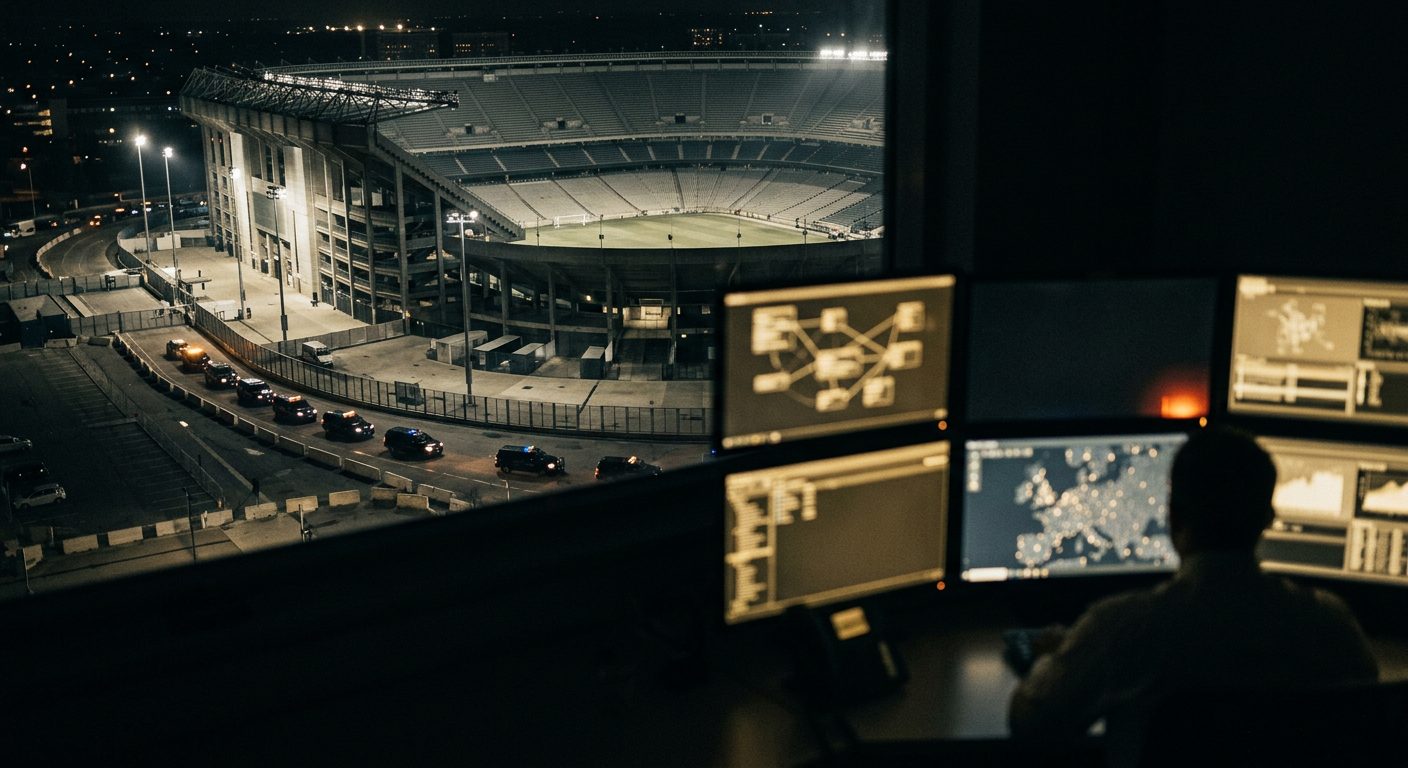
The 2026 World Cup ended on 19 July with Spain beating Argentina one-nil after extra time at MetLife Stadium, Ferran Torres scoring in the 106th minute in front of 80,663.
The security operation around it was vast. Per CBS News, more than 400 local, state and federal agencies worked the tournament, with live drone feeds across sites and a central command post in Ewing Township. New Jersey State Police described each of the eight matches at the venue as a Super Bowl-scale problem in its own right. President Trump's attendance at the final pushed the posture higher again, with a hardened perimeter, reinforced aerial surveillance and road restrictions around the complex.
The venue held. The lesson for operators is where the tournament was actually exposed. The Homeland Security Information Network, the platform that ties those agencies together for event security and threat-sharing, was breached. Per Nextgov, the intrusion happened between late May and early June and was disclosed at the end of June, hitting HSIN servers and an associated SharePoint. DHS said it isolated the affected systems and found no indication that classified networks were touched. Investigators have not named an attacker, and it is not clear what, if anything, was taken.
Operator implication. A clean night at the gate is not proof the operation was secure. The physical perimeter was hardened and visible; the coordination and information layer that ties partners together was the softer, quieter target, and it was compromised weeks before kick-off. For anyone planning around a major event, treat the shared-information backbone, who can see the plan, the roster, the movement schedule, as a primary attack surface, not back-office plumbing. Segment it, minimise what sits on it, and assume a capable adversary may be inside the coordination fabric before they are anywhere near the fence.