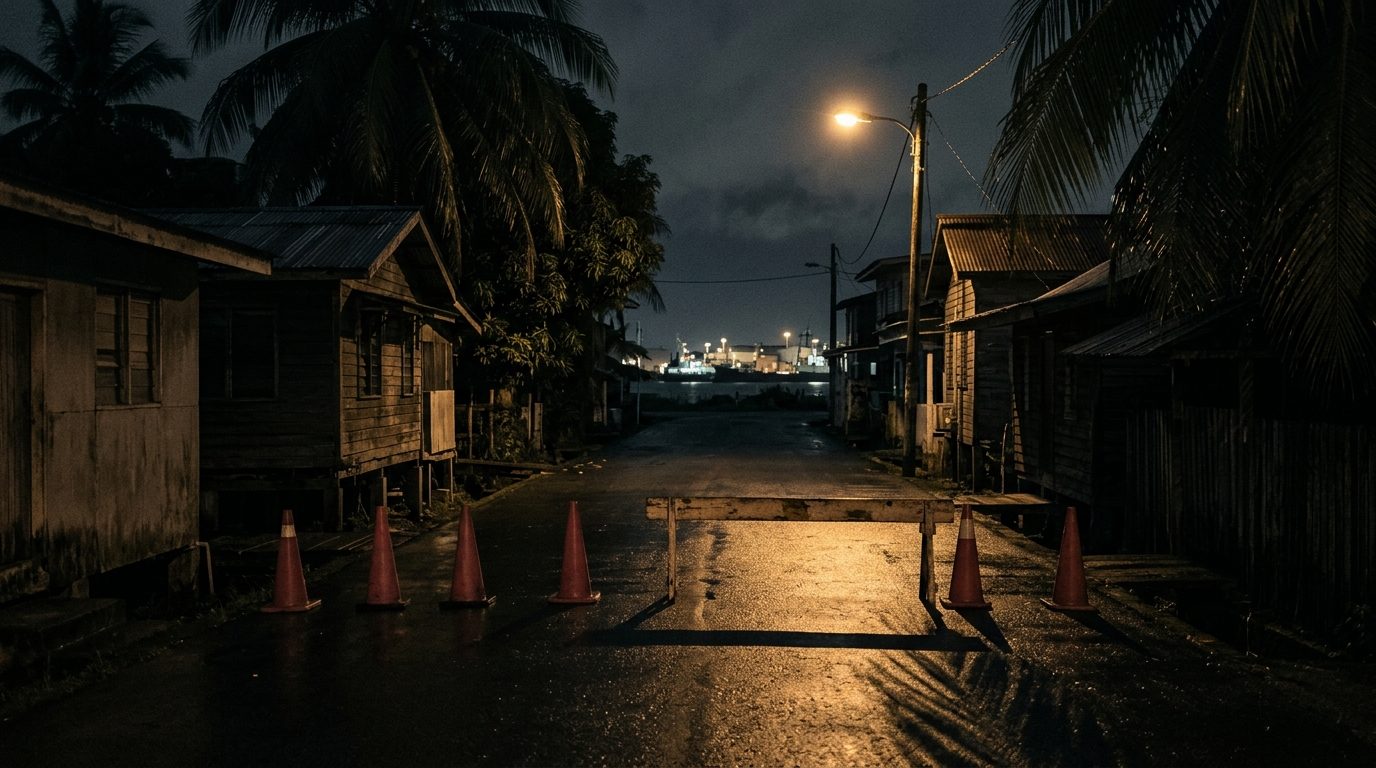
On Thursday 5 November the FCDO added new information to its Belize travel advice after the Government of Belize announced a State of Emergency. The FCDO's change note describes it as new information on the advice's Warnings and insurance page. The FCDO does not advise against travel to any part of Belize, and the change note does not record any change to that.
What the FCDO says
The page says: "The Government of Belize announced a 30-day State of Emergency (SoE) on 1 November in parts of Belize City and the Belize and Cayo Districts following an increase in gang-related violence." It says: "The state of emergency gives law enforcement additional powers to restore order and maintain public safety in affected communities." It adds: "There may be an increased police presence and more checkpoints in affected areas."
The FCDO lists the affected areas. In Belize City and Belize District: the Southside and Westside of Belize City; northern parts of Belize City, including the Philip Goldson Highway to Ladyville; Lord's Bank; Los Lagos; Lake Gardens; and Vista del Mar. In Cayo District: Cotton Tree Village and Unitedville Village, including all streets and residential areas running parallel to the George Price Highway.
Its advice is: "Carry valid ID and remain vigilant. Follow the instructions of local authorities and monitor local media for updates."
The page's safety section, which the change note does not say was altered, gives the background. It says "Belize has one of the highest per capita murder rates in the world." and "Tourists are not normally the targets of gang violence, but anyone near an incident could be affected." It says serious gang-related violence occurs most frequently in Belize City, particularly in the Southside, south of Haulover Creek. The FCDO's change history also shows an earlier State of Emergency this year in parts of Belize City and the Belize District, added on 12 May and removed on 12 June 2026, when the FCDO said it had ended.
What the page does not say
The page gives no end date and no start time beyond the announcement on 1 November, and it describes the new powers only as "additional powers". It reports no curfew, no restriction on movement and no hours for checkpoints. It gives no casualty figures, names no incident and does not say that foreigners have been targeted. We could not read a Government of Belize source, so the declaration, its date and the list of areas are the FCDO's account. We read the FCDO page in two separate fetches on 6 November.
What it means for close protection teams
This is The Ops Con's reading, not the FCDO's.
Teams moving principals through Belize City, north along the Philip Goldson Highway to Ladyville, or through Cotton Tree and Unitedville on the George Price Highway in Cayo, should plan for police checkpoints in those areas. Everyone in the party, including the principal and drivers, should carry valid ID, as the FCDO advises. Because the page sets no hours and no curfew, allow extra time for movements through the listed areas rather than assume a time of day will be clear, and brief drivers on routes that avoid the listed neighbourhoods where the task allows. The FCDO's own line that anyone near an incident could be affected is a reason to treat these neighbourhoods as places to pass through rather than to stop in. Follow police instructions at checkpoints and local media, and check the FCDO page again before each move, because it changes as the situation does.