The counter-drone picture around the 2026 World Cup is unlike anything protective teams have worked before. The Safer Skies Act, passed in December 2025 as part of the US defence authorisation bill, gives state, local, tribal and territorial law enforcement explicit authority to detect and track drones — and to disrupt or disable them where a credible threat is determined. Until now, that authority sat almost entirely with a handful of federal agencies.
The machinery is already running. FedScoop reported in November that the FBI's new National Counter-UAS Training Center in Alabama had graduated its first class, with the Department of Justice deputising trained state and local officers for counter-drone operations across the 11 US host cities. Funding is following: per Unmanned Airspace, a $500m FEMA grant programme for detection and monitoring kit is rolling out, with $250m this fiscal year prioritised for the World Cup and other high-profile events, and coordination running through a joint interagency task force.
What this means in practice for protective operations around the tournament:
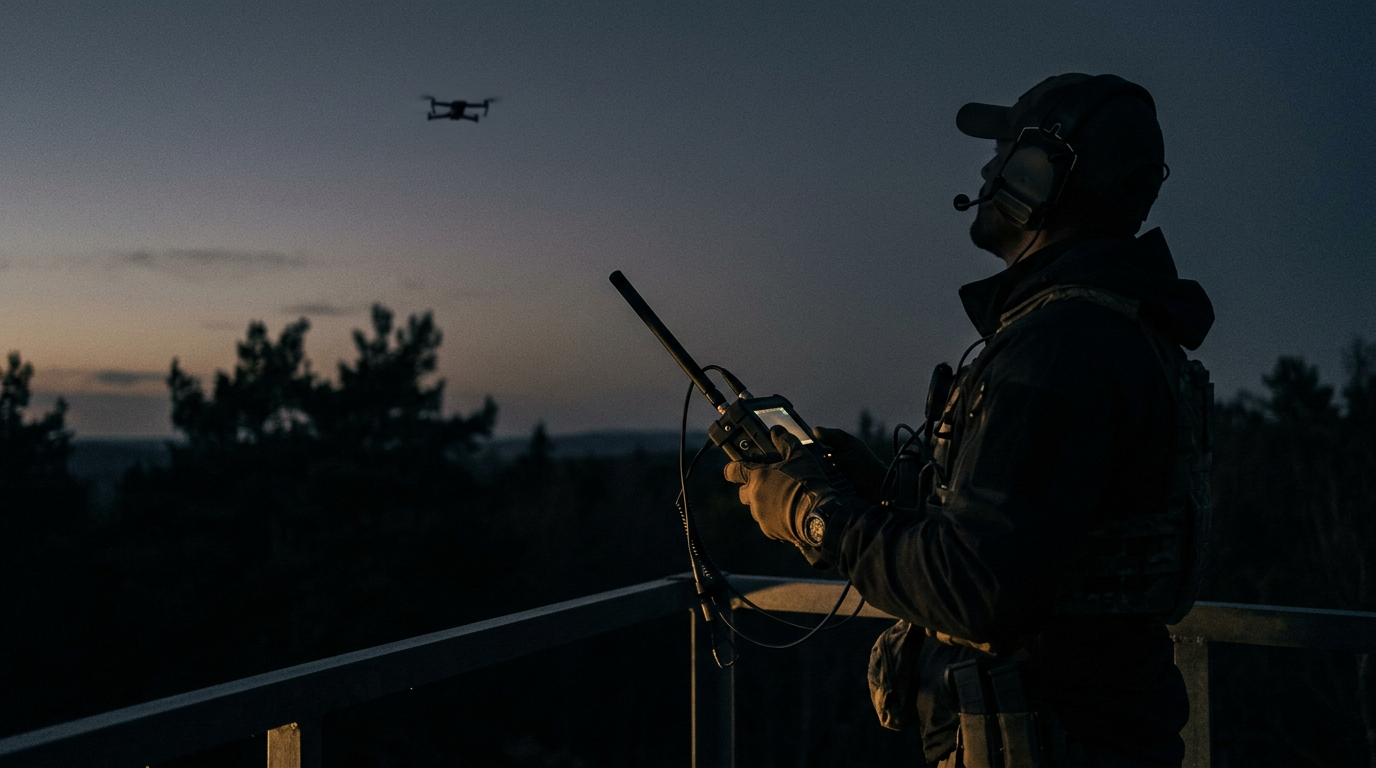
**Authority stays with law enforcement.** The new disruption powers extend to deputised officers — not to private or contracted security. A protective detail's lane remains detection, reporting and response planning. If your team fields RF detection kit, its value is situational awareness and early warning for the principal's movement plan, not engagement.
**Expect a denser sensor environment.** With grant money flowing into detection and monitoring systems around venues, teams operating near stadiums, fan fests and team hotels should assume their own UAS — lawful or otherwise — will be detected and queried. Get any aerial work cleared and documented well in advance.
**Build the drone serial into SOPs.** A confirmed drone over a movement or venue is now an event with a defined response chain: log it, report to the venue's lead agency, adjust the move. Teams that have pre-identified who owns counter-UAS at each site will move faster than teams working it out on the day.
The tournament runs into July, but the framework built for it — trained local officers with disruption authority, backed by federally funded detection networks — will outlast it. Worth learning now.