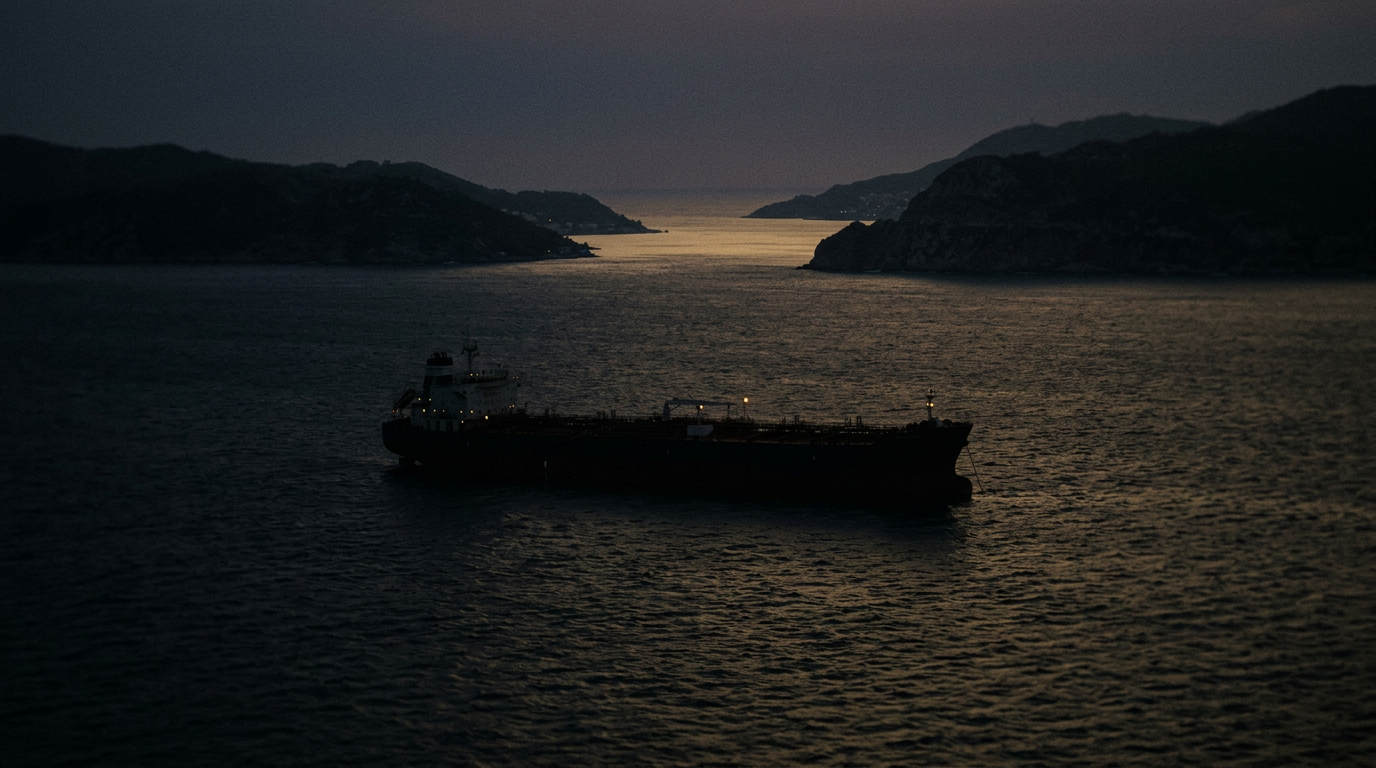
The diplomatic status of the Strait of Hormuz changed on paper last week. The market that actually moves cargo has not caught up.
War-risk pricing tells the story. For a standard seven-day policy, hull war cover that ran around 0.001% of vessel value before the crisis has re-rated to roughly 4% — described in open-source reporting as a 4,000-fold increase in the cost of crossing. The repricing was abrupt: within 48 hours of the late-February strikes premiums surged fivefold, and marine insurers pulled existing cover before re-offering it at far higher rates. One analysis cites P&I replacement cover at around $30,000 a week for protection that previously cost about $25,000 a year.
- **Availability, then price.** The first question is whether cover can be obtained at all; the second is what it costs. In the worst weeks of the crisis, owners faced cancelled policies before any question of rate — the gate on movement is whether mainstream underwriters will quote. - **State-backed cover cuts both ways.** Iran's strait authority is offering transit insurance "free of charge", with costs borne by Tehran, while reserving the right to charge later. A free policy from the party that days earlier ordered the strait closed is not a substitute for commercial war-risk cover, and most owners will read it that way. - **The market is the real arbiter.** As Eurasia Group's Gregory Brew put it, it is not Iran or the US that decides the strait is open — it is the shipping and insurance companies. Hapag-Lloyd kept its Gulf vessels in port despite the announced reopening.
**Operator implication.** If you advise principals or firms with maritime exposure, the underwriting desk is now a primary intelligence source, not a back-office cost line. Confirm cover is actually in force and not voided by a transit through a declared-closed strait, check the seven-day clauses and any breach-of-warranty terms, and watch where the next renewals price. A reopening you can't insure at a workable rate is not a reopening.