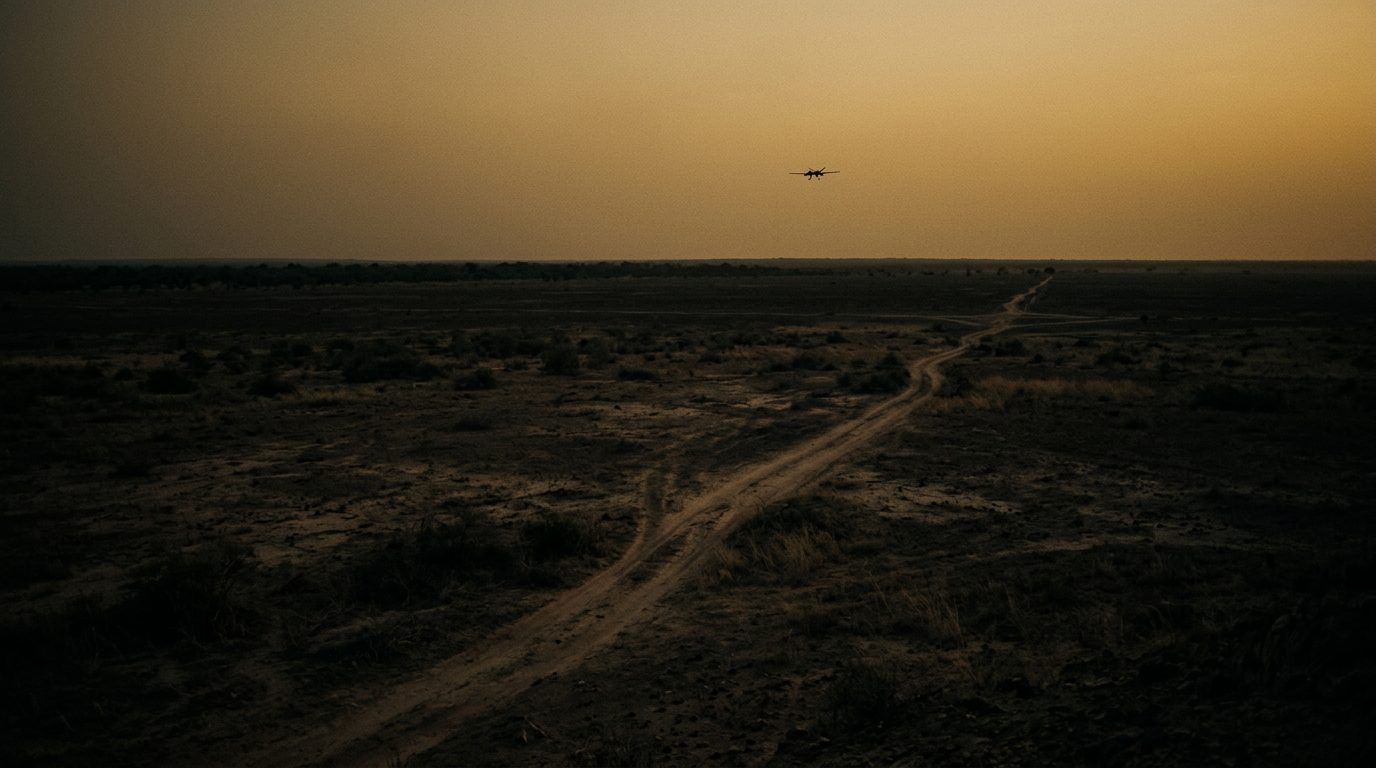
Leonardo Santos Simao, the UN Special Representative for West Africa and the Sahel, briefed the Security Council on 14 July on a threat that is changing shape. Armed groups are using drones, sophisticated communications and cryptocurrencies to coordinate operations across borders, he told members, presenting the Secretary-General's latest report on the region.
The shift that matters to operators is strategic. The UN says the groups' objective now extends beyond purely military operations: JNIM, which is aligned to al-Qaeda, and the Front de Liberation de l'Azawad are working to consolidate territorial and economic control. UNOWAS pointed to coordinated attacks across Mali, naming Bamako, Kati, Kidal, Gao and Mopti. Their aims run beyond violence: consolidating territorial and economic control, eroding confidence in the state, and intersecting with transnational organised crime.
The central Sahel and northern Nigeria remain the core conflict zones. Pressure is spreading outward, with coastal states including Liberia facing displacement and security spillover. The regional displacement figure has reached roughly 6.8 million since February 2026, with about 1.28 million people registered as refugees or asylum seekers.
For teams supporting clients with interests in or near the region, treat the professionalisation as a planning assumption, not a headline. Drone over-watch and encrypted coordination raise the baseline threat for any movement, journey management or static task. Territorial control changes route planning: roads passable on a managed-risk basis one week can carry armed checkpoints the next. Spillover toward the coast means the operating picture in the Gulf of Guinea littoral is no longer separate from the Sahel's.