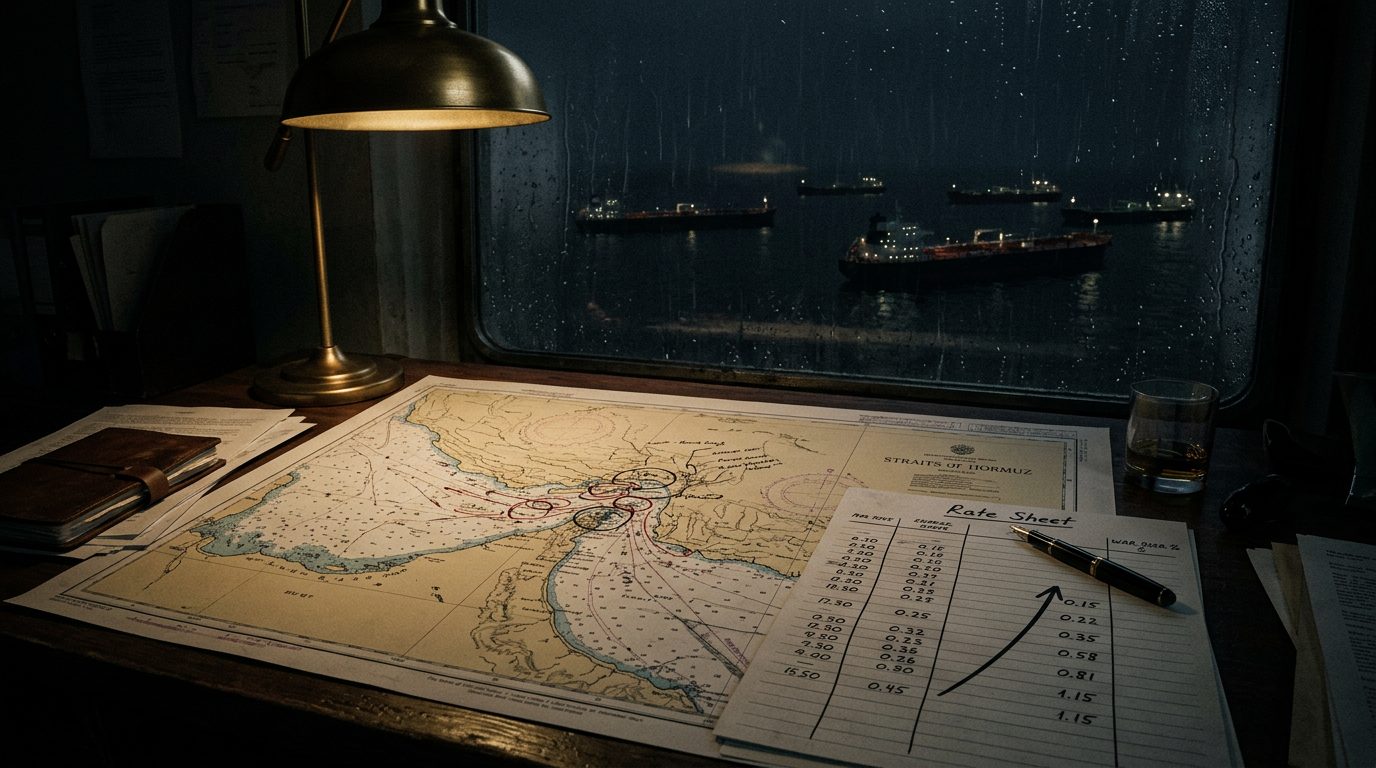
The marine war-risk market has repriced the Gulf again. After a run of tanker attacks this week, cover for a single voyage through the Strait of Hormuz is quoted at between 3 and 10 per cent of hull value. On a 100 million dollar tanker that is 3 to 10 million dollars a trip, against roughly 250,000 dollars before the war. Marsh's global head of marine, Marcus Baker, and the International Union of Marine Insurers have both flagged the jump.
The trigger was fresh violence at sea. Two Adnoc supertankers, the Mombasa and the Al Bahyah, were struck on Tuesday. One seafarer was killed and eight were injured. Underwriters price a week like that straight into the rate.
The human problem now runs ahead of the commercial one. The International Maritime Organization said on 8 July that around 6,000 seafarers were trapped aboard vessels in the region, and its Secretary-General, Arsenio Dominguez, has been pressing for safe corridors to get crews out. Cover is still being written in the London market. The reason ships are not sailing is crew and vessel safety, not the price of the policy.
For security firms and PMSCs the exposure is wider than shipowners. War-risk terms carry into charter, crewing and vessel-management arrangements, and embarked-team economics shift as escort work through Hormuz dries up. Check charter and cargo provenance on any Gulf tasking, price in the possibility of a long layup at anchor, and build crew welfare and extraction into the plan rather than treating it as the client's problem.