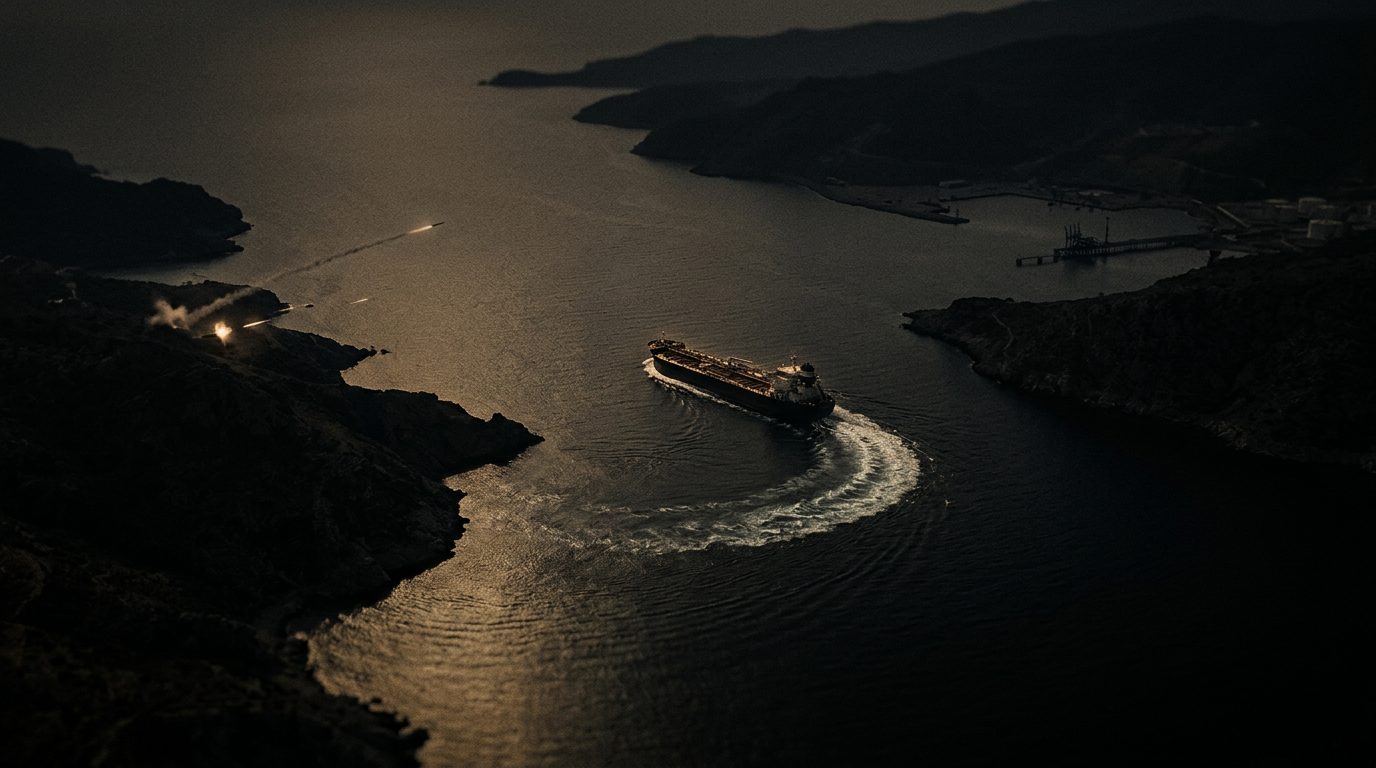
Yemen's Houthis declared a maritime embargo on Saudi Arabia on Monday 20 July, according to Al Jazeera and The War Zone. Their statement, issued through the group's SABA outlet, framed it as an eye for an eye and asserted the right to respond to a blockade with a blockade. Houthi forces began broadcasting warnings on open maritime frequencies that the Bab al-Mandeb strait is closed to Saudi shipping.
The move followed Houthi accusations that Saudi forces struck Sanaa International Airport on 13 July, answered by missile fire at Abha airport.
Bab al-Mandeb is the 29-kilometre gap between Yemen and the Horn of Africa. It is the outlet for Saudi crude shipped from Yanbu on the Red Sea coast, fed by the East-West (Petroline) pipeline, roughly 4.5 million barrels a day. Tankers bound for Saudi ports have begun turning back. Reuters, cited by The War Zone, estimates that a full closure of Bab al-Mandeb would remove about 7 per cent of global oil supply. Stacked on the Hormuz shutdown, that points to around a tenth of world supply now under threat.
For operators the significance is the widening. This is no longer a single-chokepoint problem. Maritime, energy and expat-facing details across the southern Red Sea, western Saudi Arabia and the Horn of Africa now sit in a second active theatre. Reassess any movement or asset keyed to Red Sea transit or Yanbu, and expect knock-on effects on regional aviation and ground logistics as the conflict spreads.