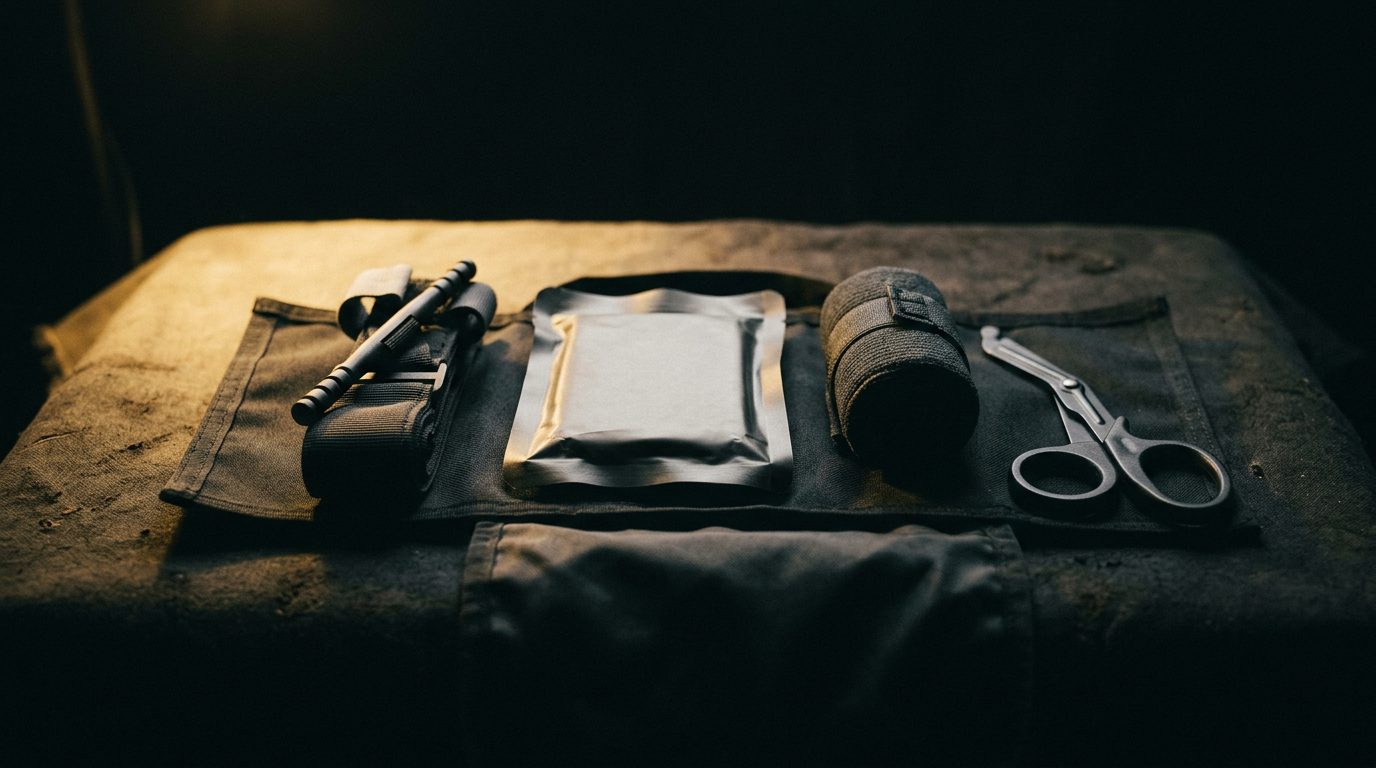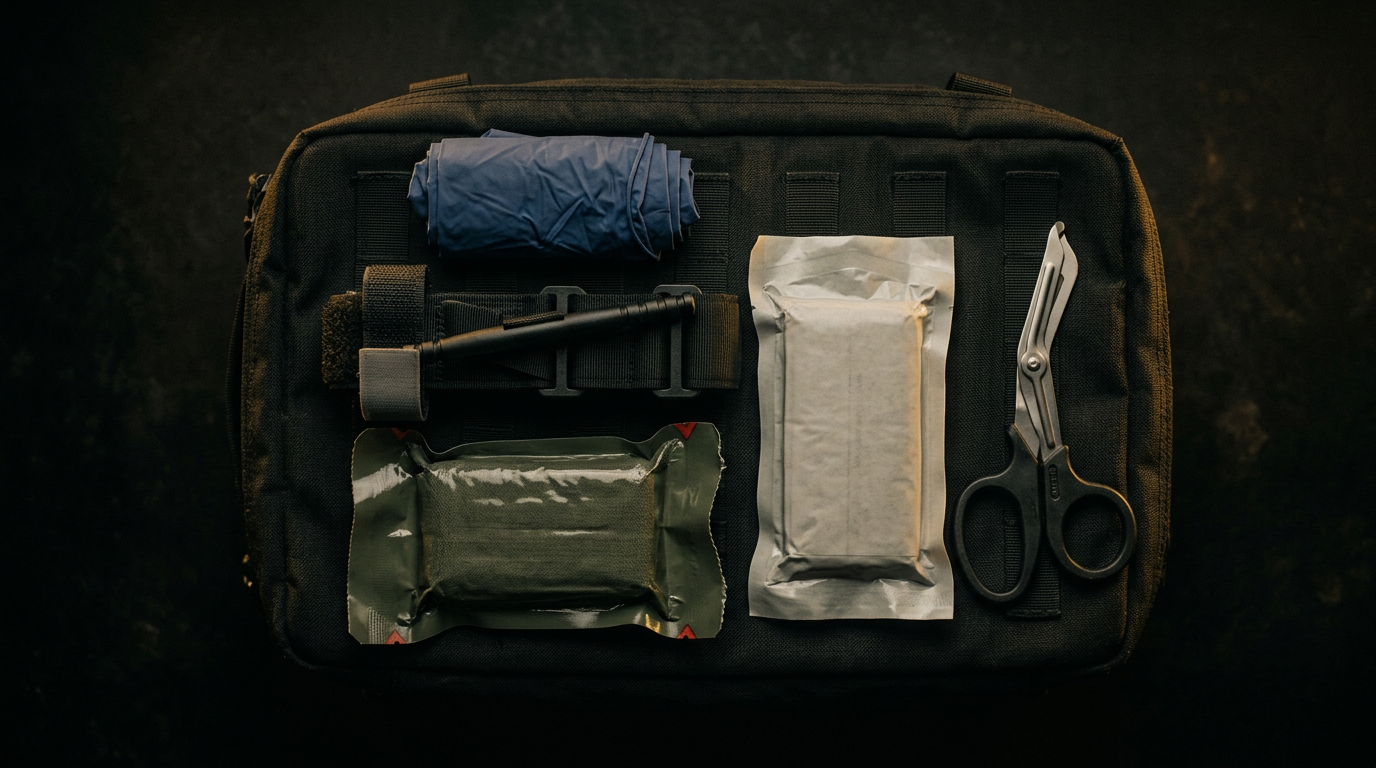
Yesterday's TCCC desk note covered the head-injury rewrite. This is the kit half of the same conversation: the IFAK itself, and the two errors that turn a survivable bleed into a fatality.
- **The tourniquet stays on.** Once it is applied, it is not loosened pre-hospital to inspect the wound. Conversion to another method is a deliberate, staged procedure done only when the criteria are met, not a reflex to ease pressure on the way to a vehicle. The current TCCC guidance reflects this by building a two-hour tourniquet reassessment into training scenarios rather than ad-hoc loosening. - **Certified hardware only.** Practitioner guidance points to field-proven devices such as the CAT Gen 7, the SOFTT-W or the SAM XT, and warns that generic or counterfeit tourniquets have shown failure rates above 30% in independent testing. A device that slips or snaps under load is worse than useless because it costs the seconds you do not have. - **Drill the algorithm and the clock.** The MARCH sequence, Massive haemorrhage, Airway, Respiration, Circulation, Hypothermia and head injury, sets the order. The current guidance builds the two-hour tourniquet reassessment into drills, alongside other changes such as mandatory capnography after a surgical airway.
**Operator implication.** Audit the kit your team actually carries against this, not against what was bought three years ago. Bin the unbranded tourniquets. Confirm everyone knows that on goes the tourniquet and it stays on, with conversion as a criteria-based call. Rehearse MARCH and the reassessment clock so it is muscle memory, because on a residential or CP task the casualty is as likely to be the principal or a bystander as the operator.