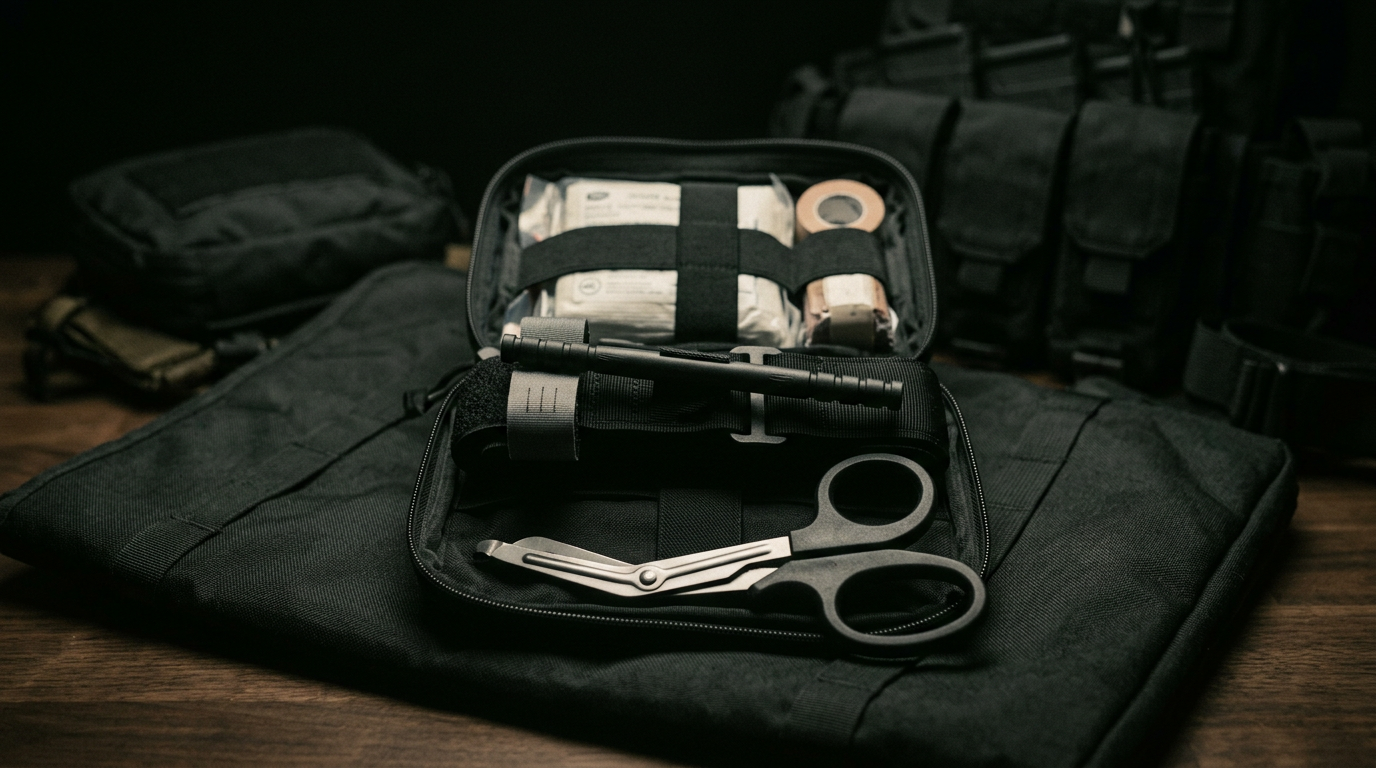
The Committee on Tactical Combat Casualty Care has moved on how tourniquets are managed after they go on. Proposed Change 25-2, published in the Journal of Special Operations Medicine in March 2026, makes reassessment of every applied tourniquet an absolute requirement rather than a best practice, expected within two hours of application and now pushed down to the All Service Member and Combat Lifesaver tiers.
What changed. Reassessment within two hours is now the standard at every tier, not just for medics. The committee also replaced "replacement" with "repositioning" as the more precise term. Conversion beyond the two-hour mark is restricted to medical personnel working to defined assessment criteria. A non-medic can and must reassess, but cannot convert past two hours without provider direction.
Why it changed. The driver is data out of the Russo-Ukrainian war: tourniquets applied when they were not medically indicated, and a rise in ischaemic complications as long evacuation times kept devices on far past the point they should have come off or been reassessed. The fix is a clear time-based rule any responder can follow under pressure.
The operator implication. Most CP medical training is built on TECC, the civilian-facing sibling of TCCC, and these changes typically reach TECC and civilian protocols within roughly six to eighteen months. The two-hour clock is the part to absorb now. On a protective task a long extraction, a lockdown, or a delayed casevac can keep a casualty under a tourniquet well past the window where it stops being a simple call and becomes risk management. Two practical points: start the clock the moment a tourniquet goes on and write the time on the casualty, and do not front-load conversion drills before your medical director has authorised the protocol. Reassessment is for everyone. Conversion past two hours is a clinical decision, not a field reflex.