A new Committee on Tactical Combat Casualty Care (CoTCCC) paper sets out tighter rules for managing a tourniquet once it is on. Proposed Change 25-2, published in the *Journal of Special Operations Medicine* (Spring 2026), draws on Russo-Ukrainian War casualty data. That data showed two problems: tourniquets applied when they were not needed, and limb damage from leaving them on too long during slow evacuations.
The change does two things. It swaps the word "replacement" for "repositioning", and it puts a clock on reassessment. Every applied tourniquet must be checked within two hours. Inside that window, non-medical responders can reassess and reposition. Beyond two hours, any conversion to a dressing is a medical-personnel job, because ischaemic damage climbs sharply between two and six hours.
This sits on top of existing TCCC conversion criteria. You consider swapping a tourniquet for wound packing and a pressure dressing only when the casualty is not in shock, you can watch the wound, and it is not controlling an amputation. The method is unchanged: pack with haemostatic gauze, apply pressure, release the tourniquet slowly over a minute while watching for rebleed, then leave it loosened just above the dressing as a backup and write down the time.
For CP teams the live risk is the extended evacuation: rural details, overseas work, or anywhere the casualty stays with you for hours.
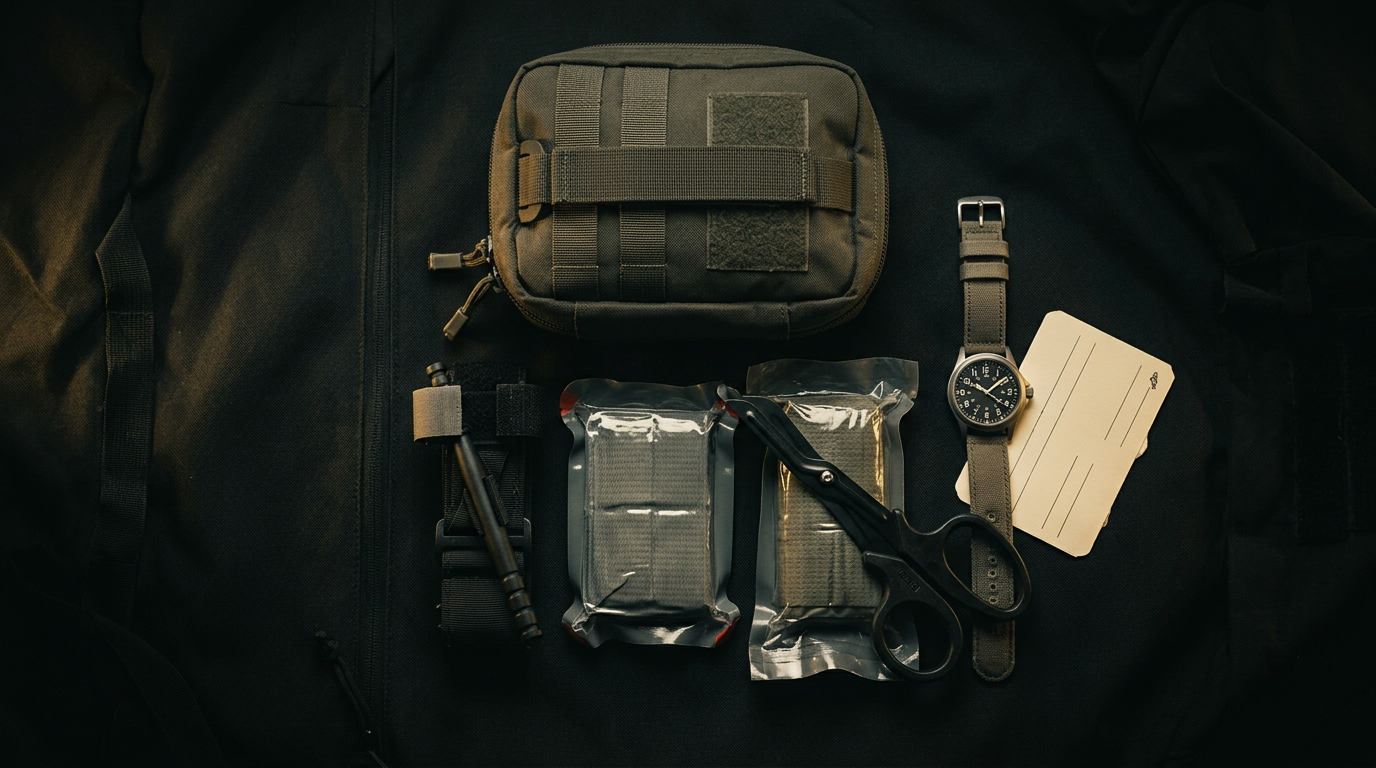
**For operators:** time-stamp every tourniquet the second it goes on, on the strap and the casualty card, not from memory. Set a two-hour mental alarm. If your casualty meets the conversion criteria and you are inside the window, reposition or convert. Past two hours, hold and hand the decision to your medic. Carry haemostatic gauze, not just the tourniquet.