Mali's fuel siege is back on. JNIM, the al-Qaeda affiliate, first declared its blockade of Bamako on 3 September 2025. It eased early in 2026 under negotiation and military pressure, then the group reimposed it on 28 April 2026, framed as retaliation for civilian cooperation with a government offensive, according to open-source tracking compiled on Wikipedia and reporting by Rio Times.
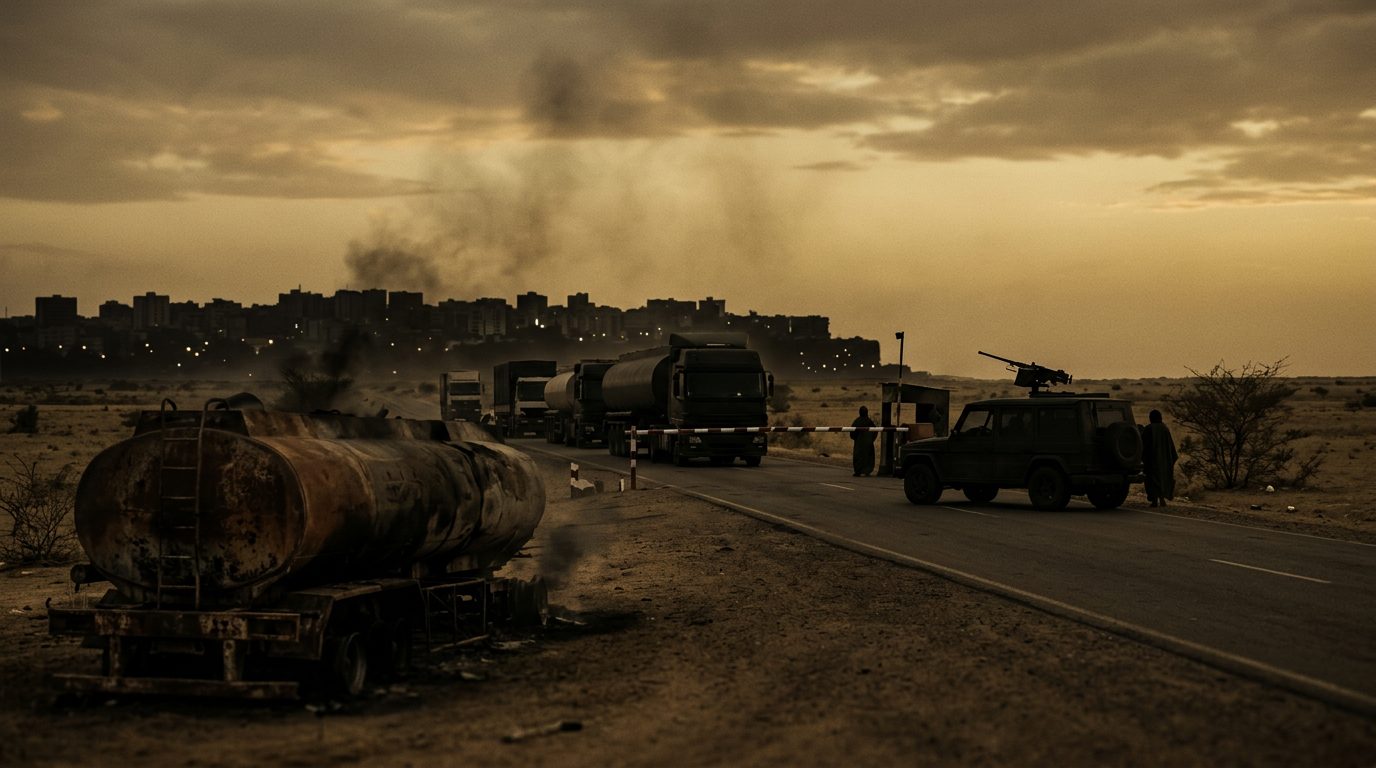
The mechanics make it effective. Mali is landlocked and imports roughly 95 per cent of its fuel by tanker from Senegal and Cote d'Ivoire, largely along National Road 1 through Kayes. More than 300 tankers have been destroyed on those routes. When the blockade bit hardest, Bamako saw hours-long fuel queues, rationing steered to military and government use, reduced night-time lighting on satellite imagery, and schools closed for two weeks.
The government response has not broken it. The junta pushed more than 1,200 tankers into Bamako under armed escort, appointed a general to run the fuel war in January, and leaned on Russian escort support and Turkish drones. The blockade held. Roadblocks have been reported around Bamako's outskirts.
For operators the picture is stark. Movement in and around Bamako depends on fuel that arrives only in guarded convoys, and those convoys are the ambush target. Assume constrained ground movement, elevated risk on the southern and western approach roads, and periodic disruption to power and aviation fuel. Build genuine fuel autonomy into any task, and treat road moves outside the city as high-risk and convoy-dependent.