The al-Qaeda-linked group JNIM has held a blockade on Mali's fuel supply since September 2025, and mid-2026 reporting confirms it is still in place. It is a siege without a frontline, and it is squeezing the capital hard.
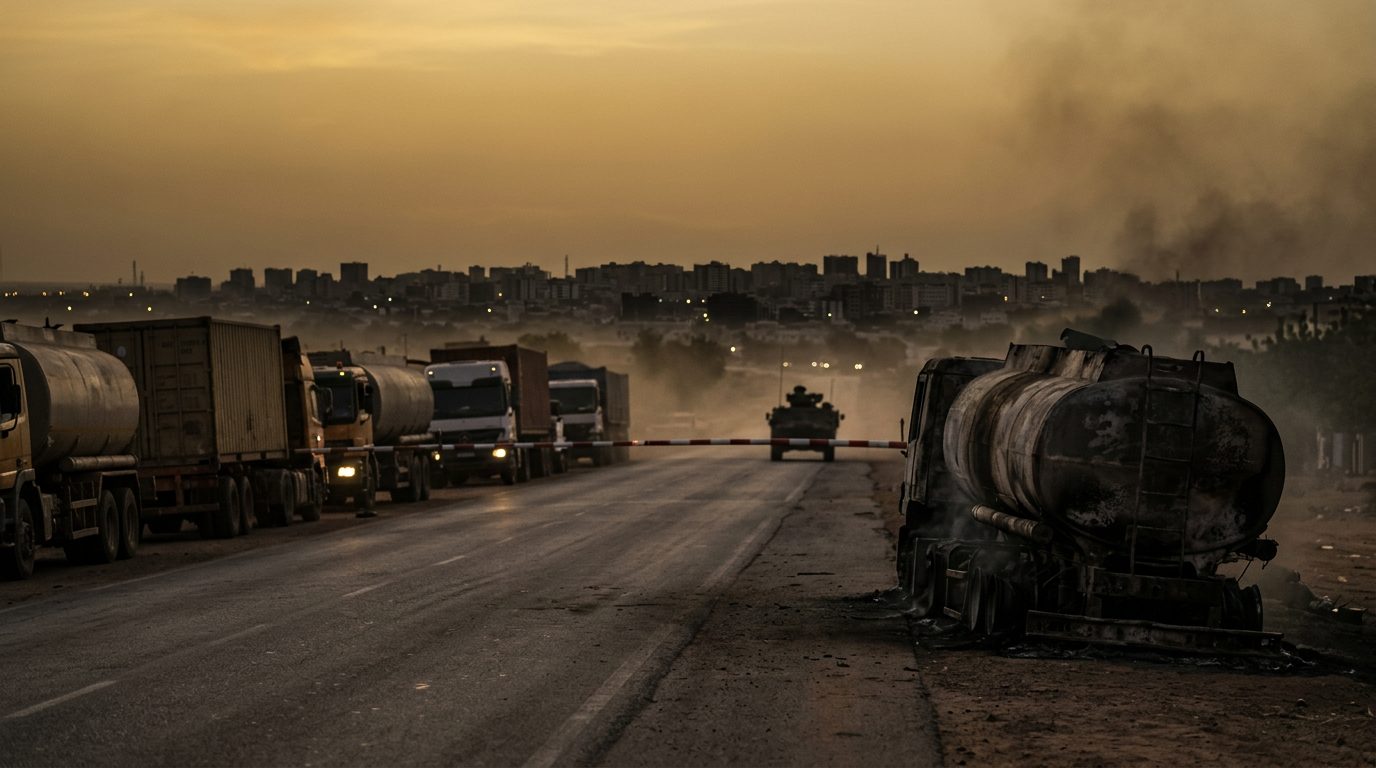
The mechanism is simple and effective. Mali is landlocked and imports roughly 95 per cent of its fuel by road from Senegal and Cote d'Ivoire. By attacking the tanker convoys on those routes, JNIM chokes Bamako without firing a shot inside the city. More than 300 fuel tankers have been torched since the blockade began. The effects are visible: long queues at filling stations, rationing that prioritises military and government use, schools closed for stretches, and a capital noticeably darker at night as power generation is cut back.
The junta's answer has been to push fuel through in large armed convoys, leaning on Russia's Africa Corps and Turkish drones for escort and strike support, and it has moved more than a thousand tankers into Bamako in waves since late 2025. In January 2026 it appointed a general to run what local media call the fuel war. But the corridors remain contested. In early February 2026, an attack on a convoy near the Senegalese border killed at least 15 people.
For operators the implication is clear. Bamako and the overland supply routes into it are a high-risk environment where fuel, movement and basic services are unreliable and the main threat is to convoys and road movement. Any presence needs its own fuel and logistics resilience, hardened road-movement planning that assumes ambush risk on the arterial routes, and a realistic extraction plan, on the understanding that a landlocked capital under a supply siege can deteriorate quickly if the convoys stop getting through.