JNIM's economic siege of southern Mali is still in place. The al-Qaeda affiliate declared a fuel blockade on 3 September 2025, cutting the tanker routes that carry the fuel Mali cannot produce, and it has not let up. Per open-source tracking, more than 300 fuel tankers have been destroyed since the blockade began.
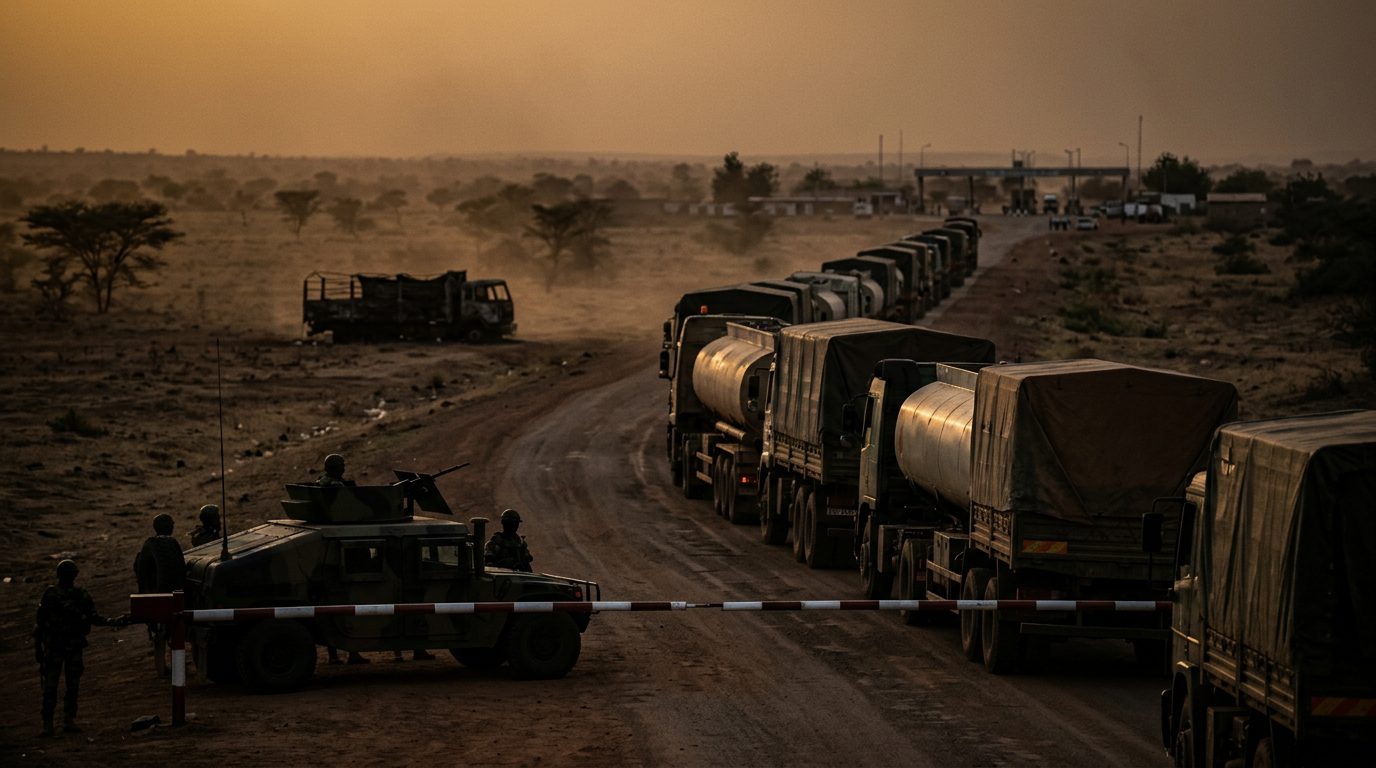
The leverage sits in one dependency. Mali is landlocked and imports about 95 per cent of its fuel by road from Senegal and Cote d'Ivoire. Convoys have been ambushed and burned in batches, with 40 or more tankers destroyed in a single October attack near Sikasso and similar losses on other axes. One attack on a fuel convoy near the Senegalese border killed at least 15 people.
What reaches Bamako now moves under guard. The army has run large escorted convoys with military and mercenary protection, and open-source reporting counted more than 1,000 tankers reaching the capital under escort since late October. The junta has leaned on Russia's Africa Corps and Turkish drones, which have so far failed to lift the blockade.
The effect on the capital has been visible: hours-long fuel queues, rationing that prioritises military and government use, reduced street lighting caught on satellite imagery, and school closures during the worst of it. The blockade chokes the city without a fight inside it.
For anyone operating in or near Bamako, treat road movement as permissive but reversible, and fuel as the single point of failure. Convoy timings, escorted resupply and cached fuel matter more than route choice. A corridor open today can close on the next ambush, and the trend of the past ten months has been a slow tightening, not a thaw.