Mali's crisis is widening from a fuel blockade into a broader breakdown of state control, and it is worth a hard look for anyone with people or interests in the country.
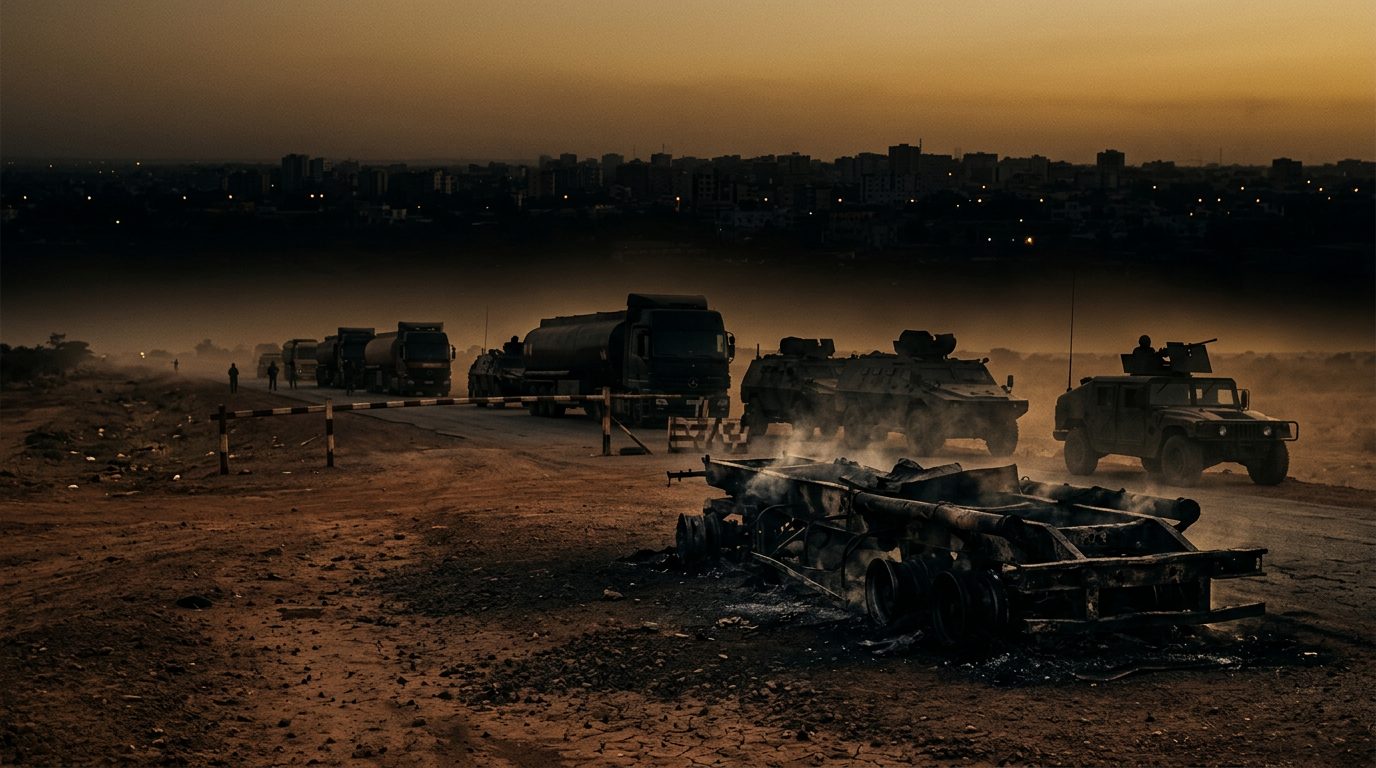
The blockade first. JNIM, the al-Qaeda affiliate, announced a full blockade of Bamako on 28 April 2026, building on a campaign it began in September 2025. Open-source reporting puts more than 300 fuel tankers destroyed on the import routes from Senegal, Cote d'Ivoire and Guinea. Mali is landlocked and brings in roughly 95 per cent of its fuel by road, so cutting those arteries chokes the capital without a shot fired in it. The result has been military-escorted convoys, rationing skewed to government and military use, hours-long queues and a capital visibly darker at night.
Two July developments show the siege biting harder. On 7 July, a high-voltage line linking Bamako to the Manantali dam was sabotaged, per Africanews, cutting power and water across parts of the capital for two days. The perpetrators were not identified, but it fits a pattern of critical infrastructure being taken off line. Then on 18 July, per ABC News, a joint JNIM and Azawad Liberation Front ambush hit an army convoy leaving Anefis for Gao, with scores of soldiers reported killed or captured and fuel tankers among the vehicles. The Malian army said it struck back and freed the convoy.
Operator implication. Treat Mali as a deteriorating-fast environment, not a static high-risk posting. The pressure is now on the two things expatriates and travellers depend on: fuel and the grid. Movement outside Bamako on the northern axes is exposed to well-organised ambush. If you have duty-of-care exposure, review whether staff should be in-country at all, confirm fuel and power contingencies for anyone who stays, and treat overland movement as a planned, escorted operation that is aborted if needed, not routine travel.