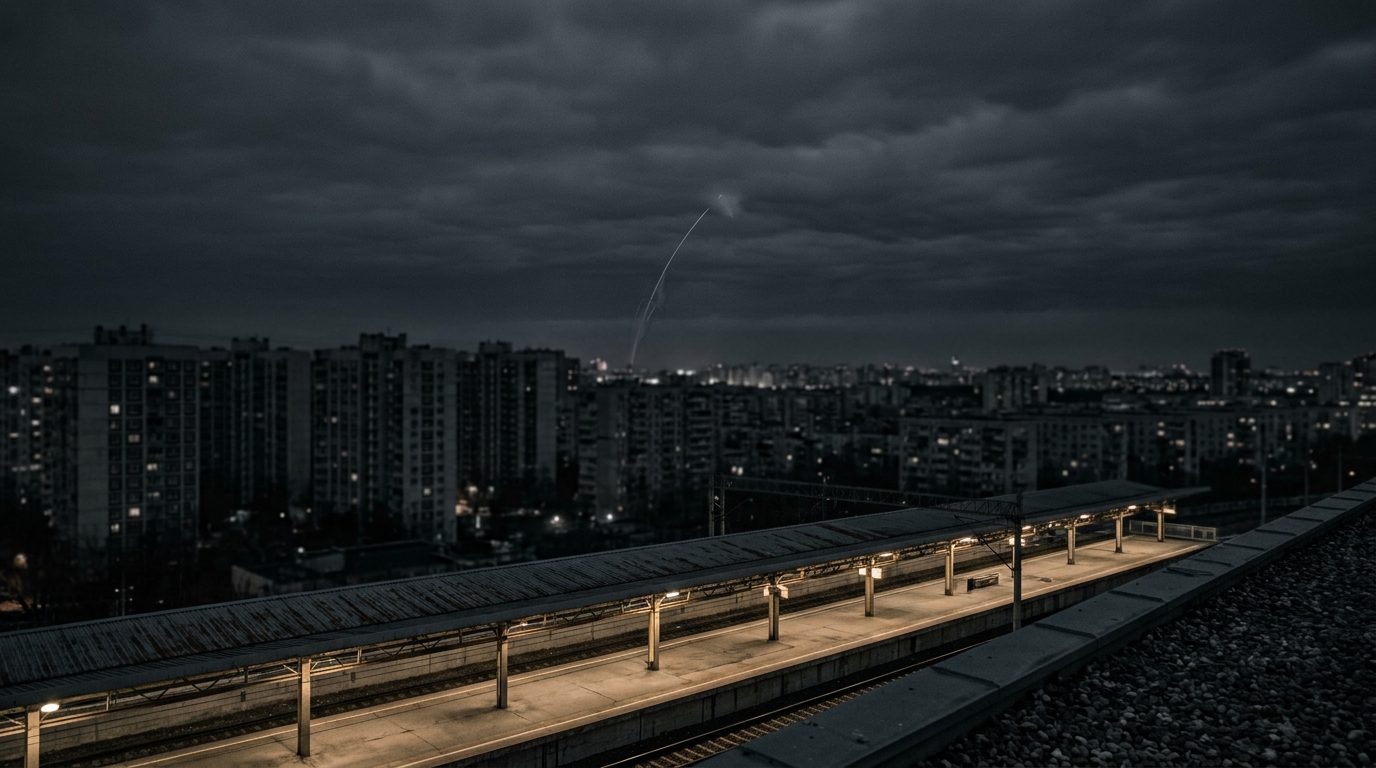
The UN Human Rights Monitoring Mission in Ukraine (HRMMU) published its August 2026 update on the protection of civilians on 16 September. It records at least 372 civilians killed and 2,349 injured in August, the second highest monthly figure this year after July, which the mission now puts at 448 killed and 2,675 injured.
The year is running well above the last. In the mission's words, "In the first eight months of 2026, more civilians were killed and injured in Ukraine than during the whole of 2025." It records 2,222 killed and 13,058 injured from January to August, 55 per cent higher than the same period in 2025.
For movement planning, the key finding is distance from the front line. Long-range weapons, missiles and drones, caused 47 per cent of August's civilian casualties (194 killed, 1,077 injured), and the mission says "Most casualties from these weapons occurred far from the frontline in urban centres." The highest tolls were in Kyiv (31 killed, 106 injured), Kherson (25 killed, 334 injured), Kryvyi Rih (16 killed, 147 injured) and Zaporizhzhia (11 killed, 131 injured). Near the front, short-range drones were the main cause, accounting for 30 per cent of all civilian casualties in the month.
Attacks on commercial targets are rising sharply. The mission reports that attacks "surged against retail, food and logistics companies". It says six of the country's largest companies, Fozzy Group, Epicentr, Nova Poshta, Rozetka, Aurora and Varus, were attacked at least 32 times in August, compared with 11 in July.
The FCDO updated the warnings page of its Ukraine travel advice on 15 September. It now reads: "In the event of attacks, follow the advice of the local authorities, including responding to air raid alerts and train evacuation instructions." The advice levels themselves are unchanged. The FCDO still advises against all travel to Ukraine except to the Zakarpattia, Ivano-Frankivsk, Ternopil, Chernivtsi and Lviv regions and the parts of the Volyn, Rivne and Zhytomyr regions more than 50km from the border with Belarus, where it advises against all but essential travel. It also notes that "Conferences and events that are attended by the Ukrainian government and military are more likely to be targeted."
For operators: treat cities far from the front line as inside the strike envelope, not behind it. Choose accommodation and venues with shelter access, brief the air raid and train evacuation drill before every rail move, keep time at large retail and logistics sites to what the task needs, and keep attendance at events with Ukrainian government or military presence off any public schedule. Work to the current FCDO position rather than a plan written earlier in the year.