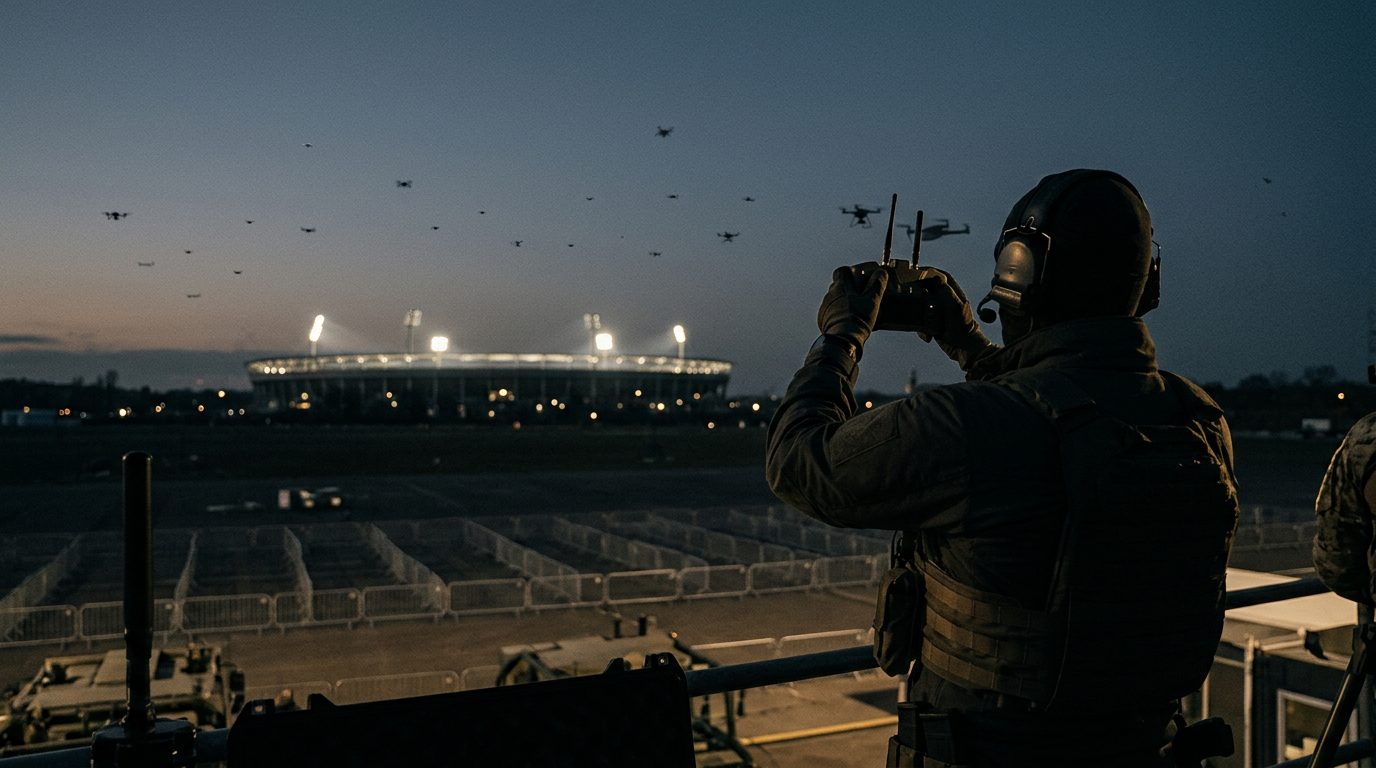
The counter-drone picture at the FIFA World Cup is now a volume problem. As of the tournament's mid-point, reported on 29 June, authorities had detected 1,139 unauthorised drones near venues and event sites, and the FBI had seized more than 500 for investigation. DHS and DOJ put the count at 'more than 600 drone incursions in restricted airspace over World Cup events since mid-June'.
The response posture is comprehensive on paper. White House task-force coordinator Andrew Giuliani says every match and fan event has counter-drone mitigation; all stadiums are FAA-designated No Drone Zones, and operators face fines up to 100,000 dollars and up to a year in prison. From 1 July, a DHS/DOJ interim final rule, authorised under the 2026 National Defense Authorization Act, lets state, local, tribal, territorial and corrections agencies with federal counter-UAS authorities assist federal responders, widening the pool of hands that can legally act against a drone.
The hard part is not the count, it is the mix. Officials say most incursions are careless or unaware operators rather than hostile actors. That is the operational challenge: a wall of benign contacts to triage in real time without missing the one that matters. A separate plot involving drones 'capable of carrying explosives' has not been linked to the tournament detections, but it is why the volume cannot simply be waved through.
Operator implication: counter-UAS is now a standing planning factor at any major public gathering, not a niche military capability. The lesson from the World Cup posture is triage. You need detection that classifies and prioritises, a clear legal authority to act, now broader in the US, and a drilled response for the contact you cannot dismiss. Build drone response into event orders and rehearse it. The threat is mostly noise, until the day it is not.