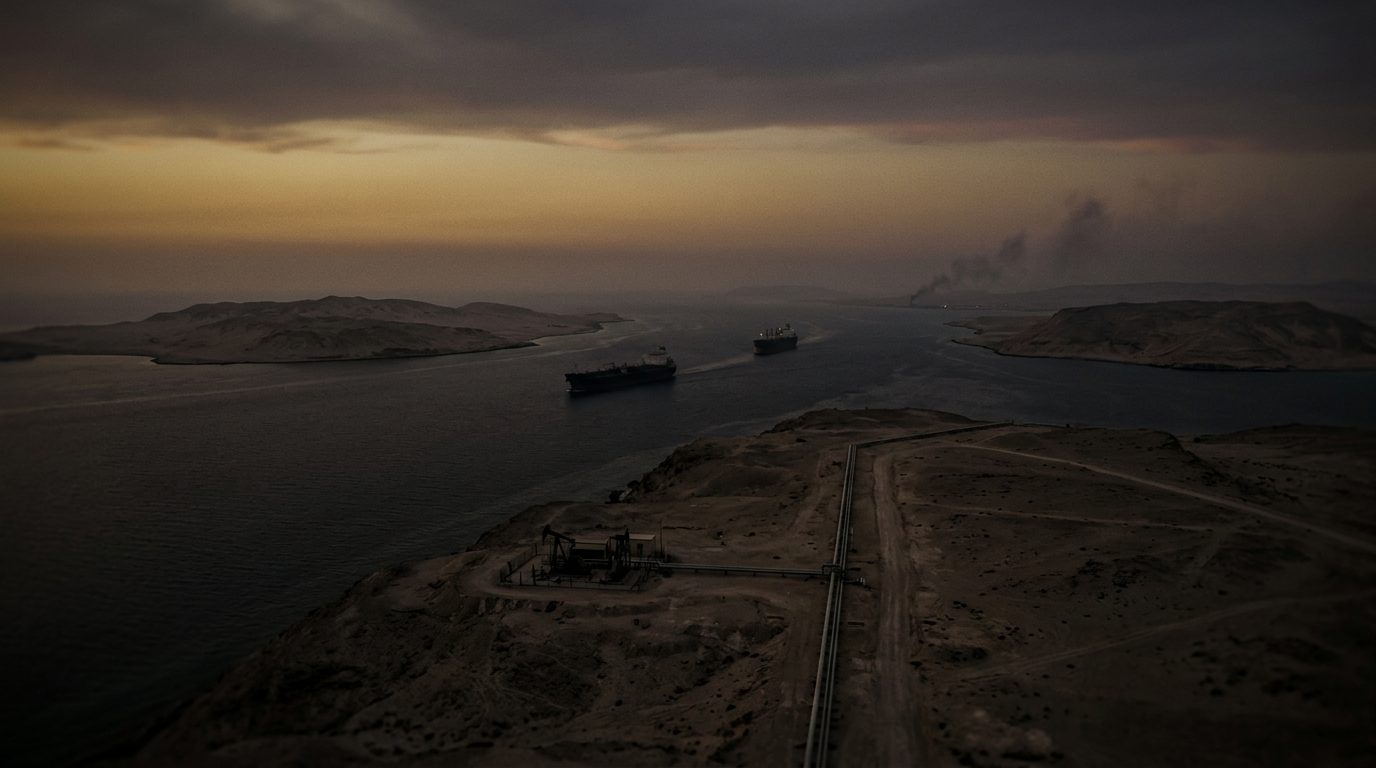
The Security Council was told on 15 September 2026 that Houthi forces are advancing toward the Bab al-Mandab Strait and have reportedly captured several islands in the southern Red Sea. Khaled Khiari, Assistant Secretary-General in the Departments of Political and Peacebuilding Affairs and Peace Operations, said that "The situation in and around the Bab al-Mandab Strait has become increasingly volatile in recent days."
The escalation has not stayed inside Yemen. On 14 September the Houthis launched missile and drone strikes on Saudi Arabian cities. Yemen's government has reportedly launched a counteroffensive that included extensive air strikes, with localised clashes reported across several front lines.
Two days earlier, on 12 September, drones reportedly launched from inside Iraq struck Saudi Arabia's East-West Pipeline. Khiari told the Council that "The strikes caused the pipeline to shut down for repairs, interrupting the crucial artery Saudi Arabia had been using as an alternative to the Strait of Hormuz." That matters for anyone reading the Gulf as a single risk system: the route that exists precisely to bypass Hormuz is currently offline, which removes a shock absorber rather than adding a new threat.
The humanitarian cost is already measurable. Khiari pointed to at least 125,000 people displaced across Yemen since the start of September, as well as 40 civilian casualties over that same period, more than half of which are women and children. Around 2,300 people have arrived in Djibouti after fleeing Yemen. Combatant casualties are estimated in the hundreds and remain unconfirmed.
One detail is worth holding onto, because it is the difference between a warning and a disruption. Khiari also said that "According to maritime tracking sites, commercial shipping flows through the Red Sea appear to remain unaffected for the time being." The threat is to the chokepoint and to the states around it, not yet to transit volumes through it.
For teams with people or movements in the region, the practical read is that the Saudi side of this has changed character. Strikes reaching Saudi cities and a pipeline hit attributed to drones from Iraqi territory widen the map well beyond the Yemeni border areas. The Foreign Office already advises against all travel to parts of Saudi Arabia and against all but essential travel to other parts, and its most recent update to that advice, on 25 July 2026, specifically cited regional risks including the Saudi-Yemen border and threats from the Houthis. Anyone planning movement through the Red Sea littoral, Djibouti or the Saudi south should be rebuilding contingency routing now rather than after a disruption.
Khiari's closing framing was that "What is needed now is sustained engagement that reduces tensions, prevents further escalation and safeguards freedom of navigation."