There is a hard tradecraft lesson buried in this week's tanker strike. Explaining why it hit the Mombasa and the Al Bahiyah, the IRGC claimed the two tankers had been influenced by the United States to take a southern route through Omani waters after switching off their navigation systems, and said they ignored repeated warnings before being hit and disabled.
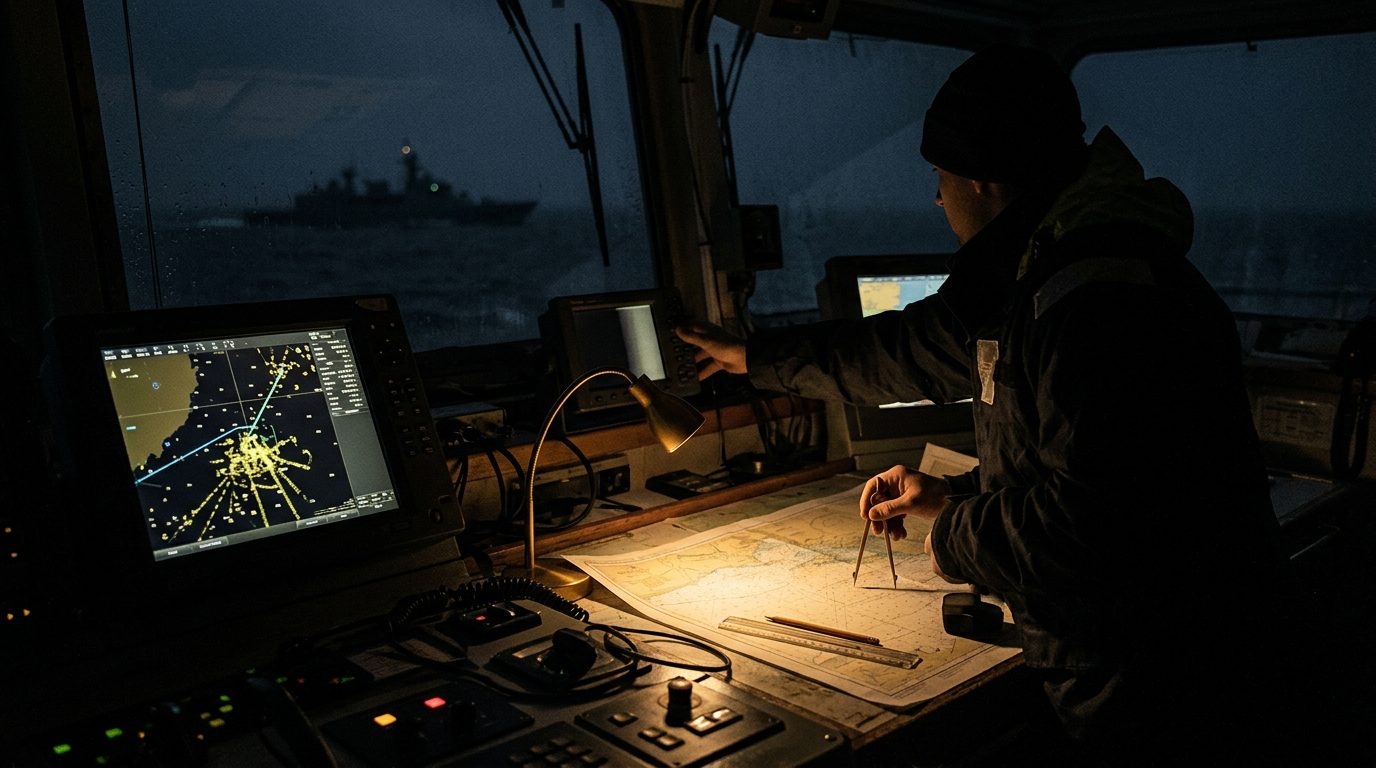
Whatever the truth of that account, the signal to mariners is clear. For months the standing problem in the Gulf has been electronic, not kinetic. Persistent GPS jamming and spoofing has thrown vessels' reported positions onto airports, inland sites and even over a nuclear plant, and one common response has been to switch AIS off altogether, protecting against a spoofed position being misread but reducing visibility to everyone else. GPS loss has also been reported on Gulf air approaches, so this is not a shipping-only problem.
The trap is that both choices now carry risk. Transit lit up and in-lane, and a spoofed track or mistaken identity can put you in the wrong place at the wrong time. Transit dark and off the usual line, and at least one belligerent has said it will read that as hostile and act on it.
For operators the answer is not a single setting but disciplined navigation. Treat every GNSS fix as suspect and cross-check against radar, visual and inertial references. Keep to recognised traffic lanes and published routing rather than improvising a quiet path. Log and report interference. Coordinate movements and intentions with naval authorities where a reporting scheme exists. In this strait, predictability and communication are now safer than stealth.