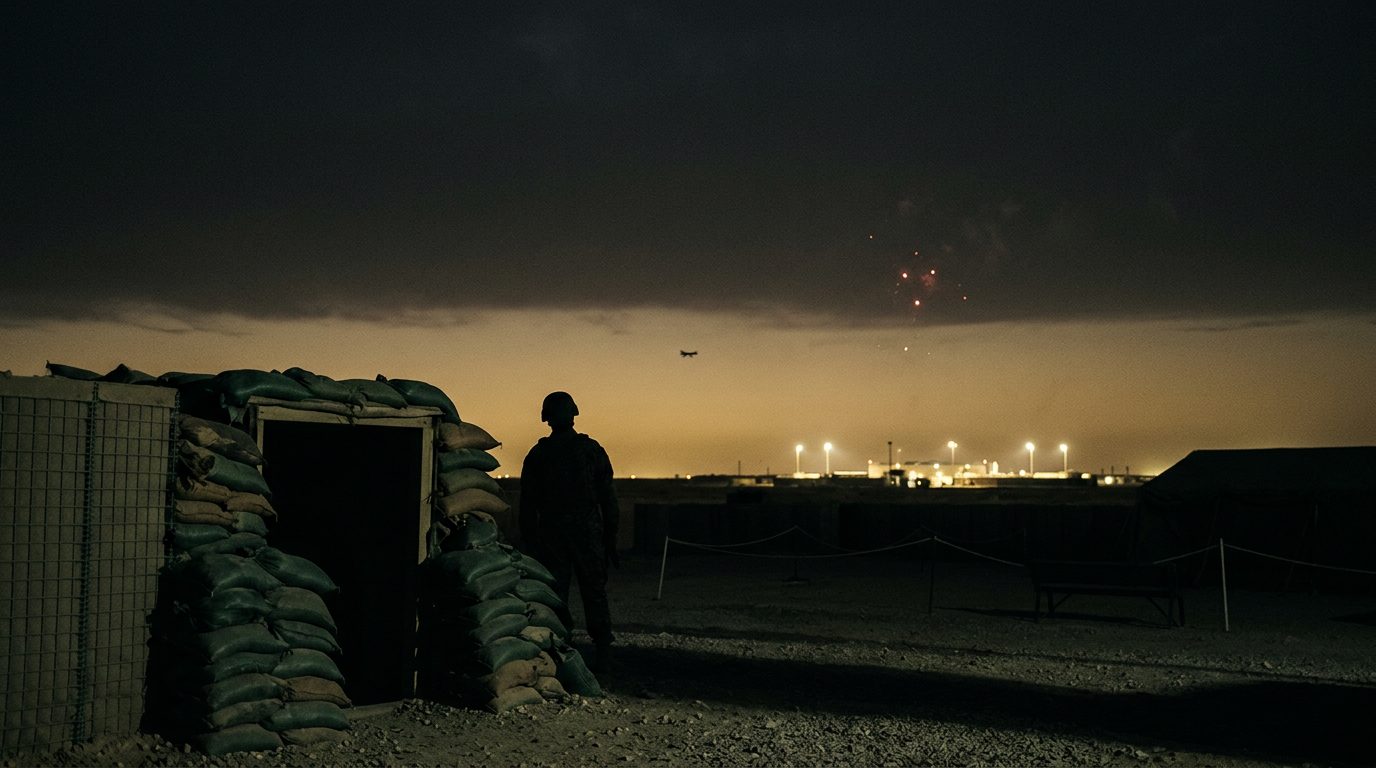
The threat to operators in the Gulf is no longer just at sea. Over the past week Iran has aimed ballistic and cruise missiles and one-way attack drones at targets on Gulf-state territory. Iranian claims and host-nation reporting describe strikes aimed at US-linked sites, including Patriot air-defence batteries in Kuwait, an early-warning site in Qatar and US army fuel storage in Bahrain, with missiles also intercepted over Jordan.
Most incoming has been intercepted, but interception is not the same as safety. Kuwait has reported material damage at several locations during intercepts, a navy vessel hit with sailors wounded earlier in the week, and a civilian injured by falling shrapnel. Debris and partial intercepts still put people and vehicles at risk on the ground.
The discipline for a static task under this threat is old and unglamorous. Know the local air-raid warning, how it sounds and who issues it, before you need it. Identify hardened cover on every site you hold and rehearse getting people into it fast, at night, without a brief. Keep a low, dispersed signature: no lit-up muster points, no predictable routines a drone operator could pattern. Build counter-drone awareness into the watch, because small fixed-wing drones fly low, slow and quiet, and a switched-on sentry is still the first line.
This is grey-space work. The client may be a commercial site with no military value that still sits under a flight path or near a targeted base. Brief the team that the threat is indiscriminate, that warning time is short, and that the plan is cover and accountability first, questions after. Assume more of the same while the strikes continue.