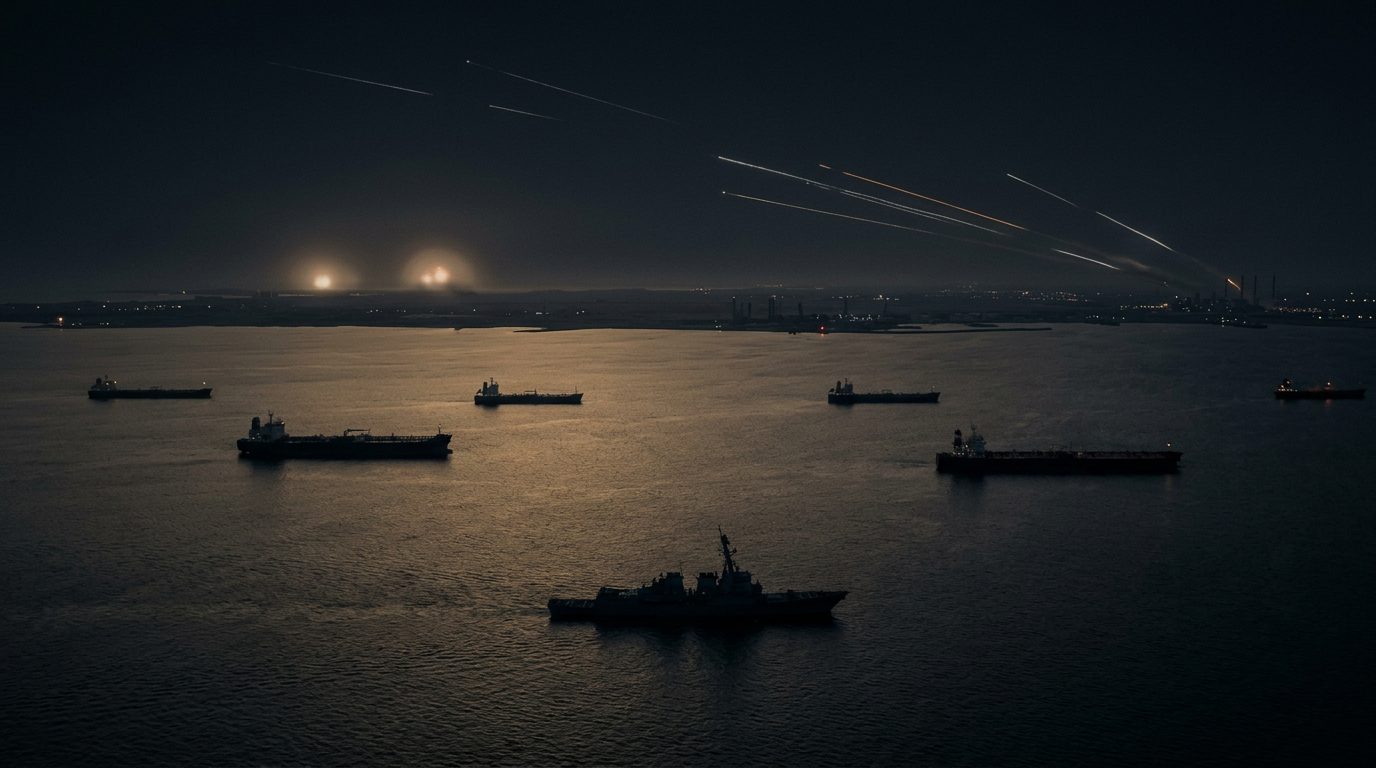
The Strait of Hormuz crisis has widened from a shipping war into a direct fight drawing in the Gulf states. The United States reimposed its naval blockade of Iranian ports at 12:01am Gulf time on Wednesday, after Washington declared that last month's memorandum of understanding with Iran had collapsed. It was the fourth consecutive day of US strikes on Iranian military sites, with open-source reporting that the strikes have reached inland targets, not only the coast.
Iran's response fell on Kuwait and Bahrain. Kuwait's defence ministry said its air defences engaged a barrage of one ballistic missile, five cruise missiles and 33 drones. A Kuwaiti navy vessel was hit and four service members were wounded. Firefighters contained a blaze at one targeted site, with no injuries reported there. Bahrain activated air raid sirens in the early hours and said its forces intercepted and destroyed a number of the incoming attacks. Iran's foreign ministry described the situation as having entered a crisis phase.
Traffic through the strait has all but stopped. Open-source tracking recorded just ten verified crossings of the monitored Hormuz zone on 13 July, a fraction of normal flow.
For operators, the picture has hardened again. The threat is no longer confined to vessels inside the strait. It now includes missile and drone attack on Gulf state territory, ports and coastal infrastructure. Anyone running maritime tasks, principal movement or static sites across Kuwait, Bahrain and the wider Gulf should treat the whole theatre as active, plan for air raid warnings and short-notice disruption, and assume the blockade regime tightens before it eases.