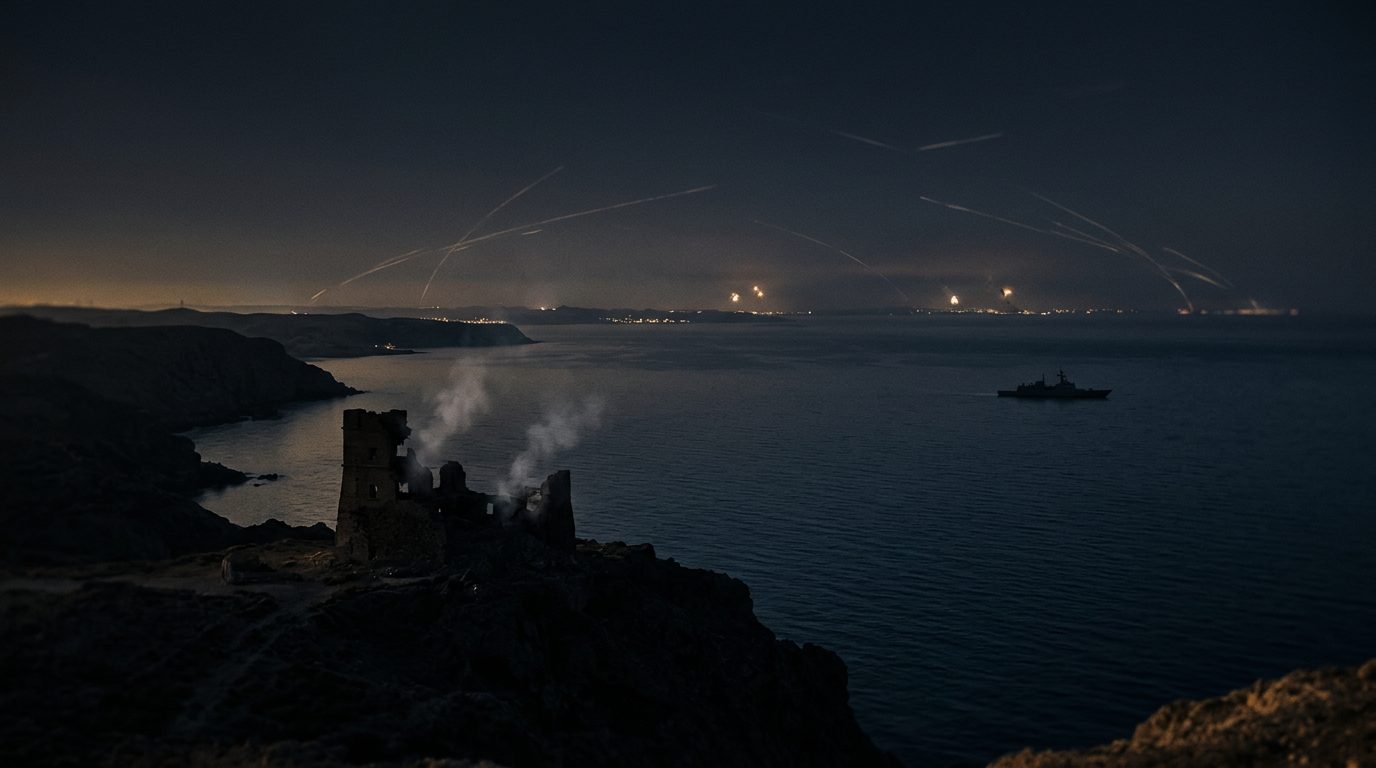
The confrontation over the Strait of Hormuz has widened along Iran's southern coast and across the wider Gulf. US Central Command ran a sixth consecutive night of strikes into the morning of 17 July. Among the targets, CENTCOM said its forces destroyed a maritime surveillance tower at the Shahid Kalantari port at Chah Bahar, on Iran's Gulf of Oman coast, describing it as part of a network the Revolutionary Guard has used for years to track and target commercial vessels transiting Hormuz. US Defense Secretary Pete Hegseth posted an image of the collapsing tower.
The strike reaches past the strait itself. Chabahar sits east of Hormuz on the Gulf of Oman, the approach waters shipping uses to line up a transit. Hitting surveillance infrastructure there signals a campaign now working the whole southern seaboard, not just the choke point.
Iran's retaliation on Friday spread across the region. Tehran said it targeted US military sites in six Arab countries. Per Al Jazeera, the named targets included the Al Udeid air base outside Doha in Qatar, the Sakhir airbase in Bahrain, US radar sites in Oman, and facilities in Kuwait, with three missiles reported transiting Jordanian airspace and a US position at al-Tanf in Syria also named. Qatar, Kuwait, Bahrain and Jordan reported intercepting incoming fire, and Kurdish forces reported downing eight drones over Erbil. Iran's health ministry put its toll at 38 killed and more than 400 injured by Friday morning.
The naval picture is unchanged and hard. The US reinstated its blockade of Iranian ports on 14 July and is enforcing it. Commercial traffic through Hormuz has all but stopped as owners and charterers decline to sail. The strait is closed by risk, not by decree.
For protective and maritime security teams, the map has grown. Principals and crews staged through Doha, Dubai, Abu Dhabi and Manama sit under live air-defence engagements, and the Gulf of Oman approach is no longer a quiet staging back door. Treat air-defence activity, port access and the blockade as fixed planning constraints for the coming week, and hold a self-reliant fallback that does not depend on scheduled aviation or a calm transit window.