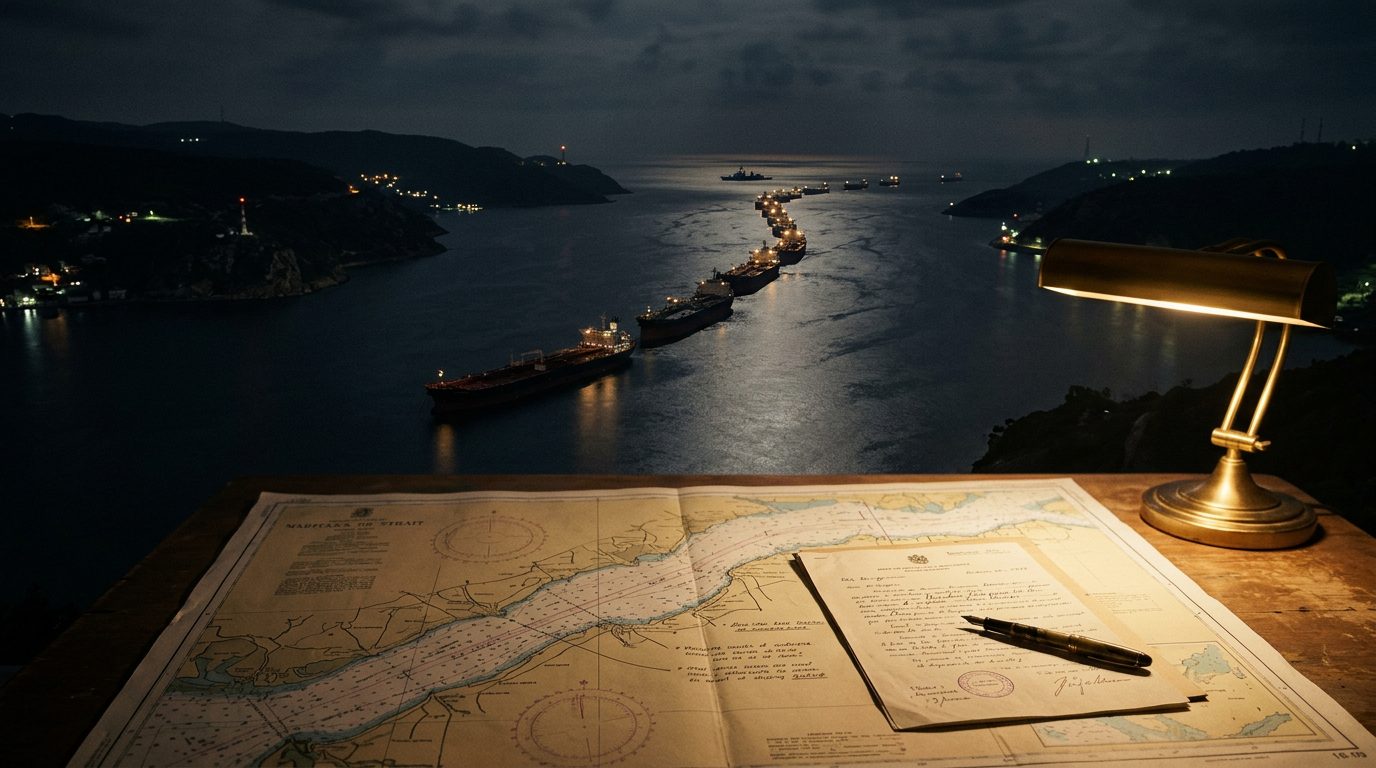
The Strait of Hormuz is still closed to normal traffic, and the argument has shifted from whether it reopens to who sets the terms.
Oman has drafted a proposal, backed by the International Maritime Organization, to manage passage through the strait — including charging navigation fees on transiting ships. France and Britain are studying it. Iran's foreign minister, Abbas Araghchi, was in Muscat on Saturday for talks centred on the waterway.
Washington and its Gulf partners have rejected any arrangement that lets Tehran impose routes, restrictions or payment on its own terms. The US demand is unchanged: Iran must state publicly that it will stop attacking ships and that all lanes are open, with no tolls. Over the weekend US forces ran two nights of strikes on Iranian maritime targets along the southern and eastern coasts, keeping the military track live alongside the diplomacy.
The traffic tells the story underneath the talks. Al Jazeera reported around five vessels tracked crossing on Wednesday and early Thursday, against roughly 130 a day before the war began in late February. Behind the closure, about 6,000 seafarers remain trapped in the region: the IMO's evacuation effort moved 136 ships and some 2,900 crew out on two alternate routes before it was paused, and the organisation is now waiting on safety guarantees from all sides before it resumes.
A separate clock is running. The US wind-down licence for previously authorised Iranian oil transactions closes on 17 July, tightening the economic pressure the same week the Omani proposal is on the table.
For operators, nothing here is resolved. Any maritime task, crew rotation, yacht movement or protective detail routed through the Gulf should assume the strait can stay shut or reopen on short notice, treat the Omani fee proposal and the 17 July deadline as the signals to watch, and plan on the basis that a single further incident resets the clock. Keep alternates live and brief crews on the political tripwires, not just the navigational ones.