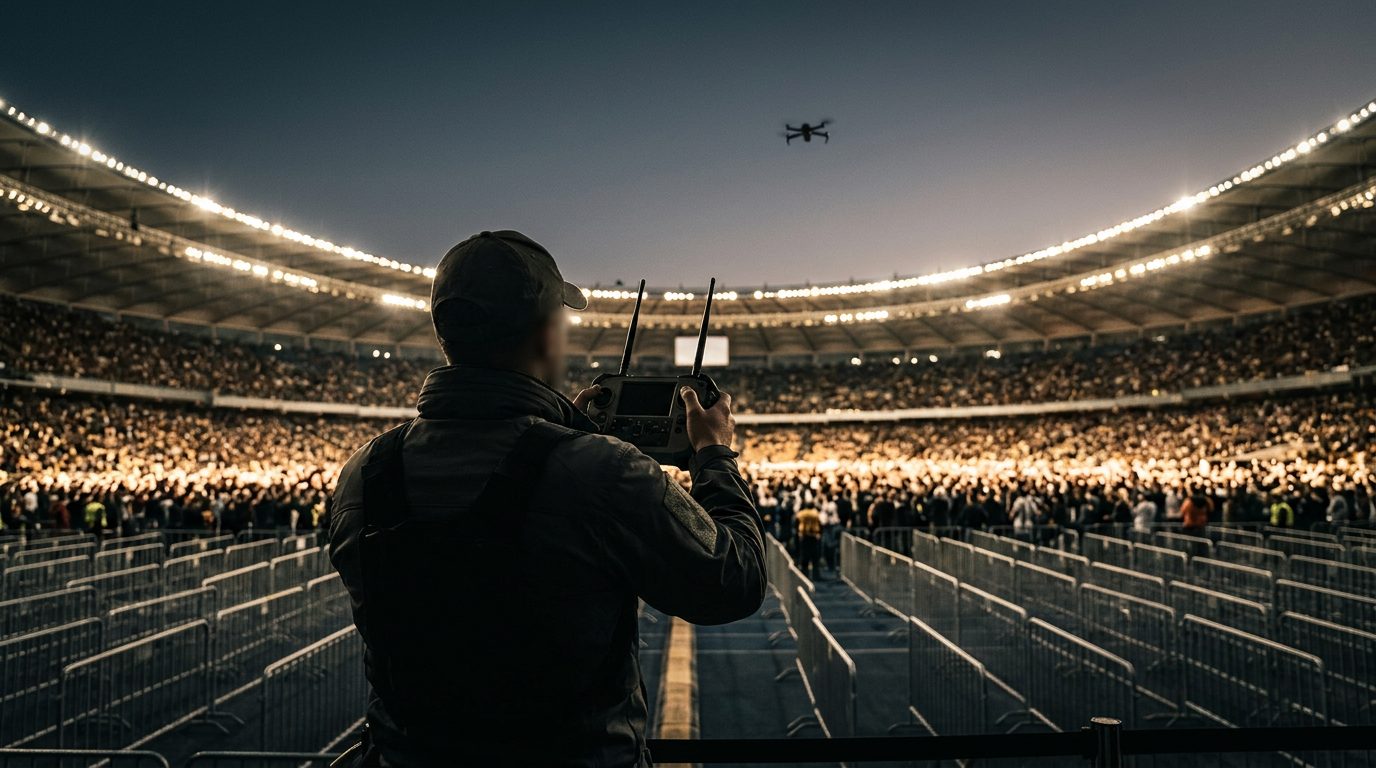
The World Cup reaches its final on 19 July at MetLife Stadium in New Jersey, closing the highest-profile security window of the tournament.
The counter-drone picture is now clear. US agencies have seized more than 600 drones near World Cup sites since the tournament opened on 11 June, and the number detected flying near venues runs well into four figures. Officials have characterised the bulk as hobbyist operators straying into restricted airspace rather than hostile actors — but volume is the problem in itself, because every contact has to be detected, identified and triaged in real time.
The federal footprint is heavy. The programme is backed by $250 million in FEMA funding distributed to the 11 US host states and Washington DC for detection and mitigation kit — drone-catching nets, radio-signal takeover devices and tracking systems. Every stadium and designated fan-event site is a no-drone zone under temporary flight restrictions, and unauthorised operators face civil penalties up to $75,000 and criminal fines up to $100,000.
The operator constraint has not changed, and it is the point worth holding onto. Under authority expanded by the 2026 defence authorization act, mitigation — jamming a drone to bring it down, or seizing it — sits with federal agencies and, for the first time, local police forces trained by the FBI. That authority does not extend to private security teams: a private detail can detect and report, but the takedown is not theirs to make.
For teams working around host cities this week, plan for busy airspace and a response you do not control. Build detect-and-liaise into the plan, know which agency owns mitigation at each venue, and treat the fan-zone perimeter — not just the stadium bowl — as the exposed edge.