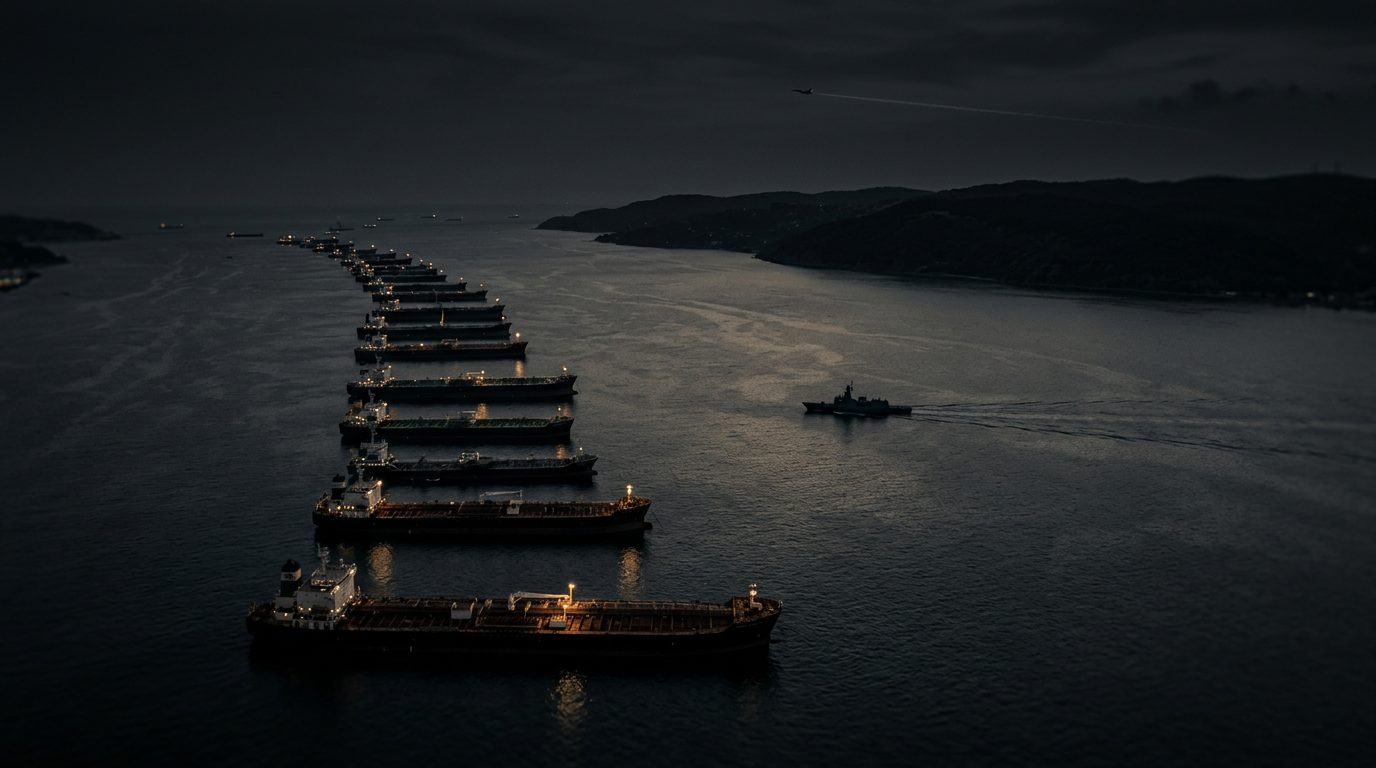
President Trump declared the US-Iran ceasefire over on Friday, after Iranian forces attacked three commercial vessels in the Strait of Hormuz earlier in the week and both sides traded strikes.
Washington is now demanding something specific: a public statement from Tehran that all channels of the strait are open, and that Iran will not fire on transiting civilian ships. US officials say they expect that declaration in the coming days.
Tehran is not playing along. Its foreign ministry denied asking for fresh talks, though the foreign minister was reported to be heading to Oman. Iranian officials have rejected the idea of outside powers dictating the terms on which the strait reopens.
Washington tightened sanctions this week, including a move to revoke a waiver on Iran's oil exports.
The traffic tells the real story. Transits have fallen sharply since 8 July, particularly on the UN-backed Omani route most masters had been using to stay clear of Iranian waters. Owners are waiting on a political signal, not a naval one.
For operators, this is neither resolved nor linear. Any maritime task, crew rotation, yacht movement or protective detail routed through the Gulf should assume the strait can close to normal traffic on short notice, that an Iranian reopening statement is the variable to watch, and that a single further incident resets the clock. Plan alternates, brief crews on the political tripwires, and keep movement flexible.