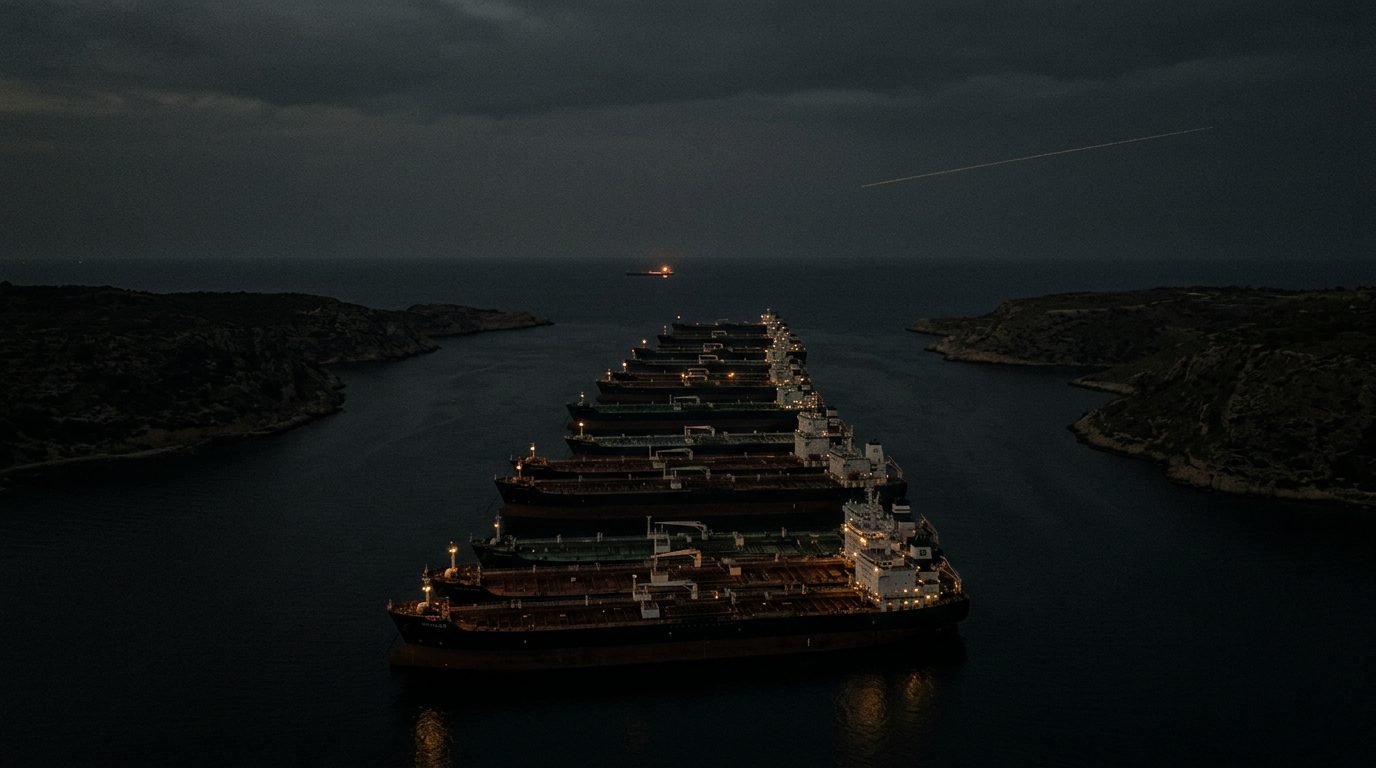
The Strait of Hormuz has effectively stopped. Open-source tracking counted only five vessels crossing on Wednesday and minimal traffic early Thursday, against 45 on Monday and roughly 130 a day before the war, per Lloyd's List Intelligence and Windward (Al Jazeera). No vessel above 10,000 deadweight tonnes has run the southern corridor with its AIS switched on since 7 July.
A week ago this looked like a fragile lull that might reopen the strait. Instead it has hardened into open conflict. Three tankers were attacked on 7 July — the Al Rekayyat off Limah in Omani waters, a second off the UAE coast, and a third by drone off the Musandam Peninsula (The Washington Times). US Central Command struck Iranian targets that evening, further strikes followed on Wednesday, and Iran reported explosions in its south on Thursday (Al Jazeera). Iranian officials claim retaliatory strikes on US-linked military assets in Bahrain, Kuwait, Qatar, Jordan and Iraq (Al Jazeera).
The offramp is gone. The Islamabad Memorandum — the understanding signed last month that was meant to keep the strait toll-free — has been declared over, and indirect talks in Qatar broke up with no headway (Al Jazeera). Markets are pricing disruption rather than shock so far: Brent sat at $76.58 on Thursday, up more than four dollars on the week but well short of a closure spike (Al Jazeera).
For anyone with Gulf exposure, the change that matters is duration. This is not a spike to sit out; treat the Gulf as an active conflict environment and re-plan on that basis. The threat has widened past shipping — Iran's claimed strikes put US-linked bases in Bahrain, Kuwait and Qatar in the frame, which changes the picture for resident details, expatriate principals and anyone routing through Gulf hubs. Expect airspace closures and diversions around southern Iran and the strait, degraded satellite navigation across the basin, and war-risk cover that reprices or vanishes at a day's notice. Defer anything you can out of the Gulf this week.