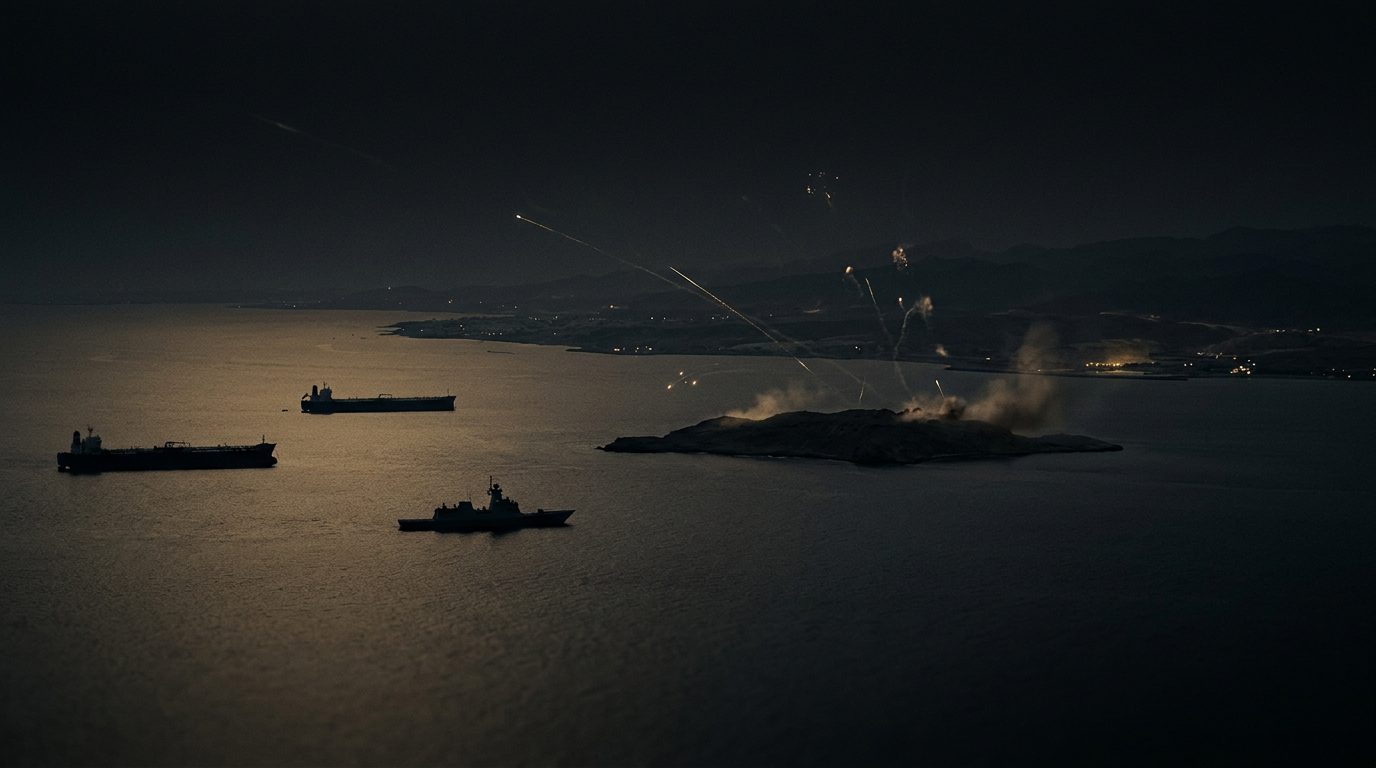
US Central Command ran a second wave of strikes on Iran on Wednesday, hitting Greater Tunb island in the Strait of Hormuz. Precision munitions went into coastal defence systems and cruise-missile storage and launch sites in a roughly 90-minute attack, following earlier strikes that morning.
A pre-dawn strike on a barracks near Iranshahr in Iran's south-east killed seven military personnel, with the Iranian army reporting 13 missiles hitting a guesthouse, guard posts and accommodation buildings, and Iranian officials putting the wider toll across the country at more than 260 wounded overnight. The Revolutionary Guard answered by vowing to close other export corridors that serve the US and its allies, saying the region's energy exports would be "either for everyone or for no one".
The US naval blockade of Iranian ports, reinstated on 14 July after last month's memorandum of understanding collapsed, remains in force. Trump dropped his own proposal for a 20 per cent fee on cargo moving through the strait, saying he would replace it with trade and investment deals with the Gulf states.
He also set a clock. Trump warned Iran to make a deal "or you're not going to have anything left", said strikes would continue over the coming days, and said they could expand to infrastructure, bridges and power plants among the named targets, by next week. Brent crude is trading above 85 dollars a barrel, around 15 per cent above pre-war levels.
For operators the read is a widening, not a narrowing, conflict with a political deadline attached. Anyone with maritime tasking, principal movement or static commitments across the Gulf should plan for a sharp escalation next week if talks stall, keep contingency routing and stand-down triggers current, and treat the whole theatre, not just the strait, as active.