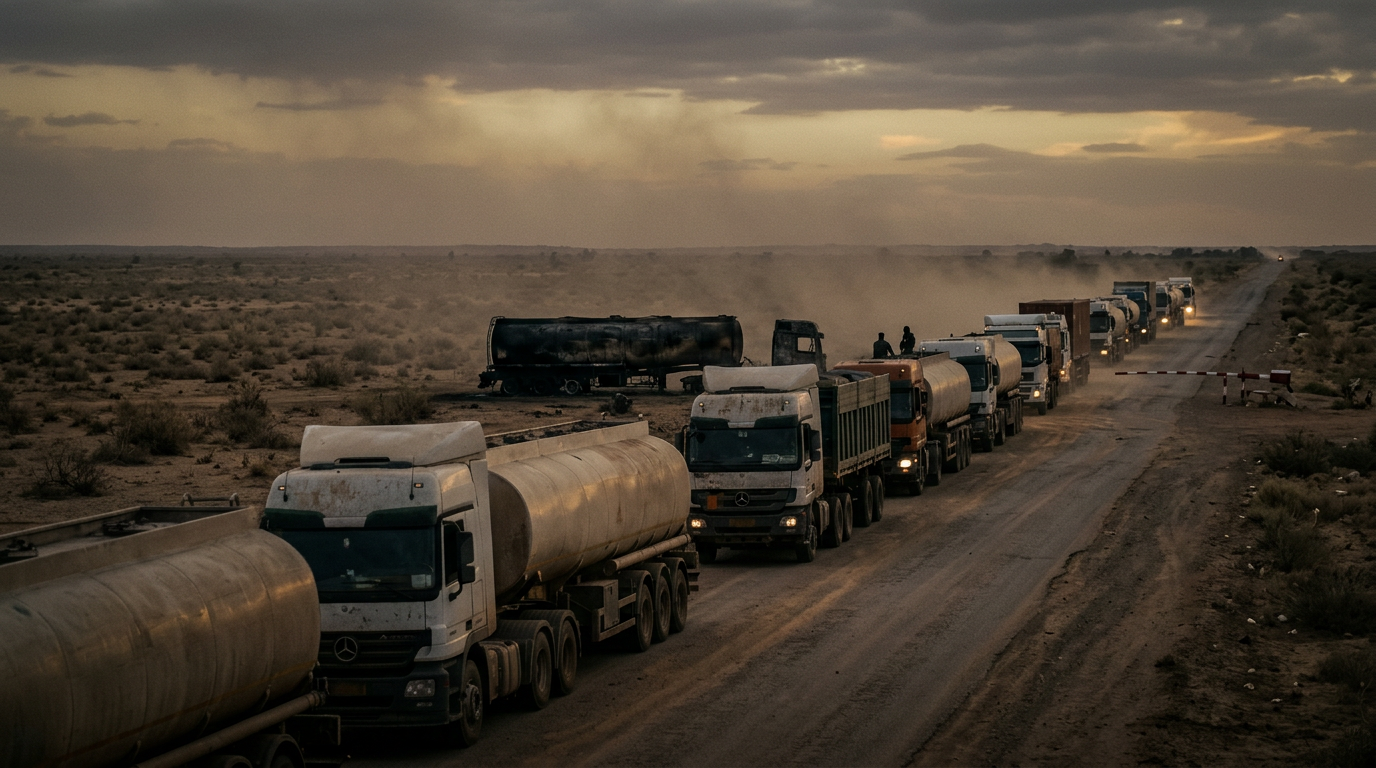
Mali's security picture is deteriorating from the centre outward. The al-Qaeda affiliate JNIM has blockaded fuel and essential goods into Bamako since September 2025; open-source reporting describes rationing, long fuel queues, a capital darker at night, and more than 300 fuel tankers destroyed on the supply roads. A blockade is not a frontline, but it is a siege.
The campaign has reached the state's own leadership. On 25 April, in coordinated attacks with Tuareg separatists, Mali's defence minister General Sadio Camara was killed in a suicide vehicle-bomb attack on his residence in Kati, near Bamako. Aviation and entry points are now firmly in scope: on 18 June gunmen attacked the airport in Niamey, in neighbouring Niger, an assault later claimed by JNIM; authorities reported 11 armed-forces personnel and two civilians killed, and 22 assailants killed.
This month the UN Security Council holds an open briefing and closed consultations on West Africa and the Sahel, with UNOWAS chief Leonardo Santos Simao briefing. The Council remains split, Western members focused on JNIM's expanding reach, Russia on its own footprint in the region.
Operator implication: treat Mali, and increasingly the wider central Sahel, as a deteriorating high-risk environment where the state's own security apparatus is under direct attack. Fuel scarcity degrades everything downstream, movement, power, communications, medevac, and airports and border crossings can no longer be assumed open. Anyone with people or interests in the region needs current ground-truth, hardened and fuel-independent logistics, and evacuation plans that do not rely on a single air gateway.