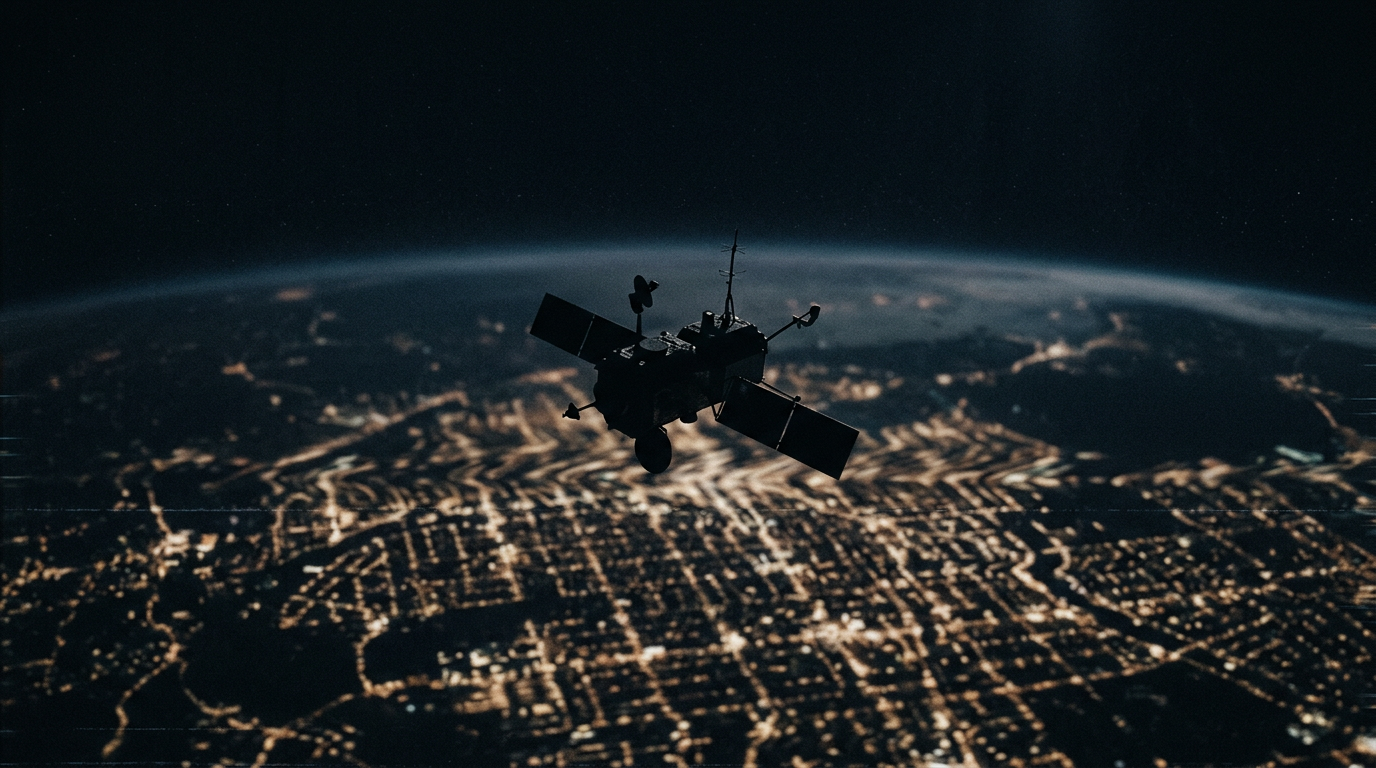
Yesterday's brief flagged GPS denial as a planning problem. Today it has attribution. A preprint led by University of Texas navigation researcher Todd Humphreys, posted on 10 June, documents 75 confirmed GPS interference events between January 2019 and April 2026 and traces them to Cosmos 2546, a Russian early-warning satellite in a high elliptical orbit above 1,200 km.
The interference is not subtle. The study describes a signal hundreds of times stronger than a normal GPS transmission, sitting on the GPS L1 band and degrading BeiDou in the same stroke while leaving Russia's own GLONASS untouched. The events run on weekdays only, last under ten seconds, and cluster in business hours — a rhythm the lead author reads as deliberate capability testing rather than accident or spillover from the war in Ukraine.
For protective operations this closes a loop. Teams across northern and eastern Europe have logged degraded positioning for two years without a clear cause. The cause is now a state-level, space-based denial capability that can be switched on at will.
The operator takeaway is unchanged but firmer: treat GNSS as a convenience, not a source of truth. Carry paper mapping and a planned route, brief drivers on dead reckoning, and assume any GPS tracker on a principal, vehicle or asset can be blunted at a time of someone else's choosing.