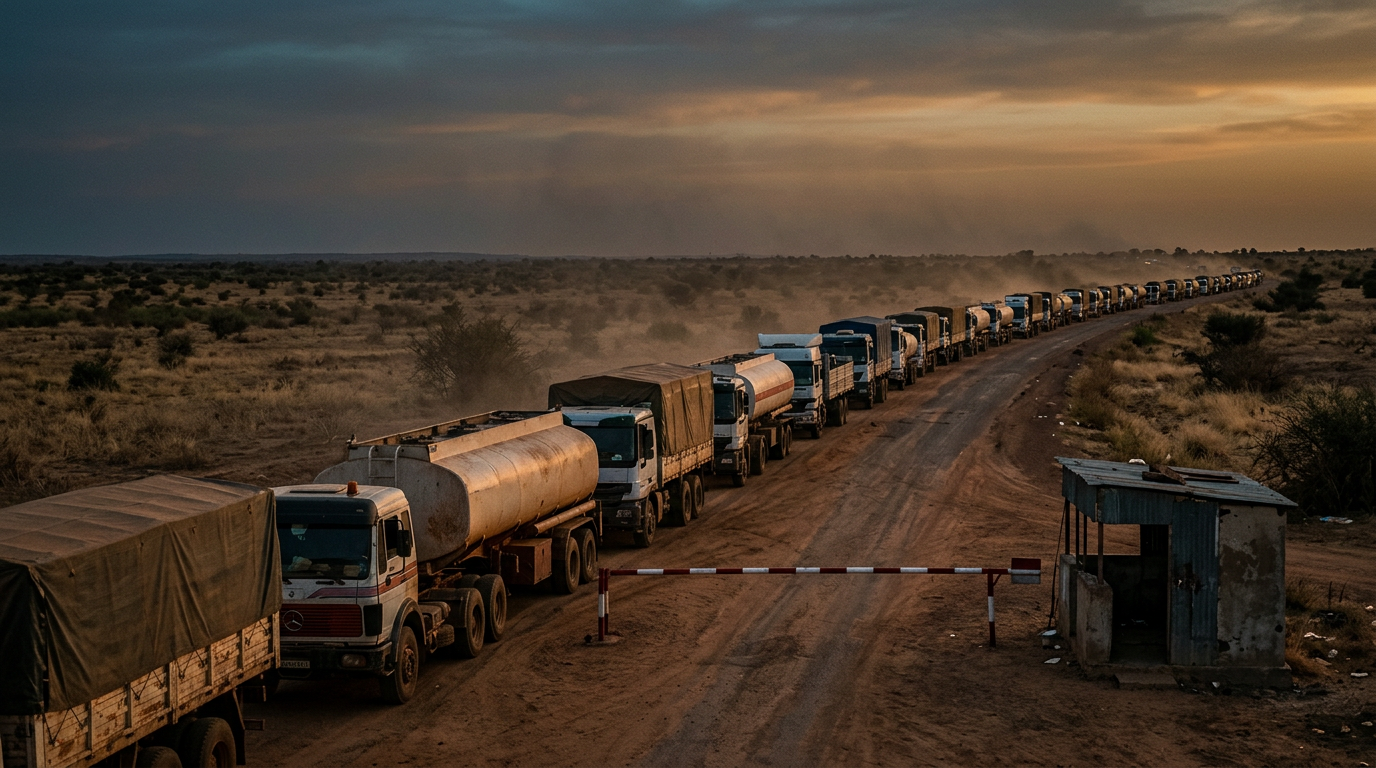
The Sahel's security problem has hardened into an economic siege. Open-source reporting indicates JNIM, the al-Qaeda affiliate, has held a fuel blockade of Mali's capital Bamako since September 2025 and has extended blockades to key trade routes, including the Kita-Bamako road and the Kayes, Conakry and Dakar corridors, choking supplies of fuel, food and goods. Military-escorted convoys have been the workaround, letting a few hundred tanker trucks through per week.
The violence is escalating alongside the blockades. Coordinated attacks on 25 April struck Bamako, Kati, Gao, Mopti and Sévaré in one of the sharpest escalations of Mali's crisis in years, and Mali's defence minister was killed. On 6 May, JNIM torched trucks carrying food to the capital. On 18 June the group claimed an attack on Niamey's airport in neighbouring Niger, in which 11 members of the armed forces and two civilians were killed and 22 assailants were reported killed by security forces. The UN Security Council is scheduled to take up the region in July, with members expected to discuss an 'expanding and evolving' terrorist threat.
Operator implication: for anyone with people or interests in Mali and the wider central Sahel, the exposure is now logistics and movement as much as direct attack. Fuel and resupply are unreliable, main corridors are contested, and convoy movement carries ambush and kidnap risk. The Niamey airport strike is the signal that aviation and points of entry are in scope, not just remote roads. Journey management, hard limits on predictable movement, resilient fuel and comms, and a workable evacuation plan matter more than a static threat rating. Treat overland corridors as high-risk and keep contingency routing and air options under constant review.