Mali's capital is operating under siege conditions, and the cause is fuel. JNIM's blockade on the routes that supply Bamako, first announced on 3 September 2025 and reimposed on 28 April 2026, has choked the flow of petrol and diesel into a landlocked country that imports almost all of it.
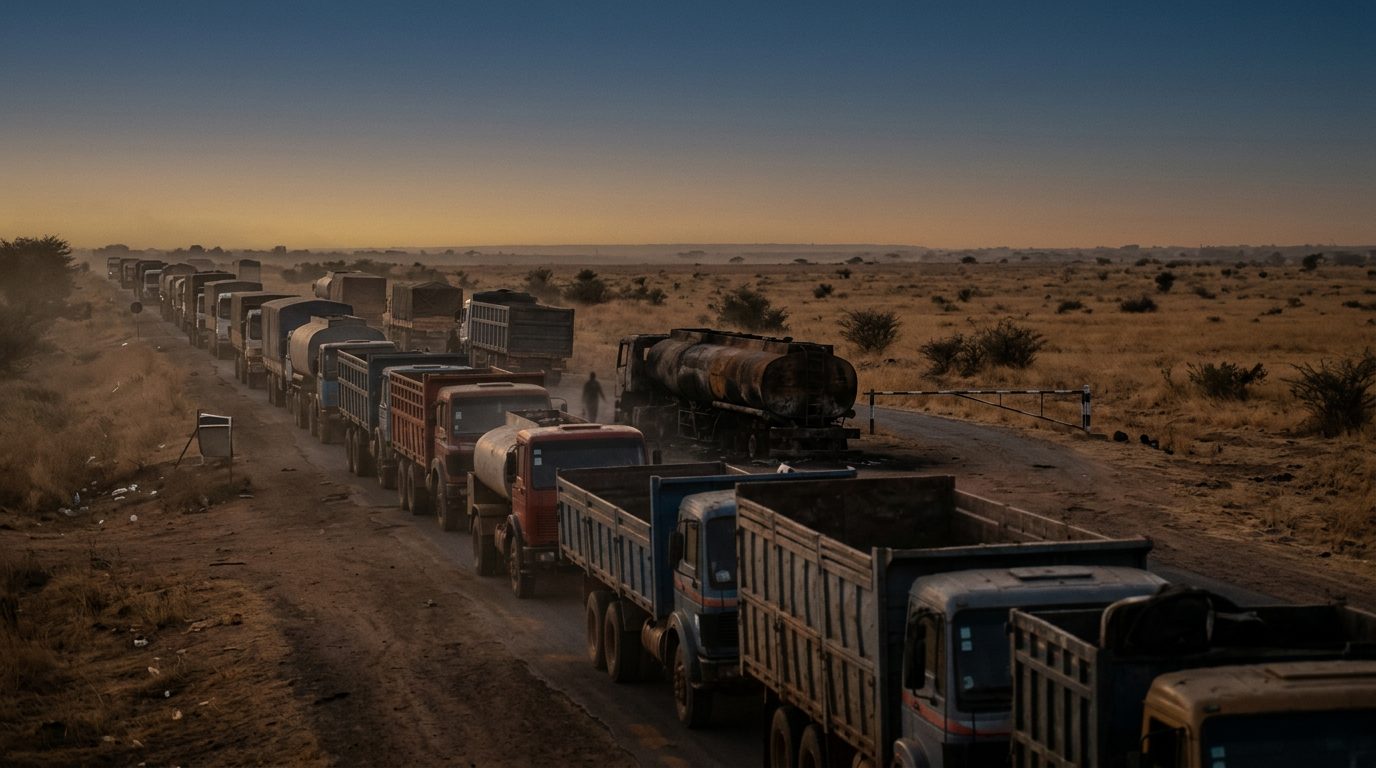
The lever is the tanker convoys. Open-source reporting counts more than 300 fuel tankers destroyed since the blockade began, on the highways in from Senegal, Cote d'Ivoire and Guinea, with roughly 95 per cent of Mali's fuel arriving from Senegal and Cote d'Ivoire. The effect is cumulative: fuel queues measured in hours, rationing, and satellite imagery showing a capital that is visibly darker at night.
The security signal is in how those already there have responded. Late in 2025 the United States and United Kingdom told their citizens to leave Mali and withdrew some embassy staff. In November the UN Secretary-General warned the Security Council of a 'moment of profound urgency' and the risk of a 'disastrous domino effect' across West Africa and the Sahel, a warning borne out as the blockade has held into the summer.
Operator implication: treat Bamako as a hard-access, fuel-constrained environment where the fundamentals fail together. Vehicle availability, generator fuel, comms uptime, hospital capacity and the responsiveness of local forces are all degraded at once. Build movement and evacuation plans around fuel as the binding constraint, keep drawn-down and stand-fast options current, and read the embassy posture as the leading indicator. The regional read matters too: a Bamako failure would not stay inside Mali's borders.